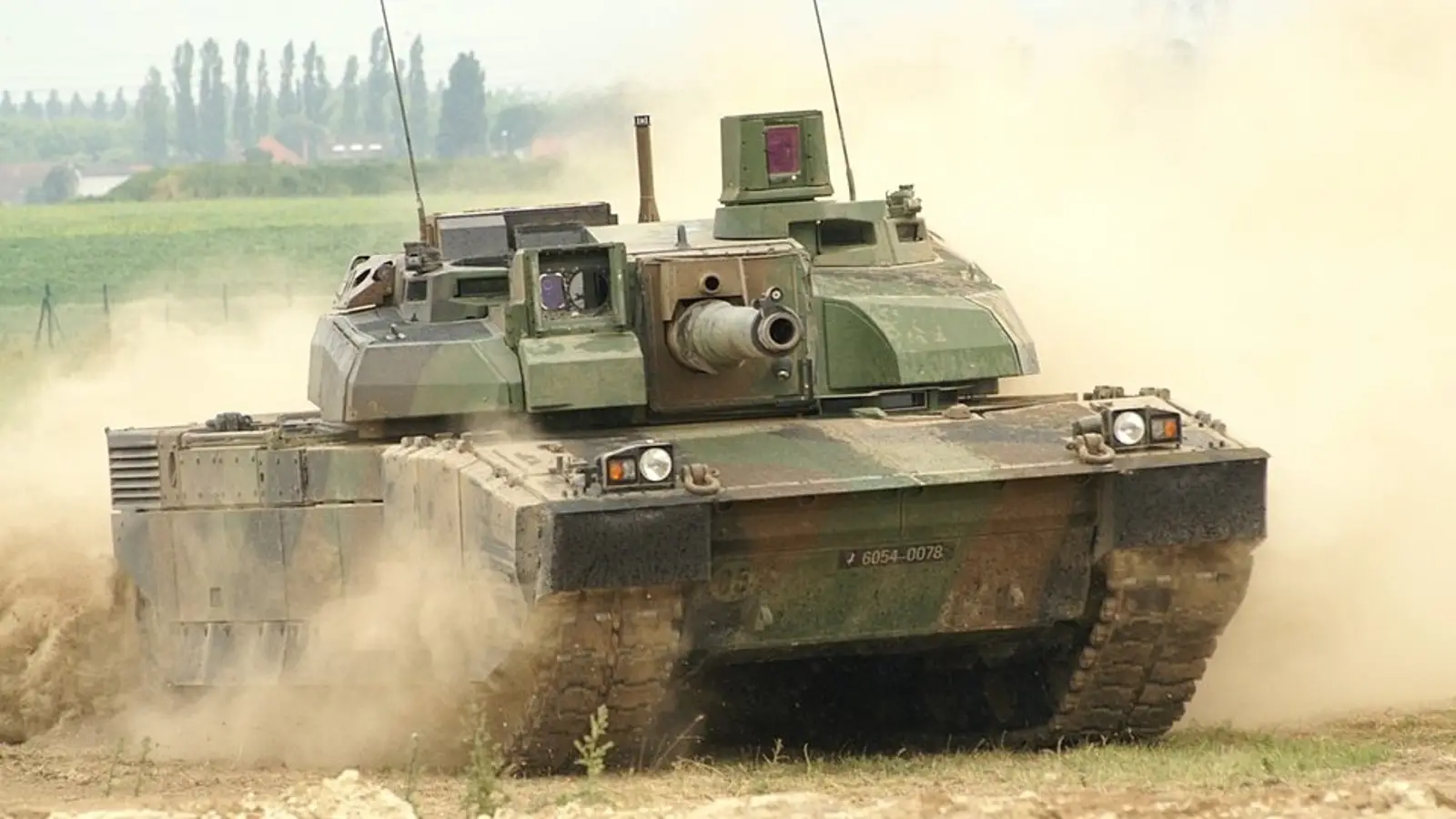


The French Army is reworking the way it uses armored forces after studying the experience of fighting in Ukraine. Commanders are experimenting with smaller tank groups that are harder for drones to detect and can be rapidly combined when a larger force is needed.
A standard French armored platoon consists of four Leclerc tanks and four VBL light armored vehicles. The 7e BB armored brigade, part of which has been deployed to Romania, is testing a different approach. Brigade commander General Maxime Do Tran told Defense News that the traditional platoon structure is being broken down into smaller combat elements that can be assembled in different combinations depending on the mission. He compared the concept to Lego pieces.
According to Do Tran, the widespread use of UAVs in Ukraine has sharply restricted armored maneuver. Areas around the front line are under constant observation, making vehicle movements easier for the enemy to detect. Dispersing armored units is intended to make individual groups less valuable as targets and reduce the likelihood that strike assets will be used against just one or two tanks, Voennoye Obozreniye reported.
French troops initially tested a formation built around one tank and one armored vehicle, but trials showed that such a pair was too small to provide sufficient tactical coordination. The brigade is now working with groups of two tanks and two light armored vehicles. At the same time, the structure is meant to remain flexible, allowing commanders to combine a much larger number of such elements when required.
The new concept was tested during the French Army’s large-scale Orion 2026 exercises earlier this year. Units operated in half-platoons, practicing both dispersal and rapid concentration of forces. The drills showed that the model can work, but it also requires greater autonomy from junior commanders and careful distribution of missions among smaller groups.
Do Tran also believes the changes should extend to the tanks themselves. In his view, future main battle tanks should be modular enough to replace the main gun with anti-drone equipment or UAV launch systems when necessary.
The general also expects the role of tank guns to decline gradually, with some of their functions shifting to artillery, drones and loitering munitions. France, however, is not preparing to abandon main battle tanks. Do Tran still considers them necessary for tactical breakthroughs and believes the new force structure can help preserve the Army’s ability to maneuver and break through enemy defenses.