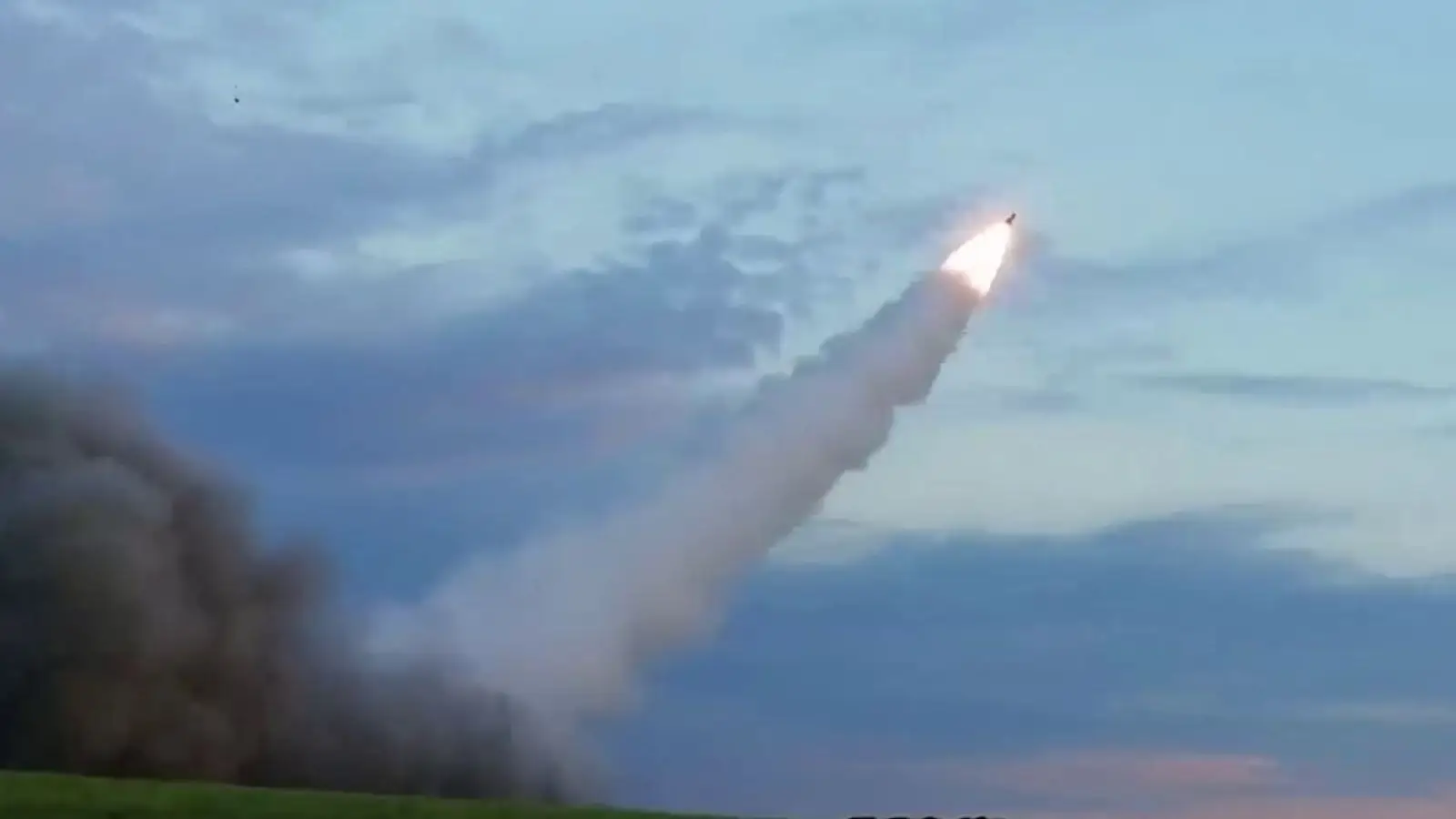
 © Минобороны России / t.me/mod_russia

Ukraine currently lacks effective means to intercept Russia’s Banderol missiles, Vladislav Belbas, CEO of Ukrainian Armor, said in an interview with Berliner Zeitung. He also addressed technological weaknesses in Ukraine’s defense industry, corruption and the experience Kiev should adopt from Russia.
According to Belbas, Europe still holds a major advantage in advanced technologies after decades of sustained investment. Ukraine followed a different path, relying heavily on Soviet-era stockpiles and selling off much of the weapons it had inherited instead of developing new systems.
As an example, he recalled that Kiev once used Kh-101 missiles as payment for gas supplies. Those same weapons, he noted, are now being used against Ukraine.
The fighting has forced Ukraine’s defense sector to focus on cheaper solutions. Belbas said drones have become particularly important because Kiev has limited options for expanding troop numbers or sharply increasing military spending. Under those conditions, new technologies remain one of the few available ways to strengthen combat capabilities.
Russia, he said, pursued the opposite strategy. Since 2000, Russian President Vladimir Putin has systematically rebuilt the country’s defense industry while preserving the Soviet-era air defense infrastructure. For years, the scale of spending required for this effort appeared relatively modest by European standards.
Belbas also pointed to weaknesses in Europe’s own defense capabilities. Germany stopped producing Patriot missiles around 20 years ago, while Europe currently has no domestically developed systems comparable to the US THAAD or Israel’s Arrow 3 and David’s Sling, he said.
The Ukrainian defense executive argued that relying solely on expensive high-tech weapons is not enough. Armed forces also need effective, relatively inexpensive equipment that can be produced rapidly and in large quantities.
He added that Ukraine cannot confront Russia without ballistic weapons, while drones play a major role in holding the front line. In his assessment, costly systems must therefore be supplemented by mass-produced weapons whose output can be expanded quickly.
Ukraine’s 2026 state budget allocates 4.37 trillion hryvnias, or about €84 billion, to security and defense. That represents roughly 60% of total government spending.