 North Atlantic Treaty Organization / www.nato.int

European armies are increasingly fitting main battle tanks with additional protection against drones, adopting solutions that have become widespread during the fighting in Ukraine. NATO drills and exercises held by individual countries now include both new tactics for armored units and experiments with cage- and net-type structures mounted over combat vehicles.
France is testing one such system on Leclerc tanks. A metal canopy installed above the turret resembles the early Russian «cope cages» that appeared at the beginning of the special military operation. These structures were primarily intended to shield the relatively vulnerable top of the turret from munitions dropped by UAVs. However, as Voennoye Obozreniye notes, later battlefield experience pushed Russian forces toward much heavier additional armor. Once kamikaze drones became widespread, simple overhead canopies proved insufficient.
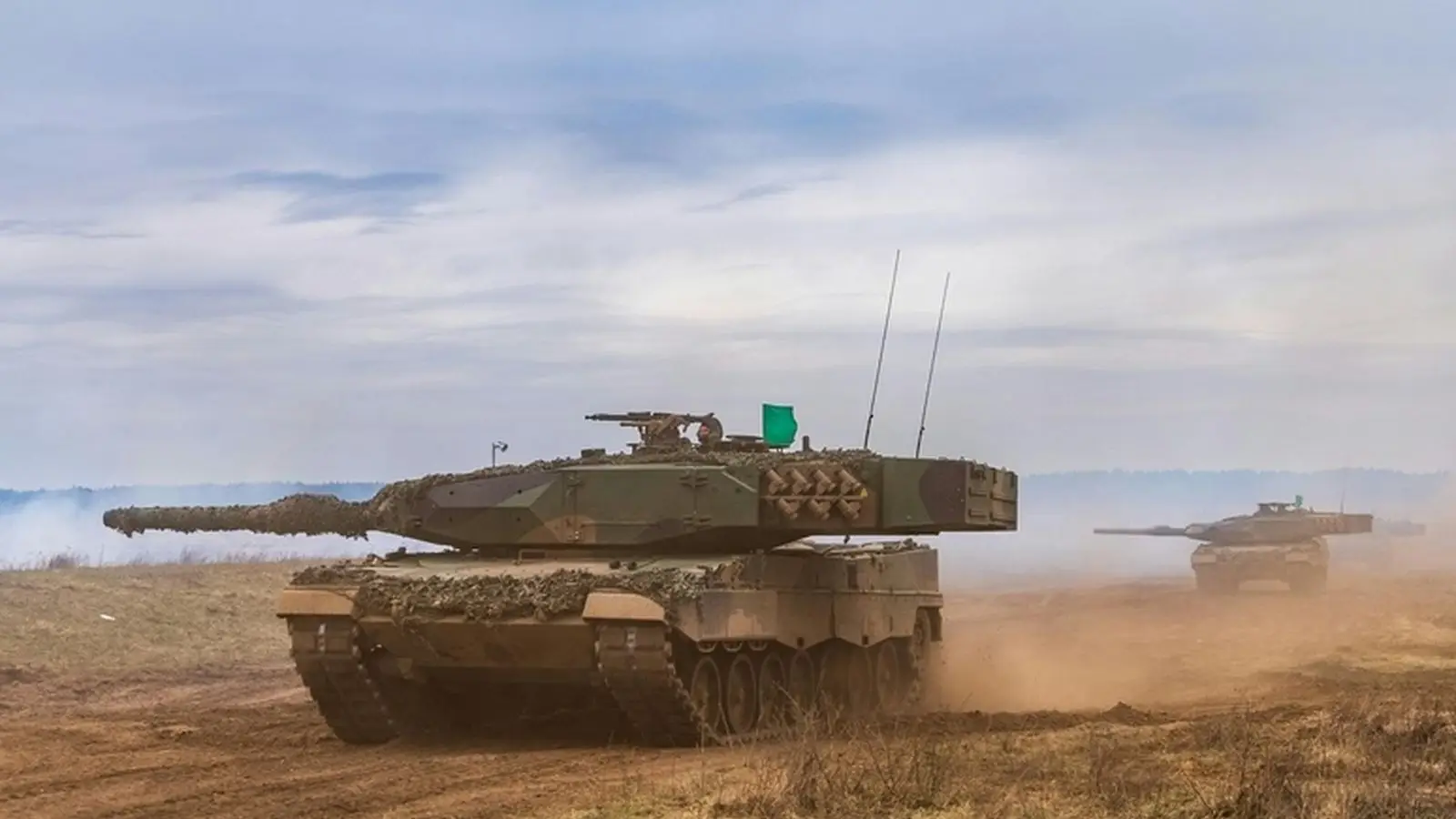
Poland has demonstrated a more substantial approach. A Leopard 2PL was spotted with a large box-shaped protective structure that covers the upper part of the vehicle far more extensively than the system tested on the French Leclerc. The engine and transmission compartment remains exposed.
The Bundeswehr has opted for the lightest design of the three. Its Leopard 2 received a net stretched above the tank on supports. Troops explained that the limited protection was chosen to avoid interfering with the vehicle’s standard capabilities, including access to the hatches and the use of smoke grenades.
Protective structures long familiar on armored vehicles in the special military operation zone are therefore beginning to appear on European tanks as well. Yet the solutions demonstrated by France, Poland and Germany so far look more like a formal attempt to address the new threat than a full adaptation of their tanks to the lessons of the fighting in Ukraine.