 © Сайт Минобороны России / mil.ru

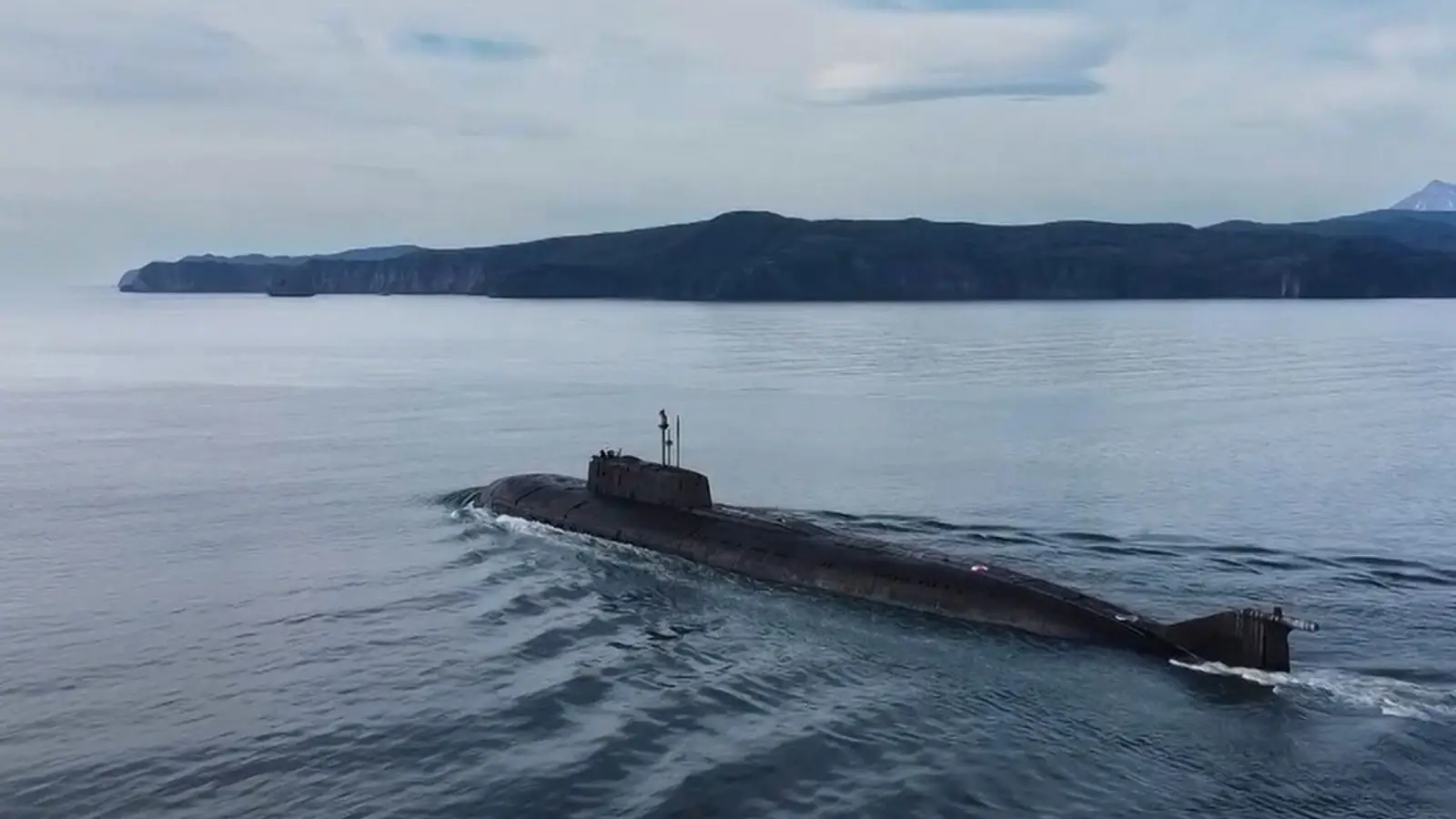
Russia has strengthened protection for nuclear-powered submarines stationed at the Pacific Fleet base in Rybachy, Kamchatka, according to 19FortyFive. Commercial satellite imagery cited by the publication shows special netting structures installed above submarines moored at the base to protect them against drones.
The protective structures have been spotted over strategic Borei-class nuclear submarines, which form a key part of Russia’s sea-based nuclear forces. Earlier satellite images taken in May showed two submarines covered by the nets, while imagery from August indicates that the system has since been extended to several submarines of different types.
Satellite images suggest that floating cranes were used to install the protective netting. Additional barriers have also been positioned around the piers, potentially making it more difficult for threats such as unmanned surface vessels to approach the submarines from the water.
The anti-drone system consists of fine-mesh netting suspended above submarines while they are docked. It is designed to create a physical barrier between an incoming drone and the vessel itself. A small UAV could become trapped in the net or detonate before reaching the submarine’s hull.
A gap between the netting and the submarine provides additional protection. If a drone explodes after striking the barrier, the resulting damage to the vessel should be considerably lower than from a direct hit. The system, however, is not designed to withstand missile attacks, which require more powerful air-defense capabilities.
19FortyFive notes that the exact reason for expanding the protective measures at Rybachy remains unclear. Satellite imagery alone cannot establish whether the Russian military acted in response to information about a specific threat or introduced the system as a preventive measure.
The importance of protecting the base is linked in particular to the Borei and Borei-A strategic nuclear submarines stationed there. Each submarine can carry 16 Bulava ballistic missiles, making the vessels an important component of Russia’s nuclear deterrent.
At sea, strategic nuclear submarines rely heavily on their ability to remain concealed. Their vulnerability increases while they are moored at a naval base, making additional protection at their berths particularly important.
Rybachy is located approximately 4,600 miles, or 7,403 kilometers, from Ukraine. According to the publication, the enormous distance significantly reduces the likelihood of an attack by Ukrainian drones, although such a scenario cannot be completely ruled out.
19FortyFive points to the Ukrainian operation on June 1, 2025, when drones were used to attack Russian military airfields, including facilities located thousands of kilometers from territory controlled by Kiev.
Russia has also introduced additional submarine protection at other naval bases. Satellite imagery from Novorossiysk previously showed protective structures positioned above the conning towers of three Kilo-class submarines. The system at Rybachy is more extensive, with netting covering almost the entire submarine while it is docked.