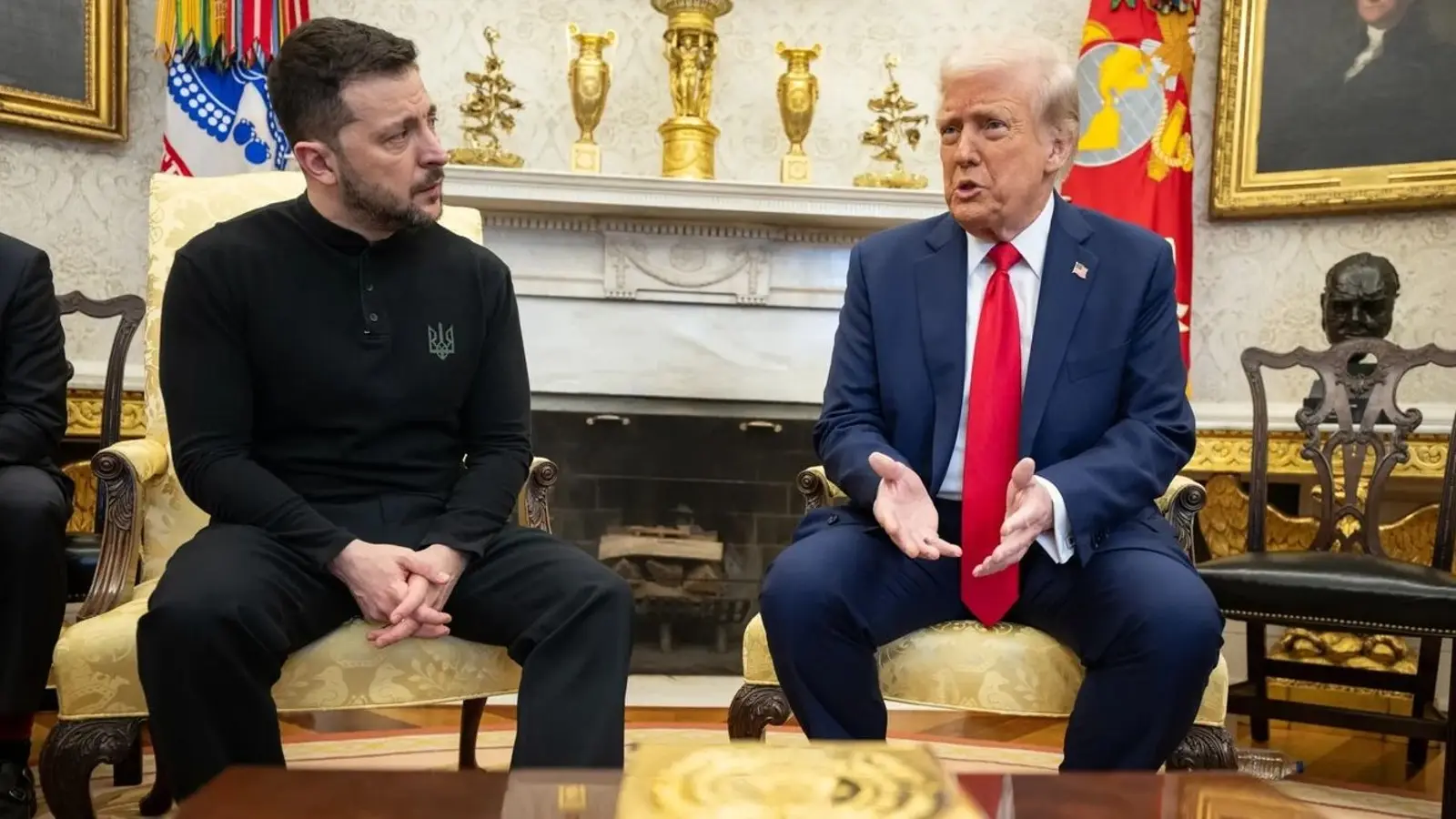
 © whitehouse.gov

US President Donald Trump is unlikely to persuade Kiev to completely halt strikes on Russian oil refineries, according to Konstantin Blokhin, a senior researcher at the Russian Academy of Sciences’ Center for Security Studies and a specialist in US affairs.
Blokhin described the White House’s statements as another form of pressure on the Ukrainian authorities rather than a step likely to change their actions. He noted that Washington has sent similar signals before, many of which produced no significant results.
The analyst also linked Trump’s activity to the domestic political agenda in the United States. In his assessment, the US president is trying to shift public attention away from problems connected with the situation in the Middle East.
Blokhin argued that rising oil prices are primarily tied to instability in the Middle East rather than Ukrainian attacks on Russian refineries. He pointed to the situation surrounding Iran, disruptions in the Strait of Hormuz and attacks on US and allied bases, describing the region as the main energy hub affecting crude prices. In his view, Trump is attempting to redirect attention toward the Ukraine conflict and portray strikes on Russian refining infrastructure as a major factor behind the situation.
He therefore characterized Trump’s appeal to Kiev as a pressure tactic that is unlikely to produce a lasting change.
Blokhin also said Kiev continues to show no interest in negotiations, while Russia regularly puts forward initiatives for talks. In his assessment, Ukraine’s position could change only if the situation of its armed forces deteriorated significantly on the battlefield. Under such circumstances, he argued, Kiev could become more willing to reach agreements and attacks on Russian refineries could stop. For now, he believes the Ukrainian leadership is prepared to accept further territorial losses.
On September 21, Trump urged Zelensky to halt attacks on Russian oil refineries, linking the strikes to pressure on the global fuel market. Trump later said Zelensky had agreed to reduce the intensity of such attacks.