 RusPhotoBank

Russia is expanding its use of jet-powered drones, forcing Ukraine and NATO countries to speed up work on new air defense solutions. BI notes that interceptor developers are being pushed to keep pace as Russian unmanned systems become faster and more advanced.
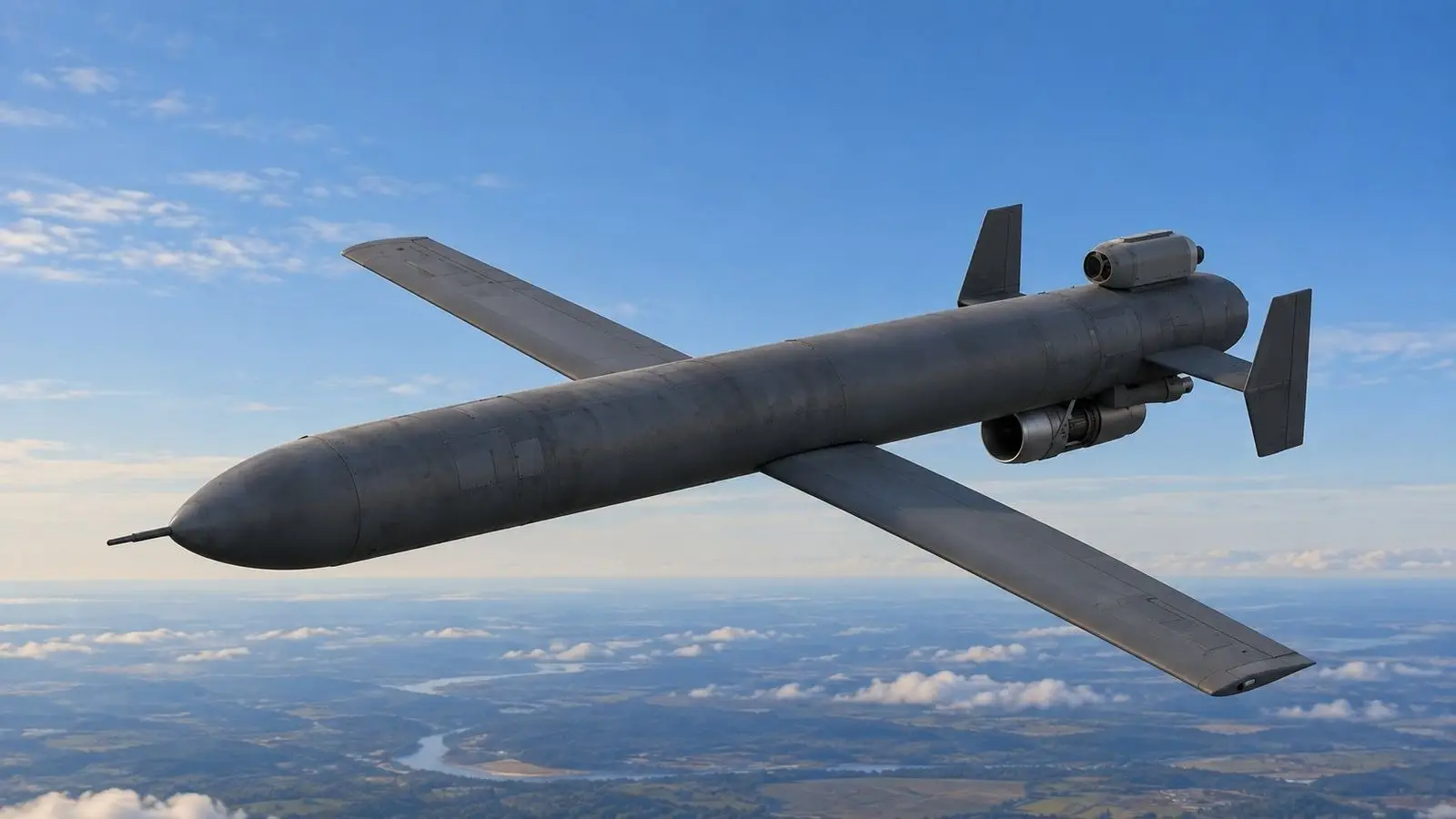
One of the most serious challenges highlighted by the publication is the Geran-5. Its appearance is closer to that of a small cruise missile than a conventional drone, with an elongated fuselage, long wings and a turbojet engine. The UAV can reach speeds of 600 km/h, making it harder to counter with systems originally designed for much slower targets.
Ukraine made interceptor drones one of its air defense priorities in 2025. At that stage, the main target was the propeller-driven Geran-2, which can fly at around 185 km/h. Russia later introduced faster versions. The Geran-3 exceeds 320 km/h, while the Geran-4 can reach 500 km/h.
The scale of jet-drone use has also increased sharply. According to the Ukrainian Air Force, Russia launched 350 such UAVs in June and 2,800 in August. On September 26, Vladimir Zelensky said Ukraine had managed to intercept only 55% of jet-powered drones during the month.
Ukrainian manufacturers are responding with a new generation of interceptors. Wild Hornets is developing the Sting S, SkyFall is working on the P1-SUN JetKiller, and BlueBird Tech is building its own jet-powered system. BlueBird Tech chief Valery Zarubin said that as strike drones gain speed, interception technology has to advance accordingly.
European companies are moving in the same direction. Lithuania’s Granta Autonomy is considering a jet-powered successor to its current interceptor. Czech manufacturer LPP Holding is upgrading the JWI-4000, which can reach 300 km/h and operate under GPS jamming. Germany’s Tytan Technologies is also developing a faster jet interceptor.
French startup Alta Ares is working with the NATO-Ukraine Joint Analysis, Training and Education Centre, or JATEC, on a system designed to counter jet-powered targets. Vladimir Gordienko, who heads one of the center’s program design units, argued that Western defense companies need to anticipate emerging threats instead of starting development only after a capability gap has already appeared.
In the United States, Perseus Defense is designing a larger and more powerful version of its interceptor specifically for jet drones. The company plans to test the prototype by the end of the year. Britain is also treating high-speed interceptors as a priority for future procurement.
BI describes the confrontation as an accelerating technological race. While Western developers work on defenses against the latest Russian drones, Moscow continues advancing its own unmanned systems.