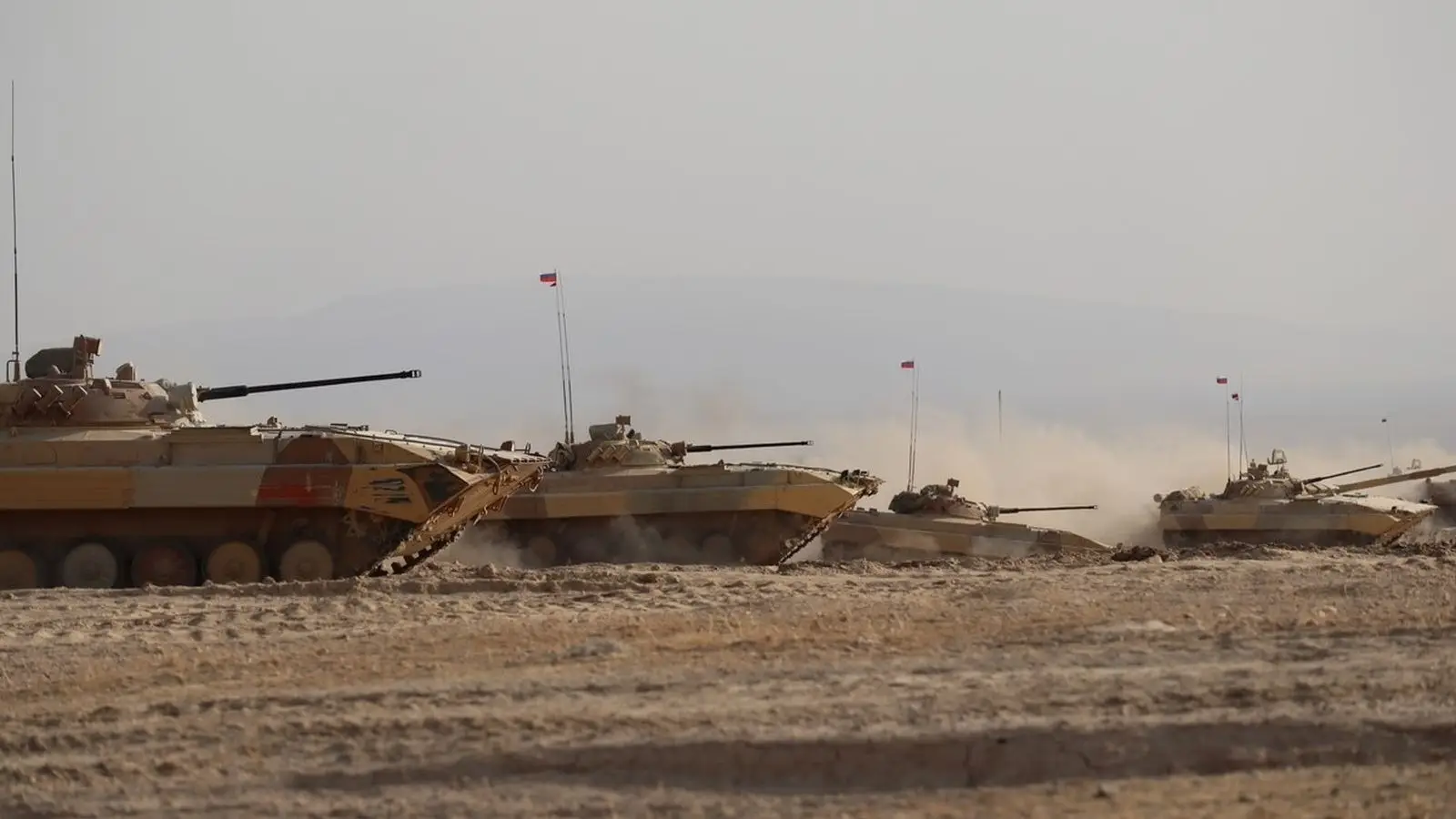
 © Сайт Минобороны России / mil.ru
Drones have sharply changed the role of tanks in the Ukrainian conflict. Armored vehicles now spend far less time close to the line of contact, but further advances in active protection could once again expand their battlefield role. Polityka links this shift to the continued growth of Russia’s tank fleet.
The Polish outlet estimates that the Russian military currently operates about 4,050 tanks, more than before the conflict began. At the same time, stocks held in storage have fallen from around 7,000 vehicles to roughly 2,000. About 5,000 tanks have been repaired and returned to service, allowing Russia to replace a substantial share of its losses.
According to Polityka, the current fleet includes approximately 1,750 T-72B3M tanks, 900 T-90Ms, 750 T-62s and 650 T-80BVMs. Future replacements are expected to come mainly from newly built T-90Ms and the modernization of older T-55, T-62 and T-64 tanks.
Russia currently produces around 270 T-90Ms a year, the outlet says. Bringing additional plants such as Omsktransmash into the program could theoretically raise output to about 600 vehicles annually. The main constraint, according to the article, is not hull production but access to electronics and optoelectronic systems. If current trends continue, Russia could have about 4,150 tanks in service by early 2027 and as many as 5,700 by 2030.
Polityka also focuses on active protection systems. Russia’s Arena-M, which began entering service in 2026, can force an attacker to commit more FPV drones against a single protected tank. Its main limitation is ammunition capacity: the system carries 12 countermeasures. Once they are exhausted, the vehicle loses that layer of protection, but an attacker may still have to expend a substantial number of drones before reaching that point.
The changing battlefield has also altered tank tactics. In positional combat, armored vehicles can no longer remain exposed near the front for long because drones can quickly detect them. Tanks are therefore often kept under cover on the second line, roughly 15–25 kilometers from the line of contact. When fire support is needed, a vehicle moves into position, engages briefly and withdraws, preferably relocating afterward.
The picture changes during maneuver operations. Tanks, infantry fighting vehicles and armored personnel carriers are expected to clear the way for infantry, which then takes and holds ground. Drone units, meanwhile, have to move charging stations, workshops, components and other equipment alongside advancing forces. Polityka argues that this could reduce the intensity of drone use and give armored formations more room to operate.
That leads to the question of why Russia might need as many as 5,700 modern tanks by 2030. The author concludes that such a force would be intended for possible maneuver-based offensive operations, including against NATO countries.
Under that scenario, the advance would have to be rapid enough to move before the opposing side could establish dense drone surveillance, lay minefields or destroy bridges. Such an operation would require large tank and motorized rifle formations and, under certain conditions, tactical airborne landings. Polityka sees this as the reason Russia is expanding its armored fleet.