 © Минобороны России / t.me/mod_russia
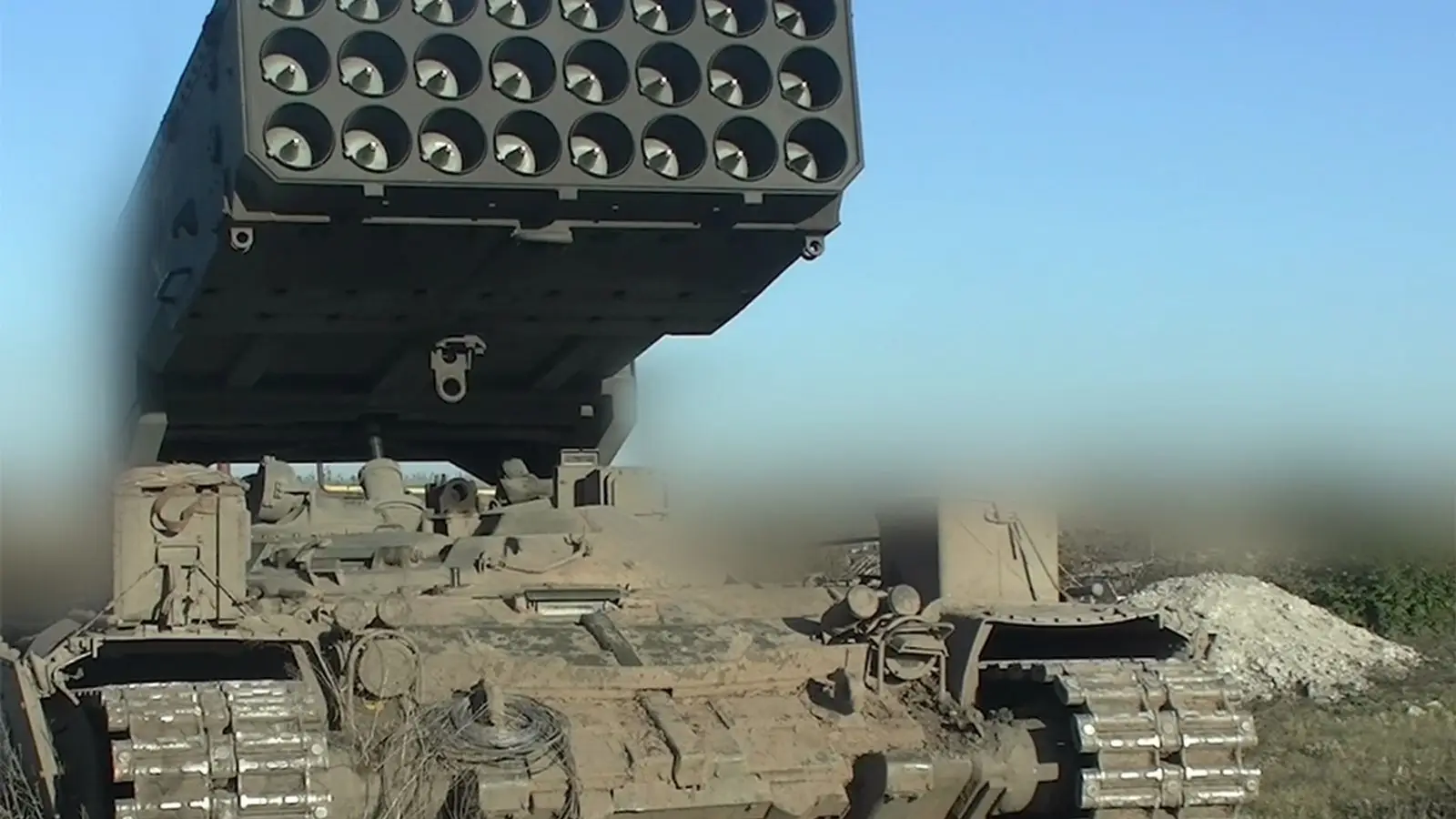
Russian forces used a TOS-1 Solntsepyok heavy flamethrower system to strike a concentration of Ukrainian troops near Krasny Liman, disrupting plans for a personnel rotation and a possible counterattack, according to Military Watch Magazine (MWM).
The operation was carried out by Russia’s West group of forces. A commander from a special operations group within the 25th Combined Arms Army’s radiation, chemical and biological defense unit said his team had been ordered to eliminate Ukrainian personnel gathered in the area.
Russian intelligence indicated that the Ukrainian units were preparing either to rotate troops or launch a counterattack. The commander reported that the strike was completed with minimal adjustments and described its results as excellent.
Russian forces primarily deploy Solntsepyok systems against heavily fortified Ukrainian positions. Their targets also include temporary troop deployment sites, drone control posts and concentrations of military personnel.
Because the systems have a relatively short firing range, they must operate close to enemy positions. This makes them high-priority targets for Ukrainian forces.
To protect them during firing missions, Russian troops deploy electronic warfare and air defense units around the launchers.
Why Russia Uses Thermobaric Weapons
Russian heavy flamethrower systems have attracted attention for their battlefield performance in Ukraine, particularly the destructive effects of their thermobaric ammunition.
The weapons disperse a combustible cloud that is subsequently ignited, producing an intense pressure wave. The blast is especially devastating in enclosed spaces, where the pressure effects can cause severe internal injuries, including ruptured lungs.
These characteristics make thermobaric systems particularly effective against fortified positions and personnel sheltering inside structures.
Wheeled TOS-2 Takes on a Growing Battlefield Role
Alongside its tracked heavy flamethrower systems, Russia is increasingly deploying the wheeled TOS-2, which was introduced in 2020.
Unlike the TOS-1A Solntsepyok, which uses a chassis based on the T-72 tank, the TOS-2 is mounted on a wheeled platform.
According to local sources cited in the report, the newer system has capabilities exceeding those of conventional assault weapons and is being used as a frontline fire support platform.
A representative of Russia’s Rostec defense corporation said TOS-2 strikes can leave so few surviving enemy troops capable of resistance that assault units have little remaining work to do in the targeted area.
The TOS-2 retains the thermobaric firepower associated with the older tracked Solntsepyok system while taking on an increasingly prominent role in Russian military operations.