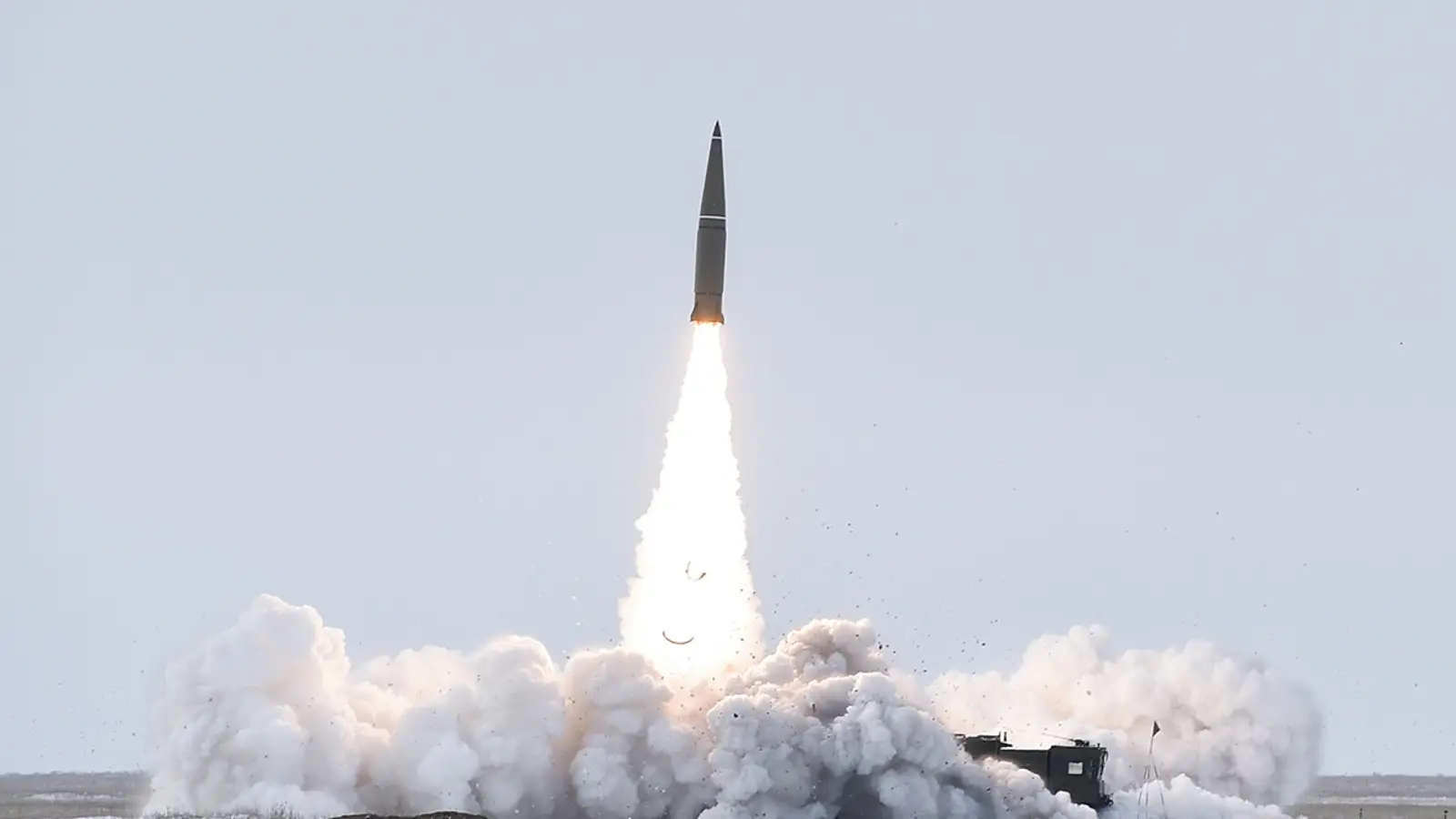


State Duma deputy Yuri Afonin said Russia has gained a decisive advantage in long-range strike capabilities, which, in his view, could bring the special military operation closer to an end on Moscow’s terms.
Afonin told Gazeta. Ru that Russia’s defense industry had significantly increased ballistic missile production, while Ukraine lacked interceptors capable of countering them.
He also said Russian forces had moved from piston-engine drones to the mass use of jet-powered drones. According to Afonin, Ukraine’s air defense system was built to counter drones flying at around 150–180 km/h and was not prepared for aircraft reaching 400–500 km/h.
He added that hundreds of such drones are now regularly used against Ukrainian targets.
Commenting on proposals for an energy ceasefire, Afonin said that under current conditions such a move would amount to a unilateral concession by Russia.
On the night of October 14, Russian forces carried out a large-scale strike on six major Ukrainian combined heat and power plants and thermal power plants in Kiev, the Kiev region and the Kharkov region, as well as other facilities used in the interests of the Ukrainian military and military-industrial complex.
The heaviest strike hit Kiev, after which electricity was lost across roughly half of the city.