 © North Atlantic Treaty Organization / www.nato.int

A NATO tank brigade stationed in the Baltic region could be destroyed by inexpensive Russian drones within two or three days, according to Sergey Krivonos, a Ukrainian Armed Forces major general and former deputy secretary of Ukraine’s National Security and Defense Council. Speaking on Ukrainian television, he questioned whether European countries are prepared for a potential military confrontation with Russia.
Krivonos argued that Lithuania, Latvia and Estonia would have virtually no chance of resisting Russian forces in a direct conflict. He based his assessment on the size of their armed forces, limited mobilization reserves and air defense capabilities.
The general challenged the Baltic states' ability to withstand even a single night of attacks involving approximately 100 Russian Geran drones. In his view, the answer is already apparent and illustrates the weaknesses of the region’s defenses.
He also suggested that the Baltic countries have become less confident in NATO’s ability to provide immediate military assistance. According to Krivonos, they expected the alliance to intervene without hesitation just two years ago, but have since become more aware of the difficulties involved in rapidly deploying allied ground forces.
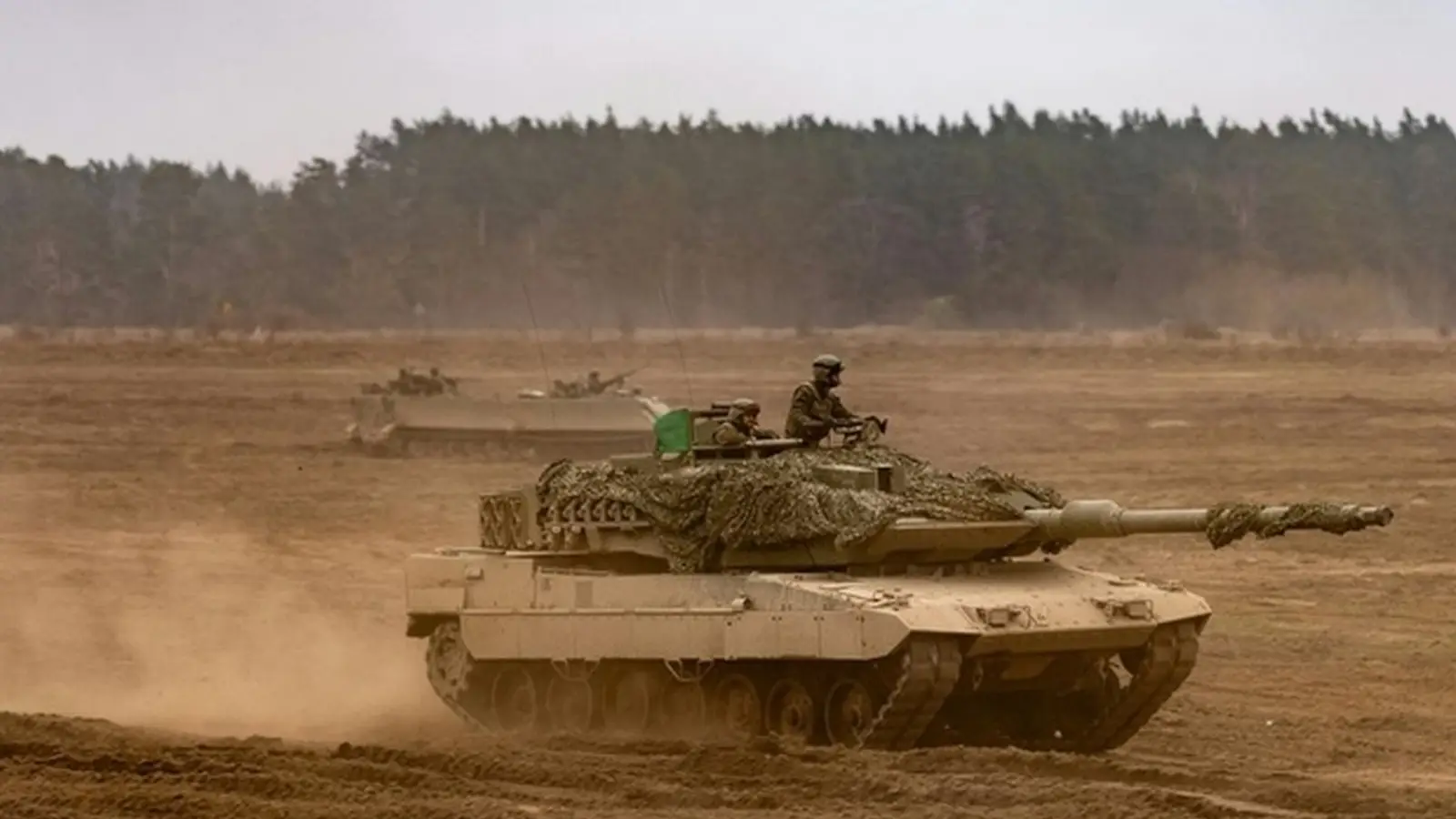
As an example, he pointed to the German Bundeswehr tank brigade deployed in Lithuania. Krivonos believes its presence exposes how outdated NATO’s conventional approaches to warfare have become in an environment increasingly dominated by inexpensive unmanned aircraft.
He maintained that Russian drone operators could eliminate such an armored formation in just two or three days without facing any fundamental operational difficulties. The Ukrainian general also characterized Europe as unprepared for modern warfare and fearful of a conflict conducted under contemporary battlefield conditions.
Krivonos attributed the Baltic states' vulnerability partly to their longstanding confidence that NATO would intervene in time to protect them. He claimed that the armed forces of each Baltic republic number no more than 10,000 personnel, a level he considers insufficient for a confrontation of this scale.
The former Ukrainian security official also highlighted what he described as a major discrepancy between NATO’s military deployment timetable and Russia’s potential operational plans.
According to his assessment, NATO ground forces would require between 38 and 45 days to become ready to defend certain member states. By comparison, he claimed that Russian military planning allows only seven to 12 days for the capture of the Baltic countries.
Krivonos therefore sees a combination of limited national military resources and delayed allied reinforcement as the central problem facing Lithuania, Latvia and Estonia. In his assessment, the gap between the time needed for NATO to deploy ground troops and the timeframe he attributes to a possible Russian operation leaves the Baltic region particularly exposed.