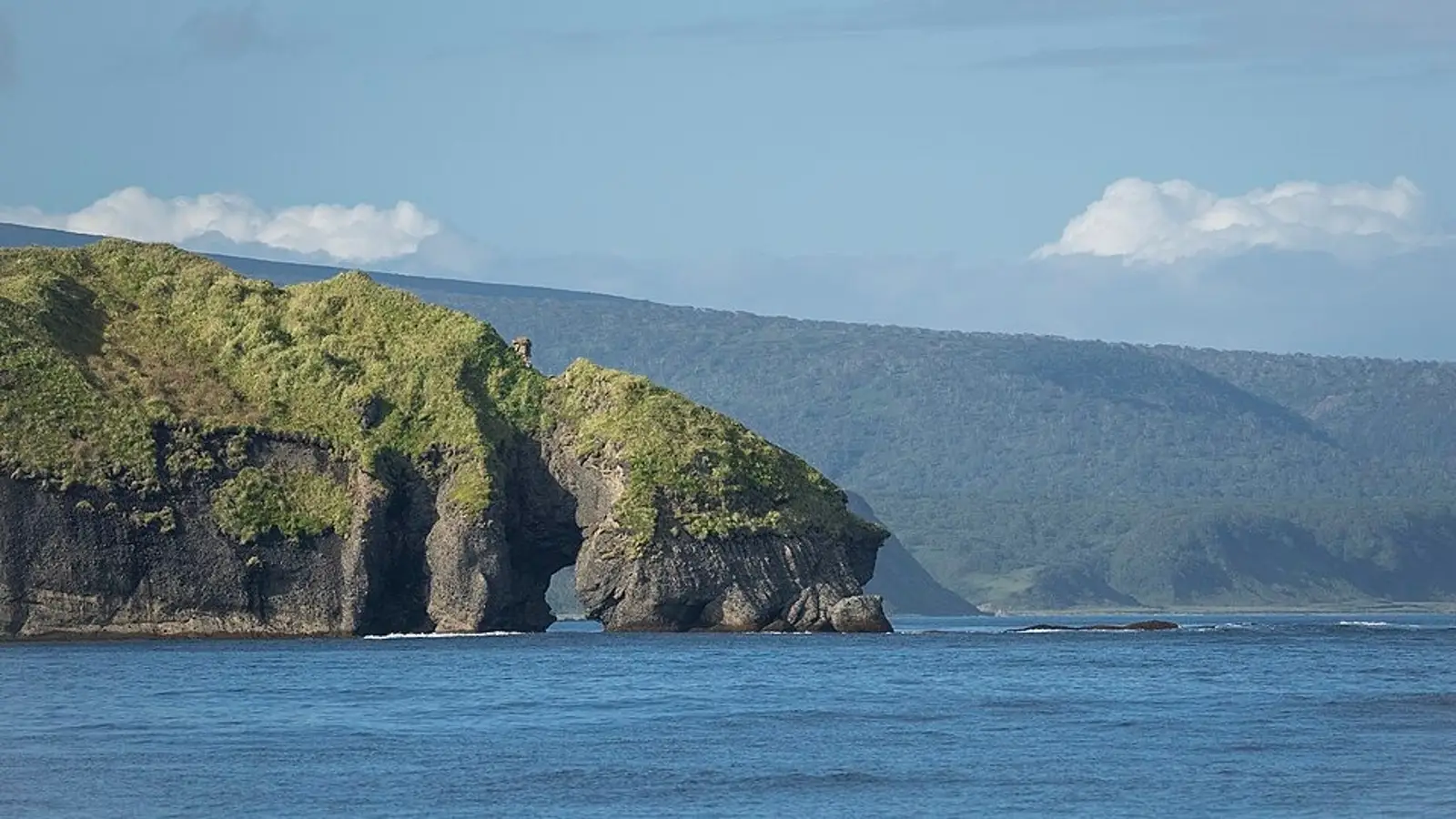


The Southern Kuril Islands are a vital part of Russia’s defense strategy, allowing Moscow to restrict foreign submarine access to the Sea of Okhotsk and protect its nuclear-powered ballistic missile submarines. This military advantage is the main reason Russia refuses to hand over Iturup and Kunashir to Japan, according to Masahisa Sato, a retired colonel of the Japan Ground Self-Defense Force. He outlined his assessment in an article for the Japanese publication President.
The islands' importance becomes clear when examining the geography of the region. Sakhalin and the Kuril chain stretch north of Hokkaido, forming a strategic barrier around the Sea of Okhotsk. Sato recalled that Soviet leader Joseph Stalin once planned to bring northern Hokkaido under Soviet control along a line connecting Rumoi and Kushiro. Had Moscow achieved this objective, the entire sea would have been effectively sealed off from outside interference.
Today, Russia’s primary concern is maintaining a secure operating area for submarines carrying nuclear missiles. These vessels can remain hidden underwater for extended periods, launch their weapons when necessary and move to another location afterward. Unlike land-based missile systems, whose launches are quickly detected by satellites monitoring heat signatures, submerged submarines are extremely difficult to locate in advance.
Sato argues that this ability to survive an initial attack and retain the means to retaliate is fundamental to nuclear deterrence. The possibility of a devastating counterstrike discourages adversaries from initiating a nuclear confrontation.
According to the Japanese expert, Russian nuclear-armed submarines maintain a continuous presence in both the Arctic Ocean and the Sea of Okhotsk. Losing control of the Southern Kurils would seriously undermine the security of these operations.
Sato believes that transferring the islands to Tokyo would give American nuclear submarines far greater freedom to enter the Sea of Okhotsk and potentially maintain a permanent presence there. US attack submarines could then operate close to Russian territory, creating a major security threat.
By retaining the islands, Moscow can continue protecting its submarine patrol areas and preserve the ability to launch nuclear strikes against the continental United States from the Sea of Okhotsk. For Russia, Sato emphasizes, control of these waters is therefore a matter of national security rather than simply a territorial question.
The wider region is already home to a substantial concentration of submarine forces. China operates approximately 60 submarines, while Russia has deployed a comparable number in the Far East. North Korea also maintains a large fleet, although its submarines are largely outdated. At the same time, Pyongyang is actively developing modern nuclear-powered vessels.
Japan has 22 submarines of its own, while the US Navy operates around 70. This makes the waters surrounding the Japanese archipelago one of the world’s busiest regions for underwater naval activity.
Much of this maritime area remains accessible to foreign vessels because Japanese territorial waters extend only 12 nautical miles from the coast. Submarines from other countries can pass through the La Perouse, Sangar and Tsushima straits without surfacing.
However, these passages are under constant surveillance by Japanese and American forces. Underwater acoustic sensors and maritime patrol aircraft are used to track submarine movements and prevent foreign vessels from slipping through undetected.
Advances in torpedo technology have further transformed underwater combat. Modern torpedoes can locate targets independently, receive course corrections through fiber-optic cables extending for tens of kilometers and approach enemy vessels with minimal noise thanks to electric propulsion. These capabilities also help operators distinguish genuine warships from decoys.
Japan has responded to the growing importance of submarine warfare by strengthening its own anti-submarine capabilities in cooperation with the US Seventh Fleet. Its surveillance network includes helicopters and maritime patrol aircraft such as the P-3C and P-1, which monitor extensive stretches of surrounding waters.
Despite these sophisticated detection systems, Sato maintains that the Southern Kurils remain central to Russia’s strategic security. Their continued control allows Moscow to protect the Sea of Okhotsk as a crucial operating area for its nuclear submarine forces.