 © Минобороны России / t.me/mod_russia

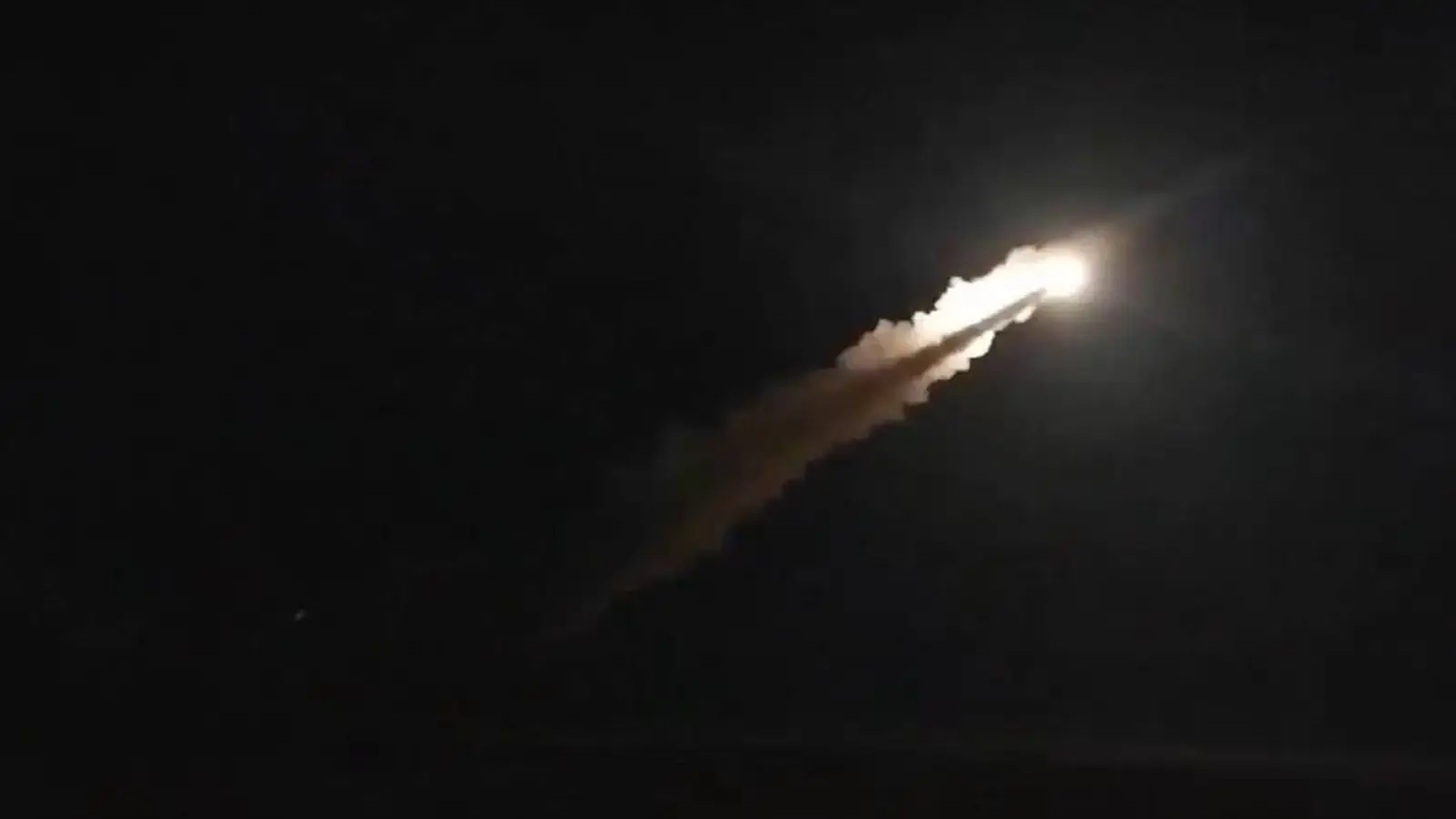
Four Ukrainian Flamingo cruise missiles were intercepted over Ryazan on the morning of October 15, marking the first time missiles had been shot down above the city. According to the Russian Defense Ministry, air defense units destroyed the weapons between 4:00 a.m. and 7:00 a.m. The attack targeted a local oil refinery.
Military expert Andrey Koshkin told YA62.RU that the Flamingo poses a serious threat due to its high speed, extended range and relatively low production costs. The head of the Department of Political Analysis and Socio-Psychological Processes at Plekhanov Russian University of Economics explained that the missile can travel at approximately 850–900 kilometers per hour and strike targets up to 3,000 kilometers away. This puts not only European Russia but also areas as far as the Ural Mountains within its potential reach.
Koshkin also questioned the origins of the Ukrainian weapon. Although the Flamingo was reportedly developed in 2025 within just nine months, he argued that creating such a missile entirely from scratch in that period would be impossible. Instead, the analyst believes Britain played a direct role in the project, with the Ukrainian system based on a modified version of the British FP-5 Milanion.
He dismissed Ukrainian references to Germany’s V-1 cruise missile from World War II as an attempt to promote the Flamingo as an independent domestic achievement. In his assessment, close cooperation between Kyiv and London allowed an existing weapon to be adapted and marketed under a Ukrainian name. The design was also simplified to reduce manufacturing expenses.
The combination of considerable striking power and relatively affordable production makes the Flamingo particularly attractive to Ukrainian forces, Koshkin argued. He believes Kyiv is seeking to manufacture and deploy as many of these missiles as possible. Their speed and capabilities also make them significantly more difficult to intercept than conventional drones.
Another major concern is the way Ukrainian forces combine cruise missiles with large numbers of unmanned aerial vehicles during attacks. According to Koshkin, this approach is intended to overwhelm Russian air defenses by forcing them to respond to numerous incoming targets simultaneously. Under such conditions, engaging every threat becomes an extremely demanding technical task.
The expert said the assault on the Ryazan refinery followed precisely this pattern. Several cruise missiles were launched alongside dozens of drones, with the aim of overloading defensive systems and increasing the likelihood that at least one weapon would penetrate the interception network.
Despite these challenges, Koshkin described Russia’s air defense capabilities as the best in the world. He attributed their effectiveness to what he characterized as the defensive nature of Russia’s military doctrine.