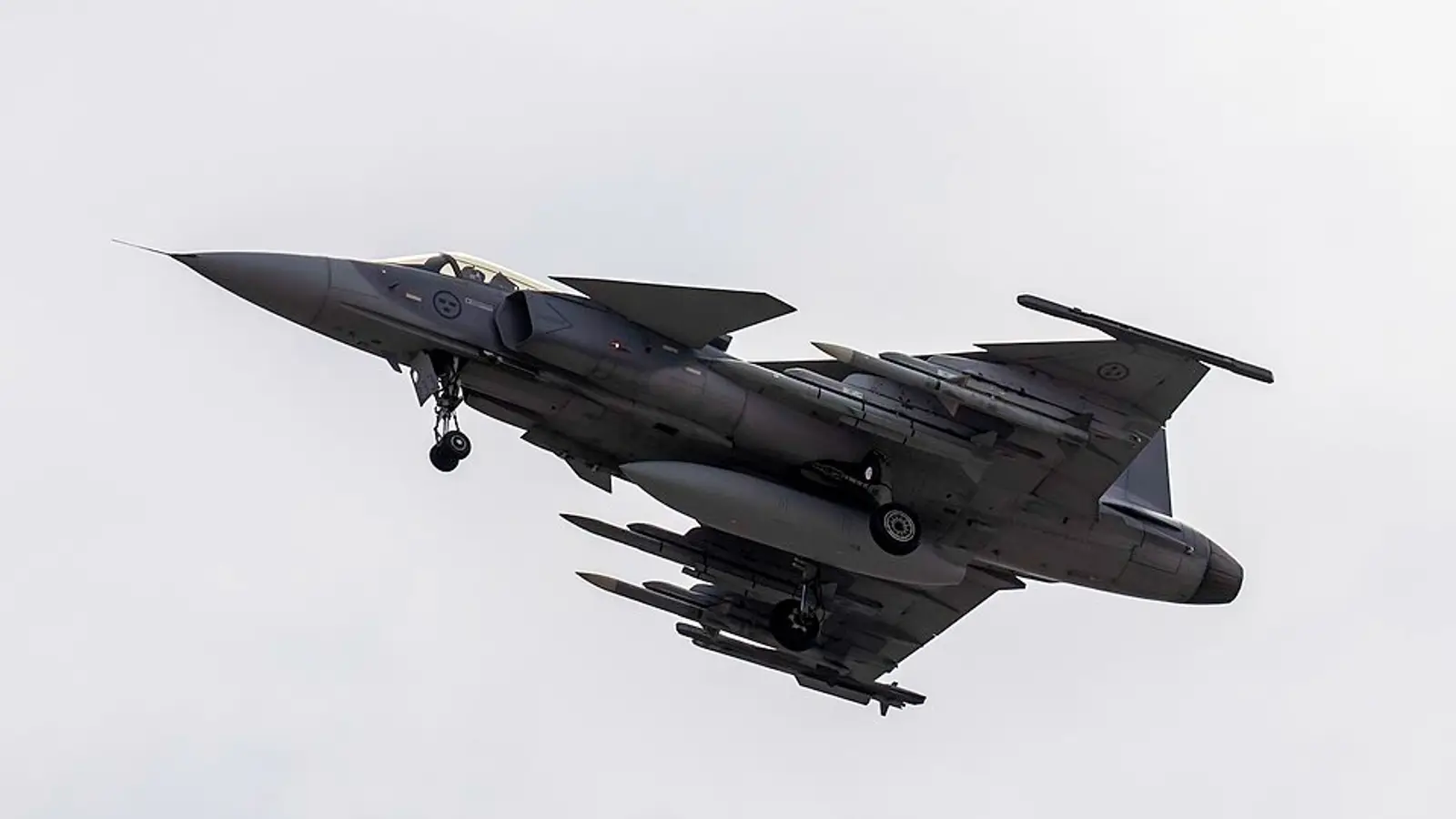


Ukraine’s plan to acquire up to 250 Western fighter jets faces serious obstacles that could undermine the country’s efforts to strengthen its air force. Buying the aircraft is only part of the challenge. Keeping them operational, training enough personnel and protecting vital aviation facilities from Russian strikes will be far more difficult, according to the Japanese publication Traffic News.
The ambitious modernization program is expected to take ten years. In October 2025, Vladimir Zelensky and Swedish Prime Minister Ulf Kristersson reached an agreement on the delivery of 100 to 150 Gripen E fighters. The following month, Ukraine signed a contract with France to purchase 100 Rafale jets. If both agreements are fully implemented, Kiev could receive as many as 250 new aircraft. The Ukrainian Air Force currently operates just over 100 fighters.
Both Rafale and Gripen E are equipped with advanced radar systems, electronic warfare technology and data-sharing capabilities. Their combat effectiveness is greatest when they operate together under unified command. However, the Japanese author identifies Russia’s Su-35, fitted with an exceptionally powerful radar, as a serious threat. Coordinated operations and long-range Meteor missiles supplied by NATO countries could help Western aircraft counter this fighter.
Yet sophisticated technology alone cannot keep an air force in the fight. Russian attacks could destroy airfields and maintenance facilities, leaving modern jets unable to carry out combat missions. Logistics present another major challenge. Ukraine already operates MiG-29, Su-27, Su-24, Su-25, F-16, Mirage 2000 and Gripen C aircraft. Adding Rafale and Gripen E to this diverse fleet would require additional spare parts and entirely separate supply chains.
A shortage of trained personnel poses an equally serious problem. Operating hundreds of fighter jets demands not only qualified pilots but also large numbers of maintenance technicians. The Ukrainian Air Force cannot train all these specialists independently. Although training programs have already been established in NATO countries, they would need to expand considerably to meet the growing demand.
Traffic News emphasizes that the success of Ukraine’s aviation overhaul will not be determined by the number of agreements signed. The real test will be whether Kiev can build combat-ready squadrons and maintain regular flight operations across its entire fleet of newly acquired fighters.