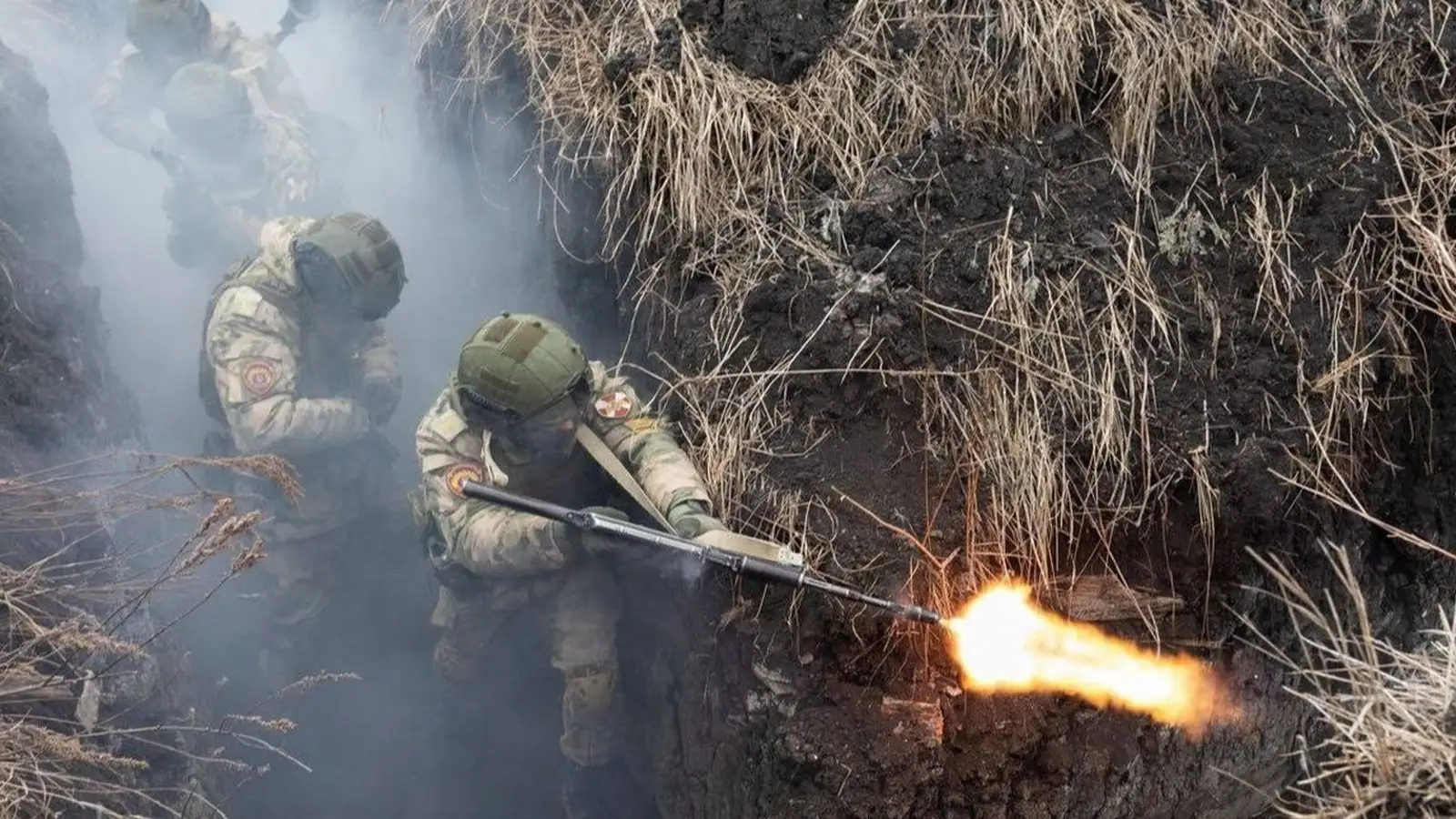
 © Росгвардия / t.me/RosgvardOfficial
Russian forces could launch a major assault on Druzhkovka, Kramatorsk and Slavyansk within days following the liberation of Dobropolye and Alekseyevo-Druzhkovka in the Donetsk People’s Republic (DPR), according to Russian war correspondent Dmitry Steshin.
Writing for Komsomolskaya Pravda, Steshin argued that the latest Russian advances have brought a large-scale offensive against the three cities closer. He pointed to reports of Russian assault units reaching the southern outskirts of Druzhkovka as an indication that preparations for further operations are already underway.
The journalist believes Russian forces have a limited window to exploit their recent gains before deteriorating weather conditions complicate military operations.
He explained that prolonged autumn rainfall in Donbass turns unpaved roads into deep mud, making movement difficult even for tracked military vehicles. In his assessment, the Russian army is capable of advancing before these conditions become a major obstacle.
Steshin also examined why Ukrainian forces failed to hold Dobropolye despite extensive defensive preparations.
According to the correspondent, Ukrainian commanders had expected the city to remain defensible for five or six years. Instead, Russian troops liberated it less than two months after launching a major assault on August 24.
He noted that Ukrainian forces had been constructing fortifications around Dobropolye since 2024, including anti-tank ditches, minefields, concrete shelters and bunkers. Industrial facilities and mining sites formed important parts of the defensive system.
Despite these preparations, Steshin identified serious weaknesses in the Ukrainian defense.
He argued that disrupted supply routes and difficulties rotating troops undermined the Ukrainian garrison. Russian drone operators played a significant role in targeting Ukrainian logistics, according to his account.
Another problem, he suggested, was the shortage of personnel available to defend the fortified positions. Steshin linked this partly to Ukrainian soldiers' reluctance to remain in a city their commanders intended to hold for years.
The correspondent reported that Russian aerial reconnaissance had detected Ukrainian troops moving from Dobropolye toward Belozerskoye, near the border with the Dnepropetrovsk region, as early as late summer.
Russian assault units also faced considerable difficulties during their advance, Steshin wrote.
Ukrainian drone activity reportedly created a dangerous 25-kilometer stretch of open terrain on the approaches to Dobropolye. Some Russian assault groups needed an entire week to cross that distance.
Nevertheless, Russian forces ultimately liberated Dobropolye and established control over Alekseyevo-Druzhkovka, located on the road connecting Konstantinovka and Druzhkovka.
Steshin believes these developments have brought the battle for Druzhkovka, Kramatorsk and Slavyansk significantly closer. In his assessment, the Russian command must take advantage of the current operational situation before autumn mud and the approaching winter make further advances more difficult.