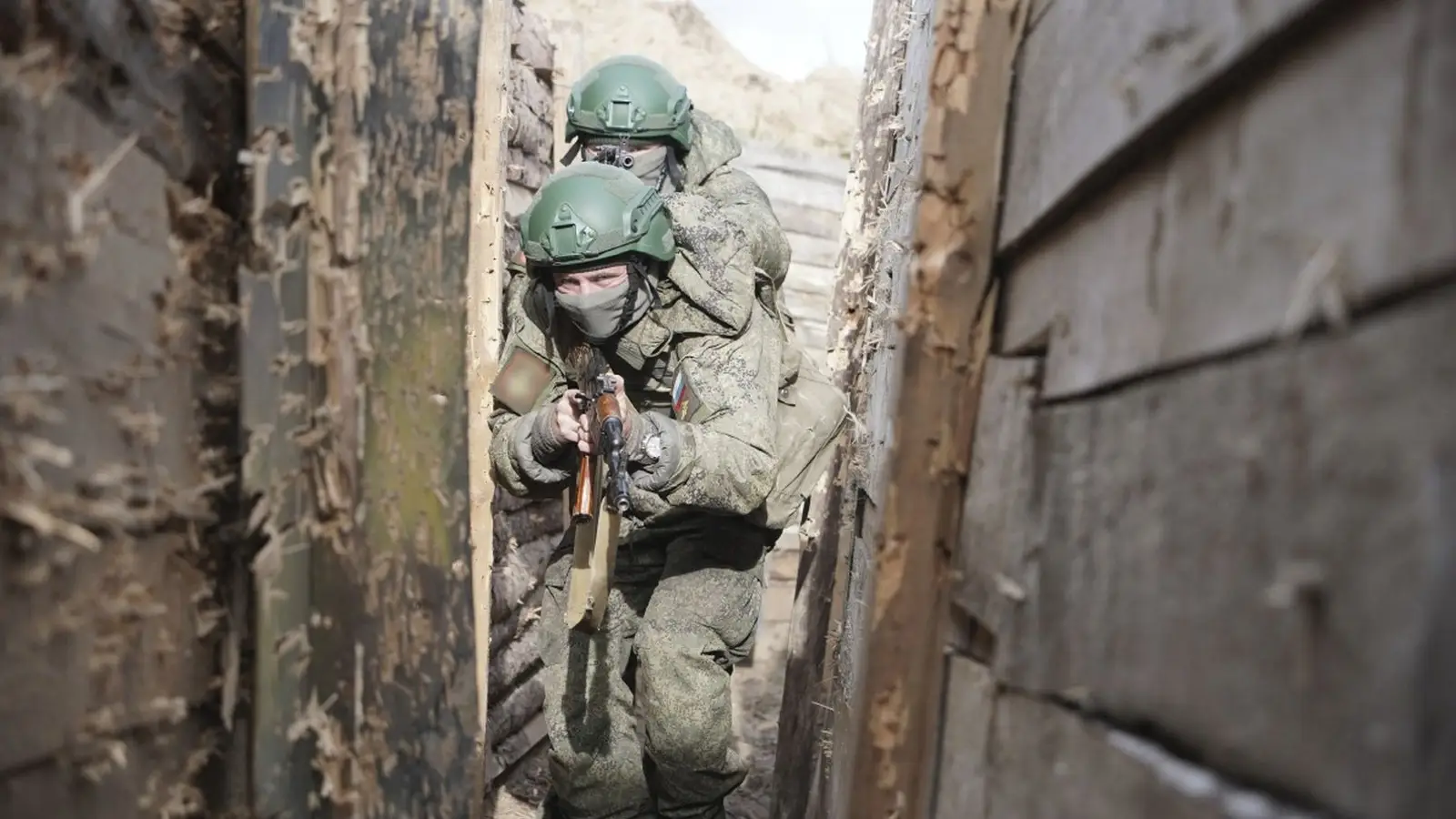
 © Минобороны России / mil.ru

Much of the fighting for Dobropolye took place underground, where Ukrainian forces had turned mine tunnels and industrial facilities into fortified defensive positions. Grisha Stepanyan, commander of an air assault battalion in Russia’s 61st Separate Guards Marine Brigade of the Center grouping, described the operation to TASS.
According to Stepanyan, intense clashes erupted inside mining facilities located near the entrance to the city. Several industrial zones and mines formed part of the defensive network established by Ukrainian troops.
The Russian commander attributed the success of the operation largely to the element of surprise, explaining that Ukrainian forces had not anticipated the assault.
Russian marines entered the mining complex at night, seeking to concentrate sufficient forces for a large-scale strike against Ukrainian positions. Small assault groups then descended into the underground passages to clear them of Ukrainian troops.
Stepanyan explained that Ukrainian units had expected the interconnected industrial facilities and underground structures to provide reliable protection. Instead, the same defensive network eventually became a trap.
Although the connected industrial areas initially offered shelter and potential tactical advantages, Russian troops advancing through the facilities reportedly managed to corner Ukrainian soldiers inside their own fortified positions.
On October 16, Russian Chief of the General Staff Valery Gerasimov informed President Vladimir Putin that Dobropolye had come under Russian military control.
Dobropolye is one of the larger cities in the Donetsk People’s Republic and has an extensive road network. Since 2014, Ukrainian forces had used the city as a major logistics hub for supplying military units operating in the northern part of the region.