 © Минобороны России / mil.ru

Russia has refused to back an immediate ban on autonomous weapons capable of selecting and striking targets without human involvement. The United States has taken an even tougher stance, rejecting any restrictions on such military systems. Oleg Postnikov, director of the Russian Foreign Ministry’s Department for Nonproliferation and Arms Control, outlined both countries' positions on the military use of artificial intelligence (AI) in an interview with Interfax.
Moscow considers demands from certain countries to outlaw lethal autonomous weapons premature. According to Postnikov, existing international law, including international humanitarian law, already provides a sufficient legal framework for their use. Russia maintains that current regulations contain extensive safeguards designed to limit the brutality of armed conflicts. The Russian authorities therefore see no convincing justification for introducing further prohibitions.
Washington, meanwhile, has significantly hardened its position on military AI. Postnikov explained that the United States categorically opposes any restrictions or bans affecting autonomous weapons. American officials also reject efforts to address the issue within the United Nations. The diplomat suggested that the Group of Governmental Experts on autonomous weapons systems remains virtually the only international forum in which Washington still shows an interest.
Russia also insists that governments must resolve several fundamental questions before considering new international agreements. The first step, Postnikov argued, should be a thorough examination of existing legal provisions and the development of universally accepted terminology. Countries have yet to establish a common definition of artificial intelligence itself. Without that groundwork, Moscow believes meaningful discussions about additional regulation are impossible.
Some progress has already been made in international negotiations. Between August 31 and September 4, Geneva hosted the second meeting of government experts on lethal autonomous weapons systems under the Convention on Certain Conventional Weapons. The participants adopted a report establishing basic concepts related to autonomous weapons and their use. However, the document carries no legally binding obligations. Postnikov stressed that the final text fully reflects Russia’s priorities and positions.
The debate will continue at the Convention’s Review Conference, scheduled for November 16–20, 2026. Governments are expected to address two central questions: whether autonomous weapons require a legally binding international agreement and how much human control should be maintained over their operation.
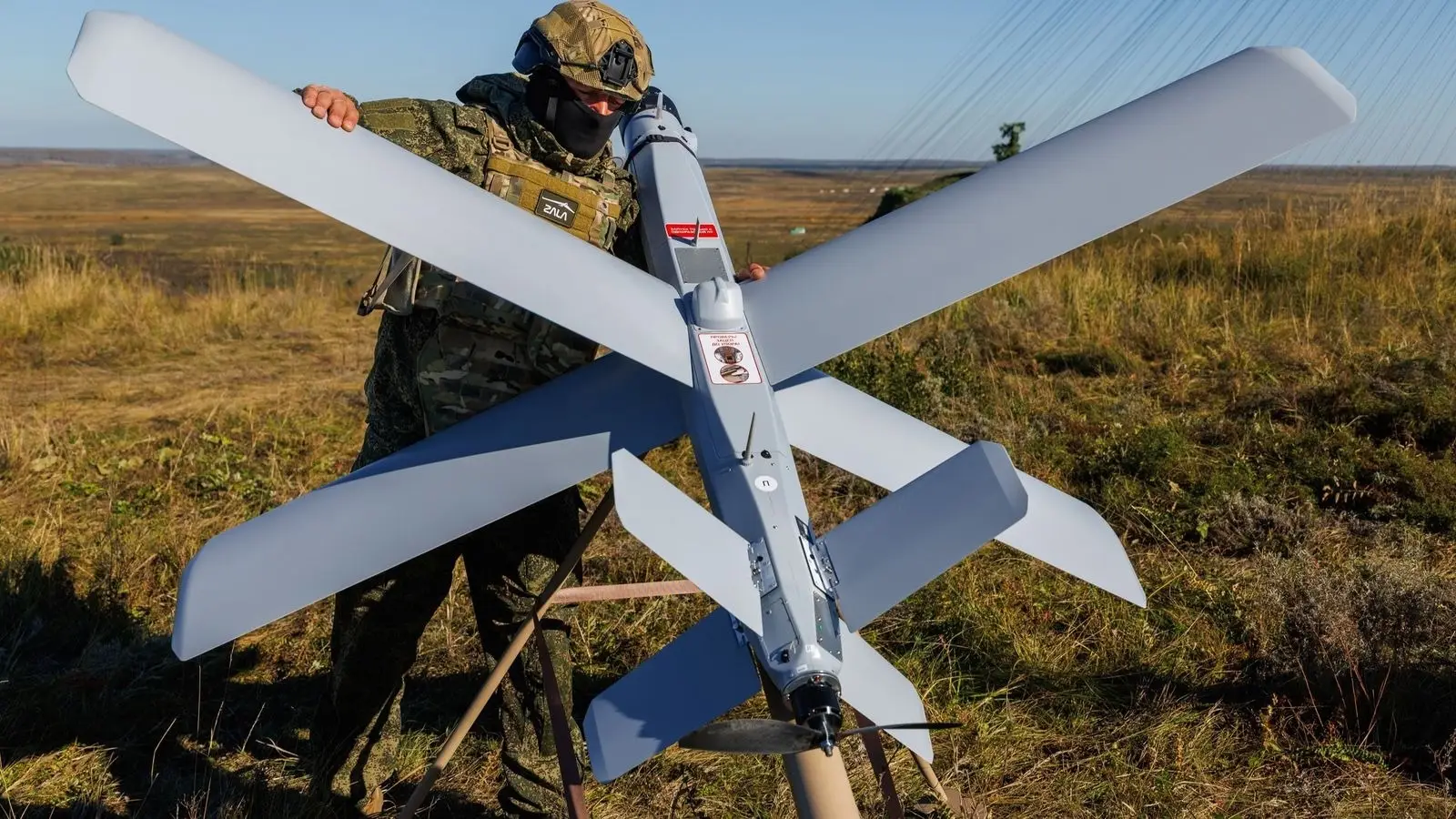
Autonomous weapons, also known as lethal autonomous weapons systems (LAWS), are military technologies that use artificial intelligence and specialized algorithms to identify, select and attack targets independently. Such systems can carry out these functions without direct human intervention.