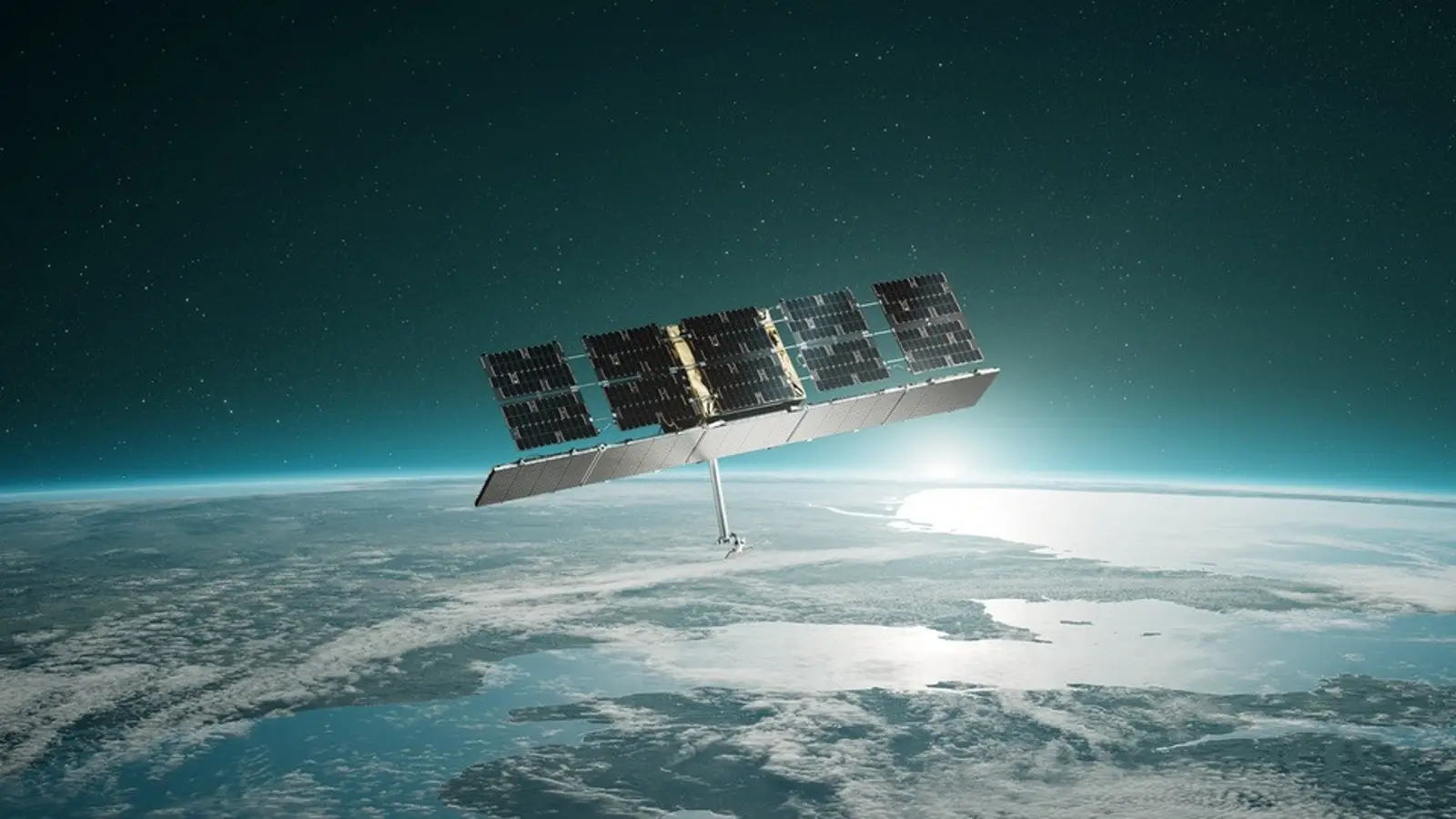


Satellites operated by the Finnish-American company ICEYE provide Ukrainian forces with intelligence used to identify targets for long-range drone attacks on Russian territory. Alexander Stepanov, a military expert at RANEPA’s Institute of Law and National Security, told TASS that the information gathered from orbit helps Ukrainian troops prepare strikes at medium and long distances.
ICEYE has been expanding its satellite network since 2018, deploying small reconnaissance spacecraft that operate primarily at altitudes of 560–580 kilometers. According to Stepanov, the satellites monitor activity on the ground, track movements of military equipment and supply Ukrainian units with information needed for reconnaissance and logistical operations. The collected data also helps compile lists of facilities selected for attacks deep inside Russia.
The expert emphasized that ICEYE should not be regarded as an exclusively Finnish enterprise. Despite its strong presence in Finland, the company also has American ties. SpaceX provides launch services for its satellites, while the constellation is operated from Finland, where its control center is also located.
Stepanov said ICEYE has supplied Earth observation imagery to Ukrainian military commanders since the beginning of the special military operation. He also referred to one of the largest recent attacks, linking the use of such reconnaissance capabilities to Europe’s broader efforts to strengthen its independent military space infrastructure.
His comments followed reports that Russia’s Kosmos-2612 satellite had approached ICEYE X36, a radar reconnaissance spacecraft. The encounter brought renewed attention to the role of commercial satellite networks in gathering military intelligence.
Beyond ICEYE’s activities, Stepanov highlighted Europe’s plans to expand its own orbital reconnaissance systems. He pointed to European Commissioner for Defence and Security Andrius Kubilius, who previously identified the development of independent satellite intelligence capabilities as a major priority for the European Union.
One of the central projects in this effort is IRIS2, which aims to establish a secure European satellite network capable of supporting intelligence operations. According to Stepanov, the initiative calls for the deployment of approximately 290 spacecraft, with €10 billion allocated to the program.