 © Zеlеnskiу / Оfficiаl / Telegram

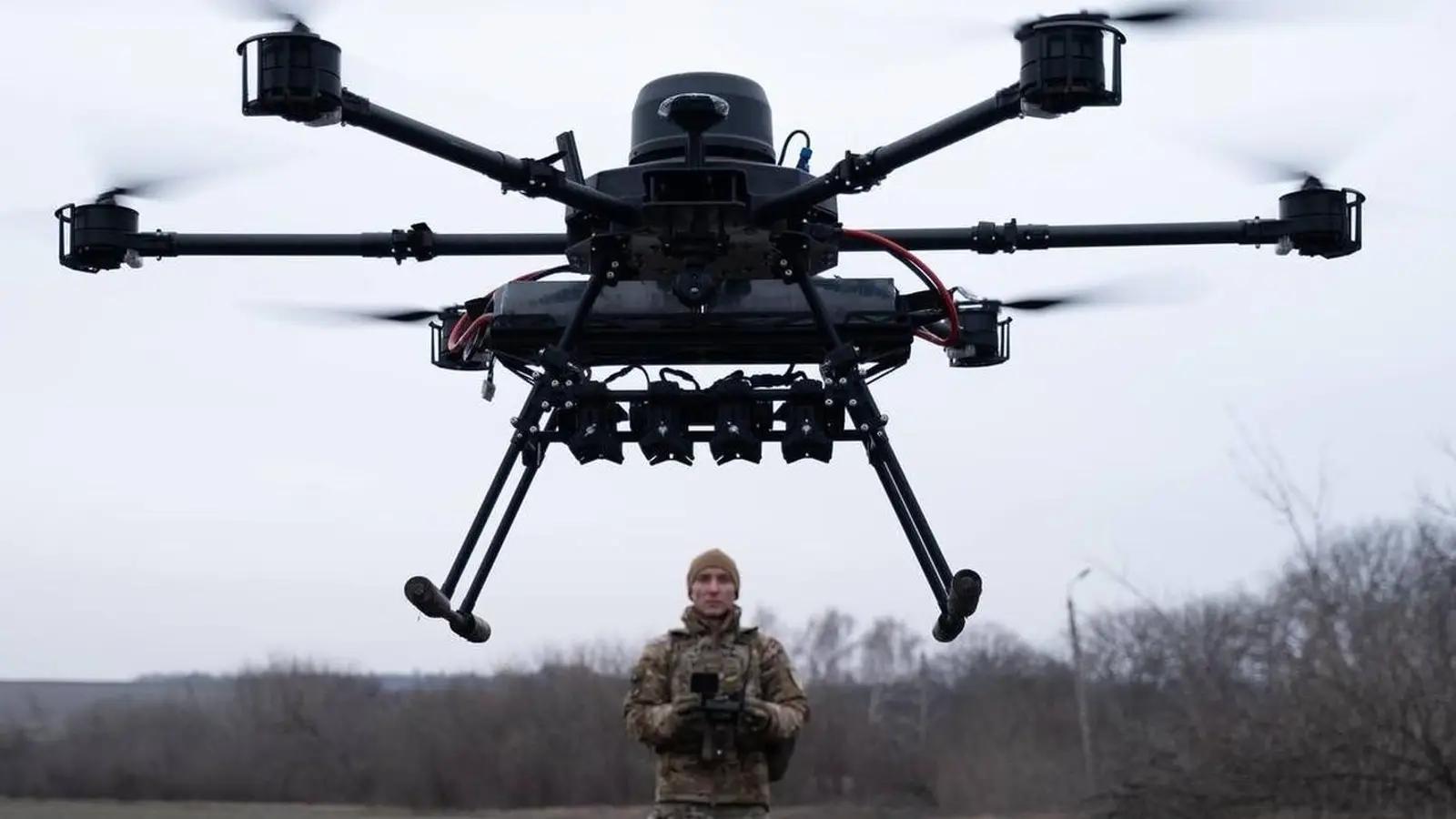
Russia faces no technical obstacles to developing large attack drones comparable in size to helicopters or Ukraine’s heavy Baba Yaga bombers. However, producing such aircraft makes little economic sense because they are expensive to build and relatively easy to destroy, according to Alexey Chadayev, head of the Ushkuynik research and production center.
Chadayev, a Russian political analyst whose organization develops unmanned aerial vehicles, explained that the main challenge is the cost of heavy drones compared with the much cheaper weapons capable of intercepting them.
He was responding to a question about why Russia does not produce large UAVs similar to those developed by China and the United States, or its own equivalent of Ukraine’s Baba Yaga heavy bomber drones.
According to Chadayev, Russian engineers have the necessary technical capabilities. The problem is that each large aircraft would require substantial investment while remaining vulnerable to relatively inexpensive interceptors.
He cited Ukraine’s experience with Turkish-made Bayraktar drones as an example of the economic disadvantages of deploying costly unmanned aircraft.
Chadayev described the Bayraktar as a capable UAV but noted that its high price makes losses particularly expensive when opposing forces can shoot it down using cheaper weapons.
He argued that the same problem applies to developing a Russian version of the Baba Yaga heavy drone. Such an aircraft could cost several million rubles, while an FPV interceptor capable of destroying it might cost only 200,000 rubles.
This imbalance makes heavy drone production economically unattractive, even when the aircraft offer significant payload capacity or other technical advantages.
Chadayev said the calculation becomes equally unfavorable for larger UAVs approaching the size of helicopters, as their increased cost does not eliminate their vulnerability to smaller drones.
He emphasized that modern drone warfare increasingly favors compact, lightweight, inexpensive and fast interceptors capable of destroying much more expensive aircraft.
In his assessment, the decisive factor in competition between unmanned systems is not their size but the cost of deploying and replacing them compared with the price of the weapons used to destroy them.