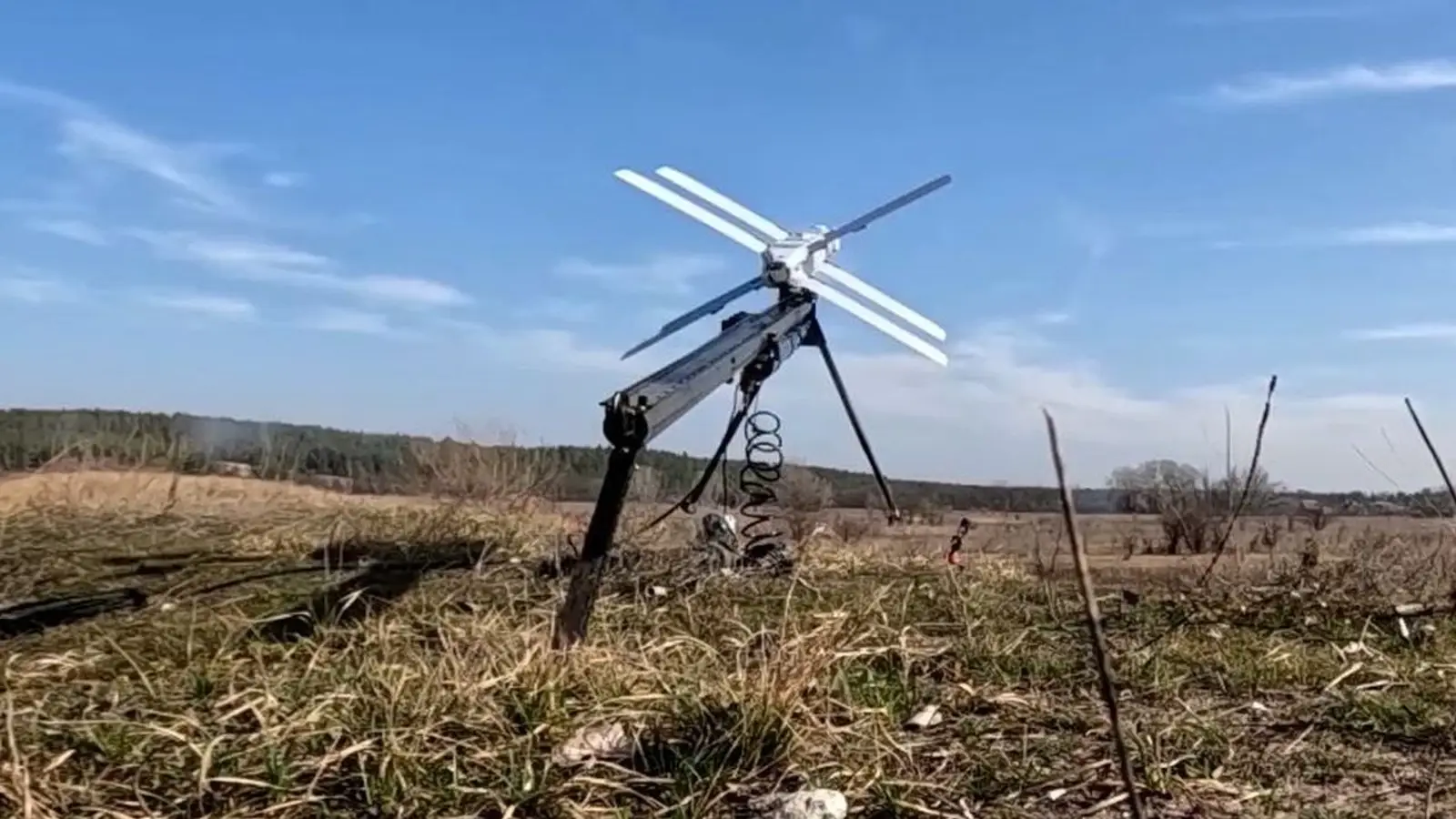
 © Минобороны России / t.me/mod_russia

Russian forces may have begun deploying a new strike drone resembling the Lancet loitering munition, according to Sergei Beskrestnov, an adviser to Vladimir Zelensky. The aircraft’s most significant difference from earlier Lancet models is its internal combustion engine, which could substantially expand its operational capabilities.
Previous drones in the Lancet family relied exclusively on electric motors. While these propulsion systems allowed relatively quiet operation, they also limited flight endurance. The new aircraft reportedly uses a gasoline engine instead.
Photographs published on Beskrestnov’s Telegram channel show an unidentified drone with X-shaped wings and tail surfaces. A rear-mounted engine drives a pusher propeller, replicating the configuration used by the Izdeliye 51 drone.
Experts believe the switch to an internal combustion engine could significantly extend the aircraft’s operational range. Liquid fuel has a higher energy density than batteries, potentially allowing the drone to cover greater distances. The modified propulsion system could also make it possible to carry a heavier warhead.
Ukrainian news outlet Strana.ua highlighted another potential advantage of the new engine. Its journalists suggested that replacing electric motors with internal combustion technology could allow Russia to establish fully domestic production of strike drones.
Such a shift could also enable Russian manufacturers to increase output while reducing their dependence on Chinese-made electric motors, according to the publication.