 © Минобороны России / mil.ru

Russia will unveil its new multi-layered counter-drone defense concept, known as the Anti-Drone Dome, at the third Russia-Africa summit in Moscow. The system will make its international debut at Gostiny Dvor on October 28–29, 2026, Rosoboronexport announced.
The concept is designed to protect military personnel, civilians, and critical facilities from unmanned aerial attacks. Its potential applications range from securing bridges, buildings, and energy infrastructure to defending strategic industrial sites and military positions. Certain configurations can also provide protection for vehicle convoys, including those transporting high-profile individuals or valuable cargo.
Rather than relying on a single method of intercepting drones, the Anti-Drone Dome combines several defensive technologies within one coordinated network. Detection equipment identifies incoming threats, while air defense weapons and electronic warfare systems provide different options for neutralizing them. An automated command-and-control platform with geospatial capabilities coordinates these components, supported by physical barriers and other engineering measures.
Rosoboronexport developed the concept in cooperation with leading Russian counter-drone equipment manufacturers and specialized security agencies. The project draws on practical experience gained from countering unmanned aircraft during military and counterterrorism operations in recent years.
Rosoboronexport CEO Alexander Mikheev emphasized that protecting essential infrastructure against drone strikes has become a crucial factor in national and economic security. He explained that effective defensive systems help businesses maintain operations, safeguard supply routes, and reassure investors that their assets are protected. Such capabilities also demonstrate the effectiveness of government administration and business management. According to Mikheev, Russia can provide customized counter-drone solutions built around equipment that has already demonstrated its effectiveness under real operating conditions.
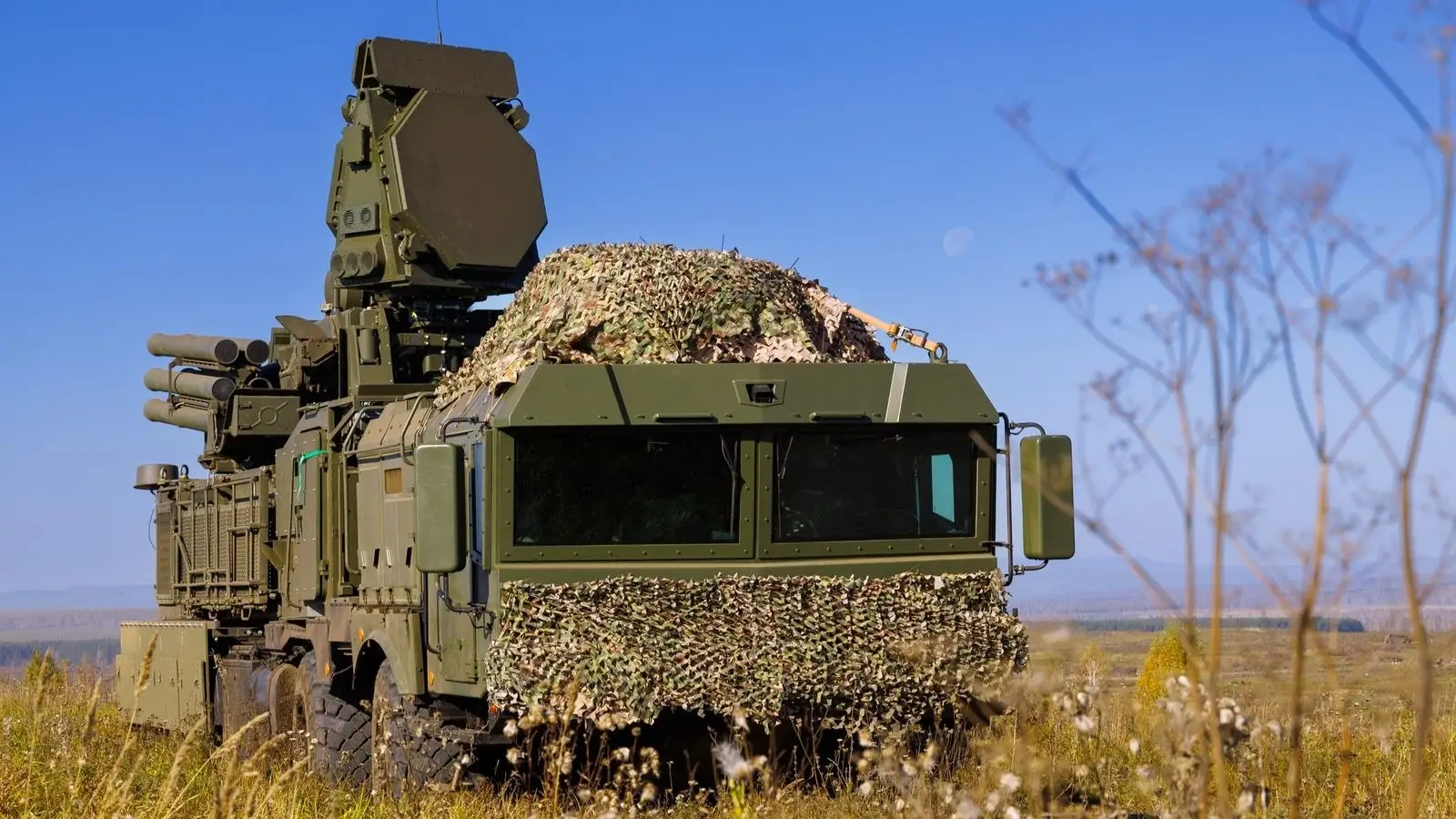
During the summit, Rosoboronexport will introduce foreign partners to the weapons and technologies available for the Anti-Drone Dome. The lineup includes the Pantsir-SMD-E and Pantsir-S1M air defense systems, the Verba man-portable air defense system, and the TKB-1167 aerial target engagement system. These weapons were developed by High Precision Systems, a holding company within the Rostec State Corporation. Another component is Rostec’s Tsitadel anti-aircraft artillery system, which uses programmable airburst ammunition.
Russia also plans to expand its counter-drone arsenal with directed-energy technologies. Serially produced laser systems are expected to join the available equipment, alongside electromagnetic pulse weapons that are currently approaching the end of their testing programs.
Electronic detection and jamming will form another part of the defensive network. Rosoboronexport intends to showcase the Silok, Repellent-Patrol, Sky-Hunter 4PC, and Radescan Anti-Drone systems. These technologies are designed to locate unmanned aircraft and disrupt the control and navigation signals they depend on.
The Anti-Drone Dome will not be offered as a fixed package with identical equipment for every customer. Instead, its components and capabilities will be selected according to the specific site, the threats it faces, and the requirements of the buyer. Rosoboronexport stressed that every element of the proposed defense network is developed and manufactured in Russia.