 © пресс-служба Госкорпорации Ростех

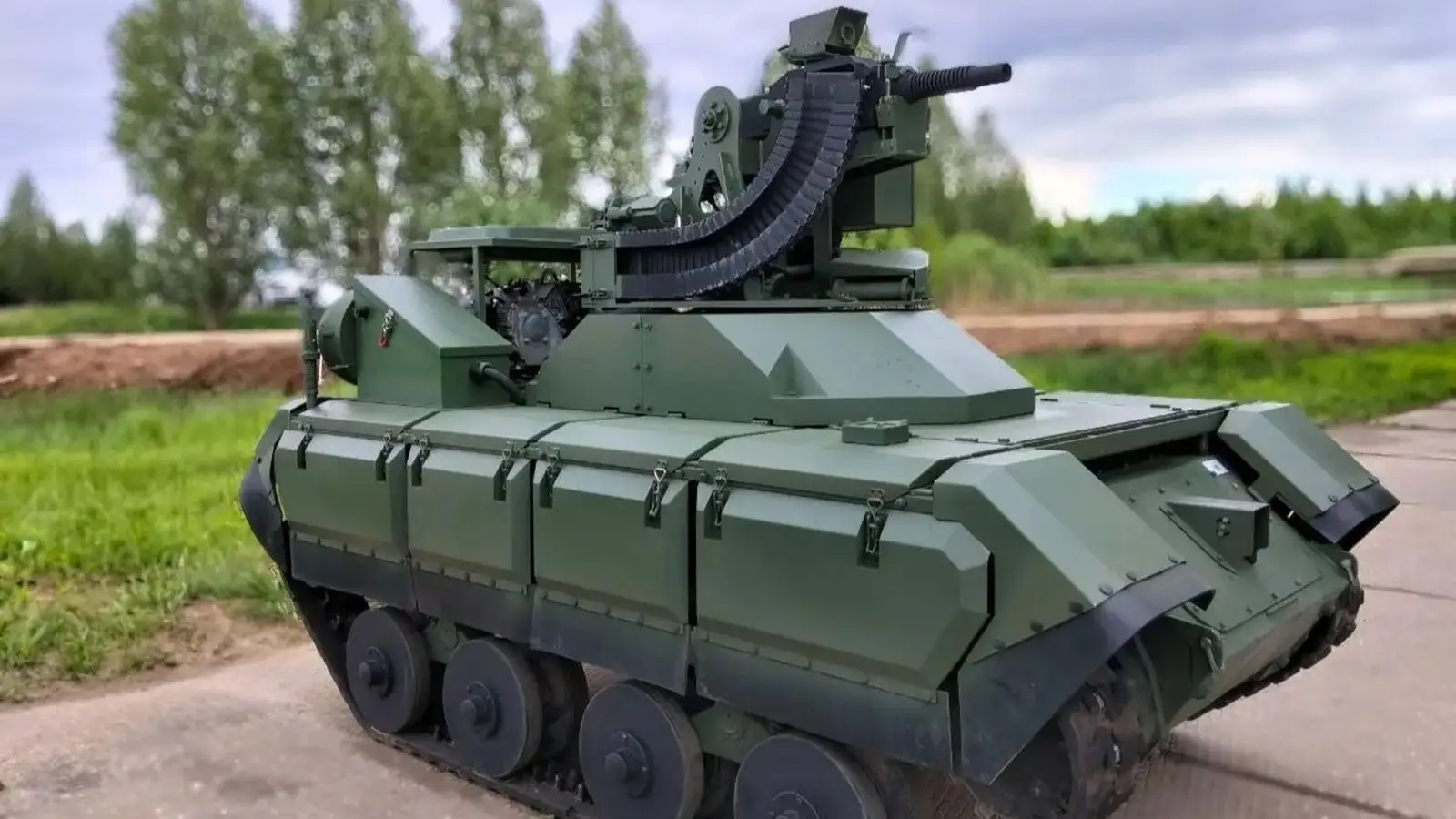
Russia is building an extensive network of specialized ground robotic systems, with different platforms designed to handle specific combat and support missions. The lightweight Depesha-3 has emerged as a key part of this expanding fleet, delivering measurable results in field operations. JSC NPO High Precision Systems, part of the Rostec state corporation, outlined this approach in a post on its official MAX messaging channel.
The scale of Russia’s military robotics program is reflected in research by StateWatch. Analysts have identified 32 models of Russian ground robots, at least 20 of which have already been documented in combat. Between 2024 and 2026, the industry moved into serial production, with Kuryer, Impuls and Depesha-3 emerging as some of the most widely deployed systems. These platforms are delivered to operational units in batches ranging from dozens to hundreds of vehicles.
Rather than relying on a single multipurpose machine, Russian developers are building platforms with distinct responsibilities. Defense Minister Andrey Belousov previously highlighted the organizational progress behind this effort, stating that every military grouping had established its own production capabilities for ground robots. He also emphasized their high effectiveness in carrying out assigned missions.
Within this broader framework, Depesha-3 serves as a lightweight, highly mobile platform designed for demanding operational conditions. Its performance figures demonstrate the scale of its deployment: in just one month, the system completed more than 600 trips and transported over 38 tons of cargo. Beyond delivering supplies, the robot is used to evacuate wounded personnel and conduct engineering reconnaissance.
Deputy Defense Minister Yunus-Bek Yevkurov has previously identified these functions as important areas of ground robotics operations. Samuel Bendett, an expert at the Center for a New American Security (CNAS), also considers Depesha-3 a significant component of Russia’s main ground robotic systems.
The advantages of operating several specialized platforms together were demonstrated at the Tsentr-2026 event. Kuryer, Impuls and Depesha-3 were presented alongside one another, with representatives from 51 countries observing their performance. Each vehicle performed a specific function, illustrating how different robotic systems can operate within a coordinated structure.
This division of responsibilities extends across multiple weight classes. Heavy robotic vehicles operate ahead of advancing assault units, while medium-sized platforms transport supplies and modules. The compact Depesha-3 handles particularly difficult tasks along the final 100 meters of a route, including the evacuation of wounded troops.
Supporters of Russia’s robotics strategy see this combination of large-scale manufacturing, battlefield experience, modular design and complementary capabilities as evidence that the country is developing its own technological approach rather than following existing models.
Instead of concentrating resources on a universal machine expected to perform every task, Russia is expanding a family of purpose-built ground robots. Depesha-3 illustrates how this strategy works in practice, combining a clearly defined operational role with extensive experience in field deployment.