 © Минобороны России / t.me/mod_russia

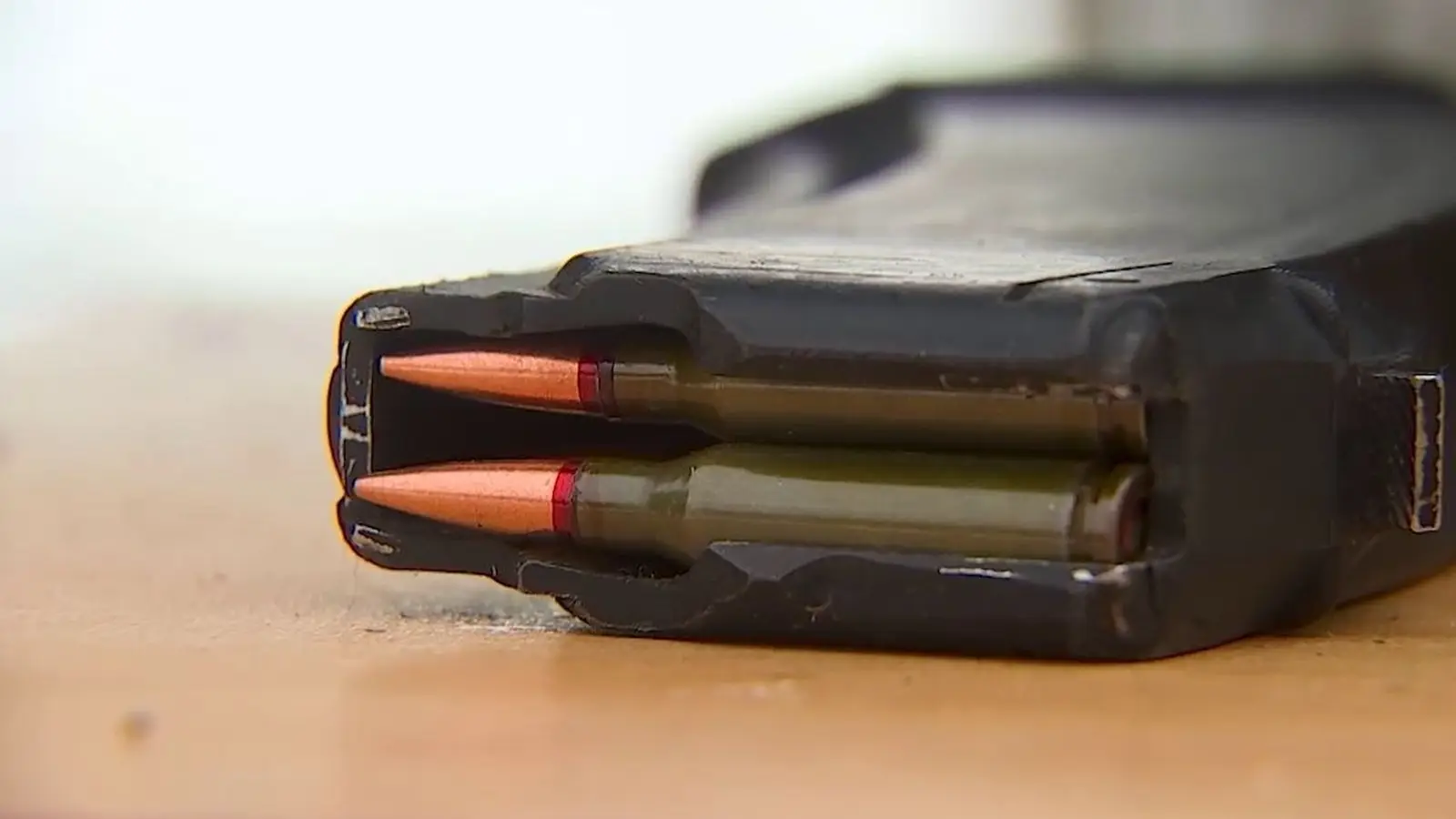
Russia has developed new Matryoshka anti-drone ammunition that is ready for mass production and allows soldiers to shoot down unmanned aerial vehicles using standard Kalashnikov assault rifles. According to Izvestia, Russian engineers have also created a manufacturing process that can be introduced quickly without relying on foreign equipment. The rounds are designed to protect infantry from attacks by FPV drones and other small UAVs.
The Matryoshka cartridge contains a projectile made up of three connected, cone-shaped sections. Once fired, these separate and spread apart as they travel toward the target. At a distance of 25 meters, the gap between the projectiles reaches 12–15 centimeters, increasing to 25–30 centimeters at 100 meters.
The Center for Unmanned Systems and Technologies (TsBST) explained that this design produces a dense pattern of projectiles, allowing soldiers to engage aerial targets with several shots from a standard 5.45 mm Kalashnikov rifle.
Development began in 2023 at JSC NPP, a TsBST resident company, with contributions from weapons specialist Alexey Vasilyev, who runs the Russian Engineer Telegram channel, and other experts. The project emerged as FPV drones and small unmanned aircraft became increasingly widespread on the battlefield. Engineers sought to give infantry a means of countering these threats without having to carry separate shotguns or portable electronic warfare systems.
The ammunition is not limited to drone defense. Its developers say the rounds can also be used against enemy personnel at close range, including during assault operations to clear trenches and fortified positions.
The cartridge has undergone several redesigns, with its sixth version now expected to enter serial production. Testing, including trials conducted at TsNIITochMash, confirmed the stated performance characteristics for range, accuracy and penetration. The developers also maintain that Matryoshka does not damage the rifle and has almost no effect on the service life of its barrel and mechanical components.
Manufacturing can be established at existing ammunition factories or newly built facilities, without requiring foreign equipment.
Military expert Yuri Lyamin described such ammunition as urgently needed by infantry units. Speaking to Izvestia, he explained that troops refer to these weapons as last-chance rounds because they are intended for situations in which an enemy drone is already approaching a soldier.
Hitting a small UAV with a conventional rifle bullet is extremely difficult, even for a trained marksman. By dispersing several projectiles, the new cartridge is expected to increase the likelihood of destroying an incoming drone. Lyamin added that similar ammunition is being developed in other countries.
A veteran of the Donetsk People’s Republic People’s Militia known by the call sign Naruto highlighted the practical advantages of Matryoshka over shotguns, which are widely used by troops defending themselves against drones.
He explained that carrying an additional firearm and its ammunition increases the weight of a soldier’s equipment, restricts mobility and makes combat tasks more difficult. The new rounds eliminate the need for a separate weapon, allowing troops to rely on their existing assault rifles and several magazines loaded with specialized ammunition.
Naruto also pointed to the way the projectiles behave inside a rifled barrel. Their rotation should produce a consistent and predictable dispersion pattern, while offering greater effective range and destructive impact than smoothbore weapons.
Despite these advantages, military specialists acknowledge that Matryoshka’s actual combat effectiveness can only be fully assessed after the ammunition sees widespread battlefield use.