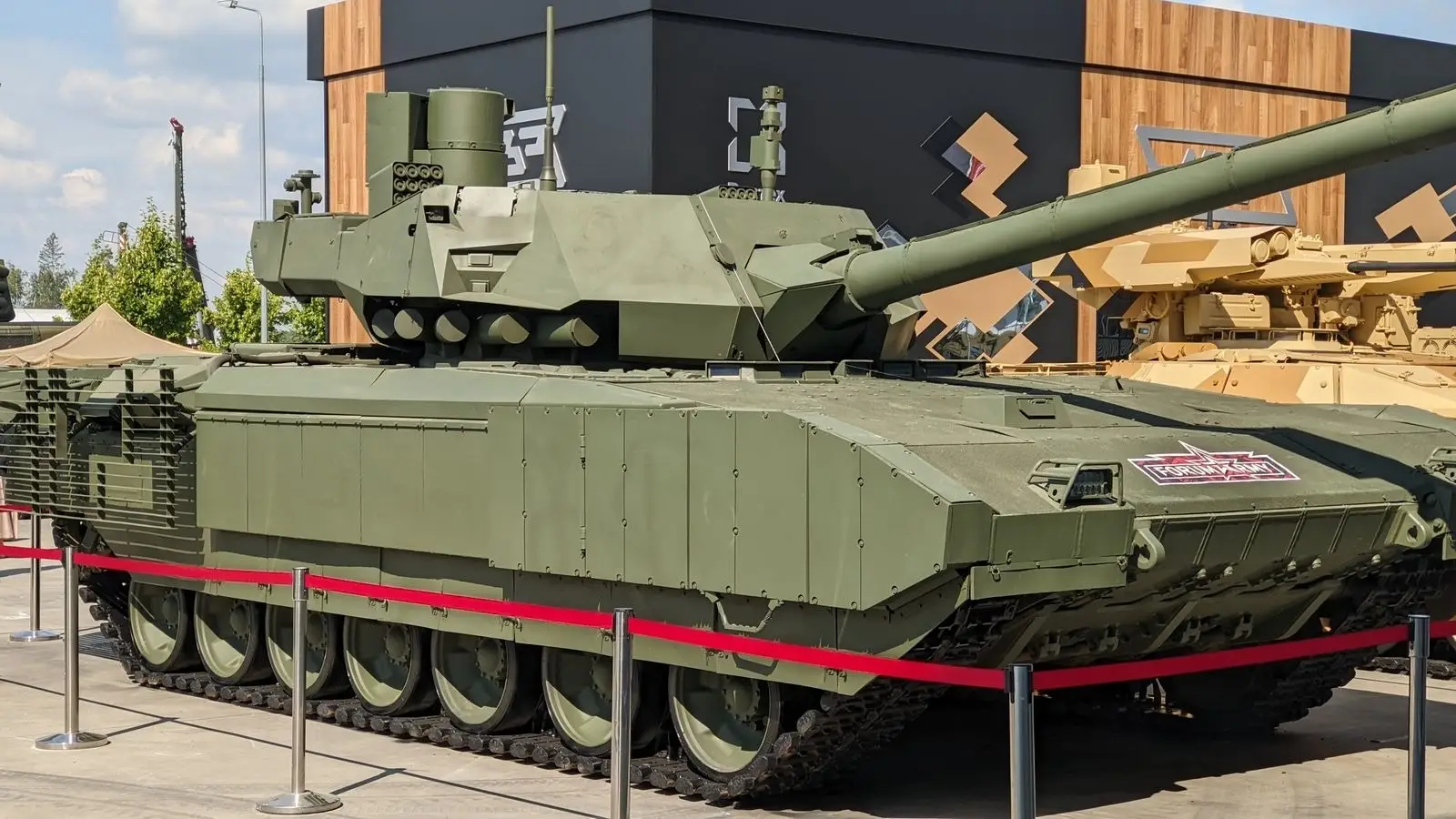
 © A. Krivonosov

The growing threat from inexpensive attack drones has changed the role of armored vehicles on the battlefield, prompting Russia to avoid deploying its advanced T-14 Armata tanks in the Ukraine conflict, according to American defense publication 19FortyFive.
Military analyst Brandon Weichert argues that the widespread use of unmanned aerial vehicles has made traditional tank operations increasingly dangerous. Relatively cheap drones can inflict serious damage on expensive armored vehicles, fundamentally changing the balance between their battlefield value and vulnerability.
According to Weichert, this threat is also one of the reasons Western-made tanks supplied to Ukraine have proved ineffective under modern combat conditions.
The analyst believes Russian commanders have reached similar conclusions about the risks facing their own armored forces.
Rather than exposing the T-14 Armata, which Weichert describes as one of the world’s most advanced main battle tanks, Russia has chosen to rely on less expensive vehicles.
In his assessment, the potential loss of a sophisticated and costly T-14 is difficult to justify when cheaper tanks can perform battlefield tasks without exposing such valuable equipment to drone attacks.
Weichert also highlighted a broader shift in how tanks are being employed during the conflict.
Instead of relying primarily on direct engagements with enemy armored vehicles, Russian forces are increasingly using tanks as mobile artillery platforms.
According to the analyst, these vehicles operate from concealed firing positions and engage targets indirectly, without maintaining a direct line of sight.
This approach allows Russian troops to retain the firepower of their tanks while reducing the risks associated with deploying heavy armored vehicles in areas exposed to drone attacks.