 © Минобороны России / mil.ru

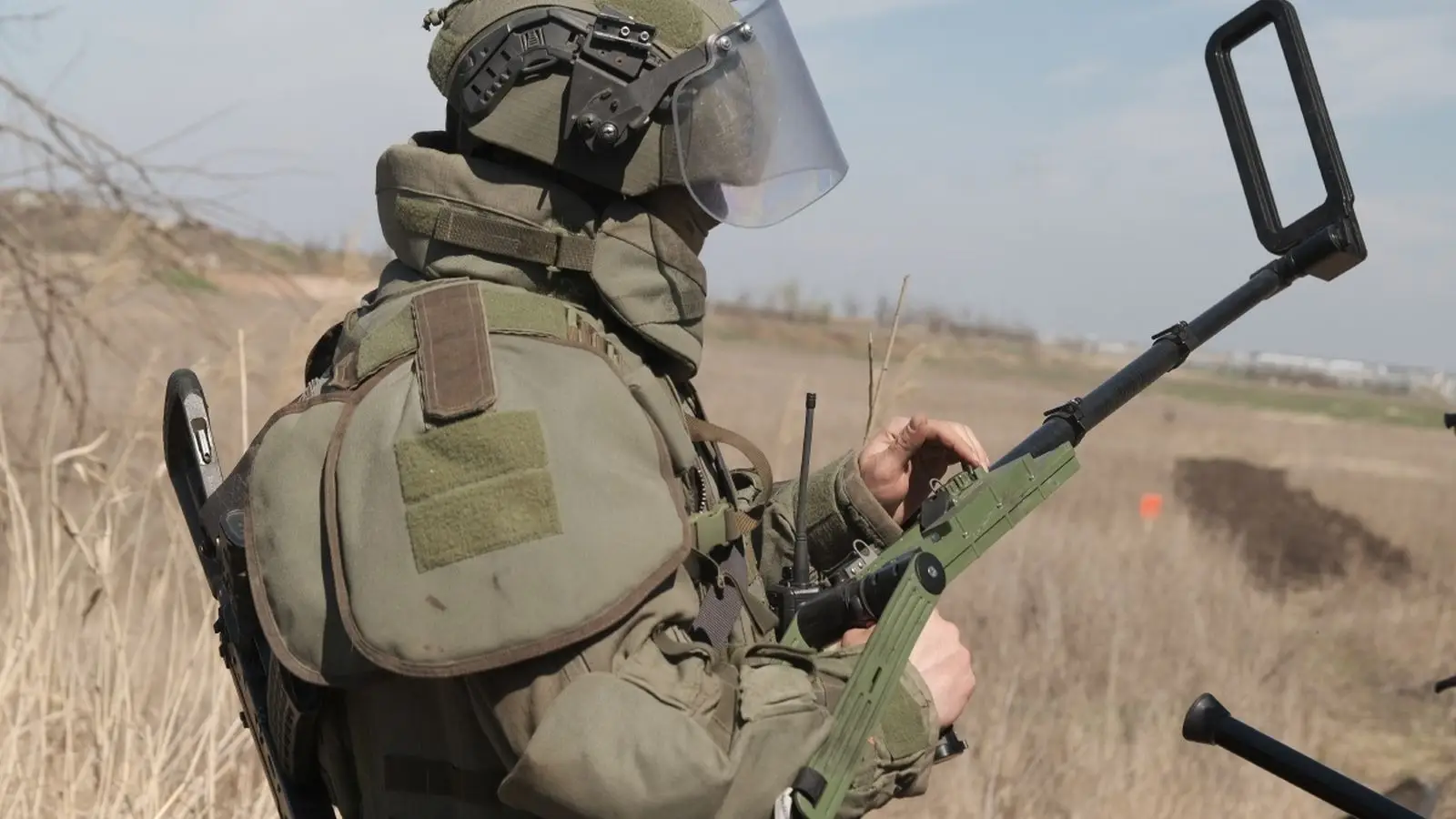
Russian defense manufacturer Rostec has upgraded the Obereg GR sapper vest with a built-in system designed to stop bleeding from injured limbs. The new equipment is intended for specialists carrying out humanitarian demining operations. According to the state corporation, the modification was developed by the Oktava plant, which operates under the management of RT-Capital. A prototype is currently undergoing testing.
The technology uses inflatable cuffs to apply pressure to the wearer’s arms and legs. Its operating principle is similar to that of a medical blood pressure monitor. A battery-powered pump mounted on the back of the vest delivers air through tubes connected to the cuffs, allowing them to tighten around the selected limbs.
The system is controlled through a panel housed in a protected pocket on the chest. To activate it, the sapper pulls a cord and presses the appropriate buttons to select which limbs require compression. Four buttons allow the operator to engage the cuffs individually, with the option of applying pressure to all four limbs at once.
Releasing the pressure requires no complicated procedure. The wearer can undo the cuff fastening, open a valve to deflate it or cut through the material.
Rostec says the integrated tourniquet mechanism is intended to reduce the time needed to control bleeding after an injury. This could provide valuable additional time to evacuate a wounded sapper to a hospital, improving the chances of a successful outcome.
Despite the additional equipment, the Obereg GR weighs approximately five kilograms. Its ballistic inserts, rated S2 and Br1+, are designed to withstand pistol bullets and shrapnel. The armor also provides protection against anti-personnel mines.
The vest’s protective coverage extends beyond the torso to include the groin and inner thighs. It also features a wide collar that allows the wearer to use a helmet equipped with a face shield.
Obereg GR protective vests are already being supplied to humanitarian demining teams working in the new regions. However, the upgraded version featuring the pneumatic bleeding control system has yet to complete its testing phase.