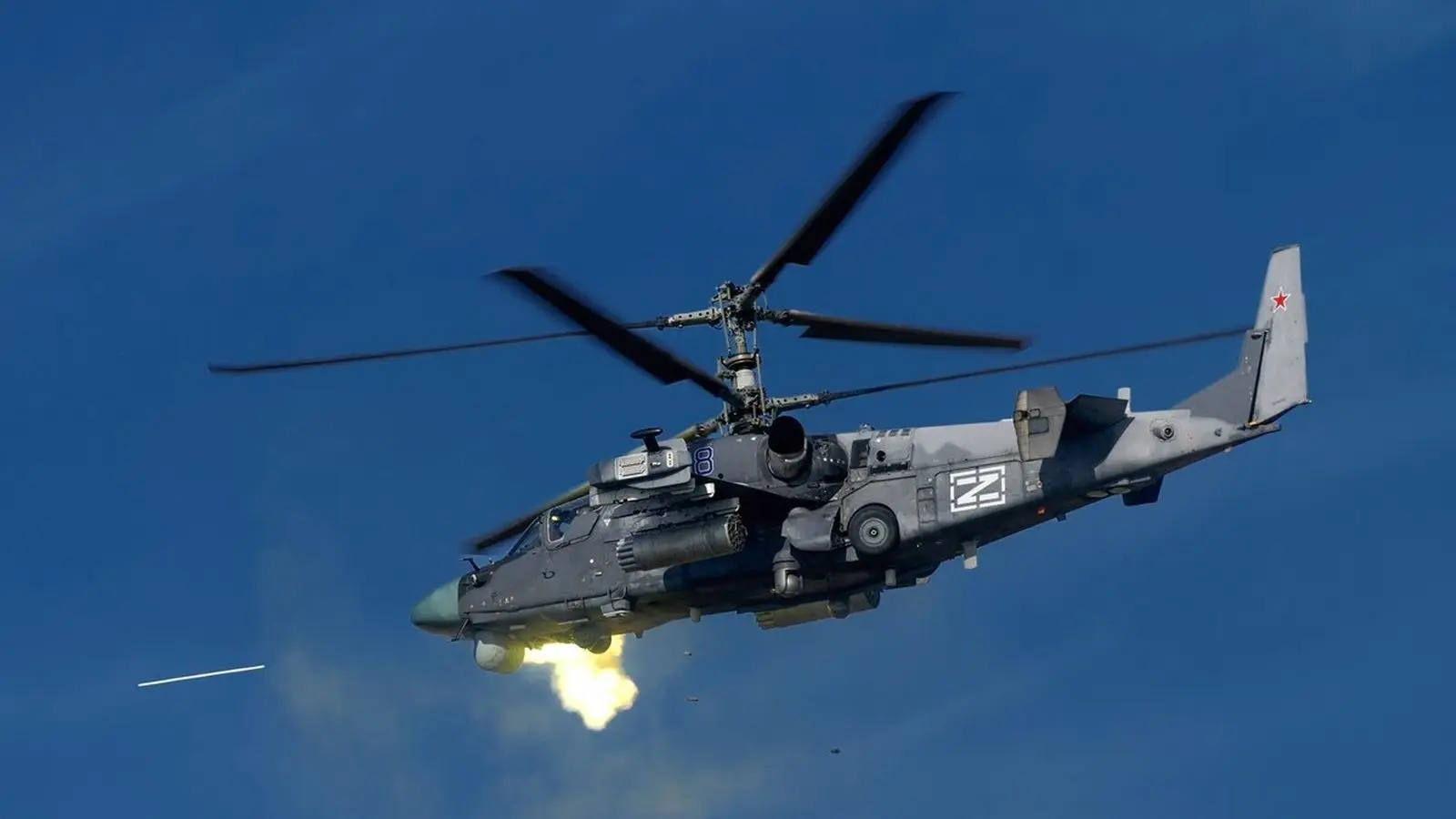
 © Сайт Минобороны России / mil.ru

Russia’s Army Aviation marked its 78th anniversary on October 28. Helicopter units are currently playing an active role in the special military operation, demonstrating high effectiveness in destroying a wide range of targets, including unmanned aerial vehicles. The Russian Defense Ministry highlighted their combat capabilities while outlining the force’s ongoing modernization.
Russian helicopter crews employ an extensive range of precision-guided weapons. Their arsenal includes light multipurpose guided missiles (LMUR), Vikhr and Khrizantema anti-tank missile systems, and Igla-S and Verba air-to-air guided missiles. These weapons allow pilots to engage and destroy targets without entering the engagement zones of enemy air defense systems.
The helicopter fleet is also undergoing extensive modernization. Aviation units are receiving upgraded Ka-52M and Mi-28NM attack helicopters, various versions of the multipurpose Mi-8, and Mi-26T2V heavy transport helicopters. The latter belong to the family of the world’s largest mass-produced transport helicopters.
Beyond its combat responsibilities, Army Aviation provides aerial support to ground formations and carries out specialized missions. Its mobility also makes it an important asset in responding to natural disasters and industrial emergencies. Organizationally, the force operates within the Russian Air Force, which forms part of the Russian Aerospace Forces (VKS).
Training the next generation of military helicopter pilots remains another essential part of maintaining these capabilities. The Syzran Higher Military Aviation School of Pilots is responsible for preparing professional officers who will go on to operate Army Aviation helicopters and carry out assigned missions.