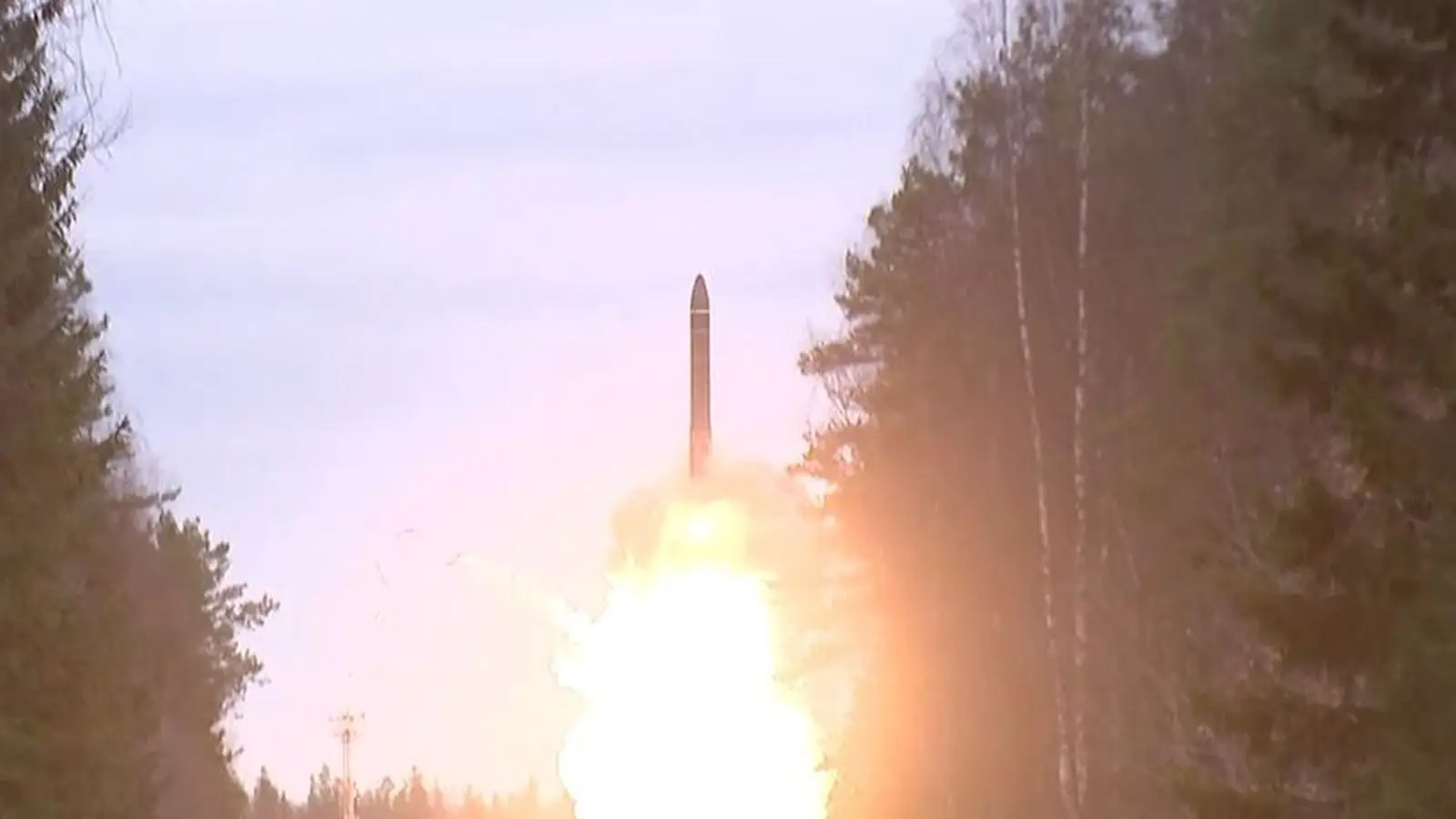
 © Минобороны России / t.me/mod_russia

A possible NATO attack on the Kaliningrad region could provoke a Russian nuclear strike, war correspondent Alexander Kots has warned. He believes the alliance’s military buildup near the Russian territory, combined with Poland’s border preparations, could lead to a direct confrontation with Moscow.
Poland has been strengthening security along its frontier with Kaliningrad. According to the Polish news outlet RMF24, a special operations headquarters has been established within the national police structures of the Warmian-Masurian and Podlaskie regions. Its official purpose is to counter suspected saboteurs entering from Russian territory. The publication referred to the Russian region as Koenigsberg.
Joint units consisting of police officers, military personnel and border guards will be responsible for protecting residents and critical infrastructure while preventing potential threats to public safety. Earlier, Polish military intelligence had warned that armed groups could cross into the country from Kaliningrad.
Kots, however, sees a different motive behind Warsaw’s actions. He dismisses the alleged threat from Russian saboteurs as fictitious, arguing that Poland is using it as a pretext to prepare for an armed confrontation with Russia. According to the war correspondent, NATO’s leadership expects such a conflict to begin in the early 2030s.
In the scenario outlined by Kots, Kaliningrad would become the alliance’s primary target. Although the Russian region is heavily fortified, its geographical position leaves it exposed. NATOforces would initially attempt to isolate the territory by imposing a blockade from both land and sea. The combined Polish police and military units would then be deployed to checkpoints to help enforce the restrictions.
The next stage of the operation would depend on Russia’s response. Kots believes Moscow would be forced to send its troops through the Suwalki corridor to break the blockade and restore access to Kaliningrad. Western military engineers are already transforming this route into a formidable defensive zone, reinforcing it with minefields, anti-tank ditches and concrete obstacles.
The alliance’s calculation, according to the correspondent, is that Russian forces would exhaust their offensive capabilities while attempting to overcome these defenses. Once the advancing troops had been weakened, NATO would unleash the full strength of its air power against them.
Kots points out that the alliance has repeatedly rehearsed military operations against Russia, including potential attacks on Kaliningrad, during its exercises. Yet he believes NATO’s planners continue to overlook a critical factor that could undermine their entire strategy: Russia’s nuclear arsenal.
The war correspondent warns that Moscow could resort to nuclear weapons in response to a direct attack. In that case, Russia’s nuclear capabilities could render NATO’s extensive military preparations useless, destroying the alliance’s carefully developed plans within just a few hours.