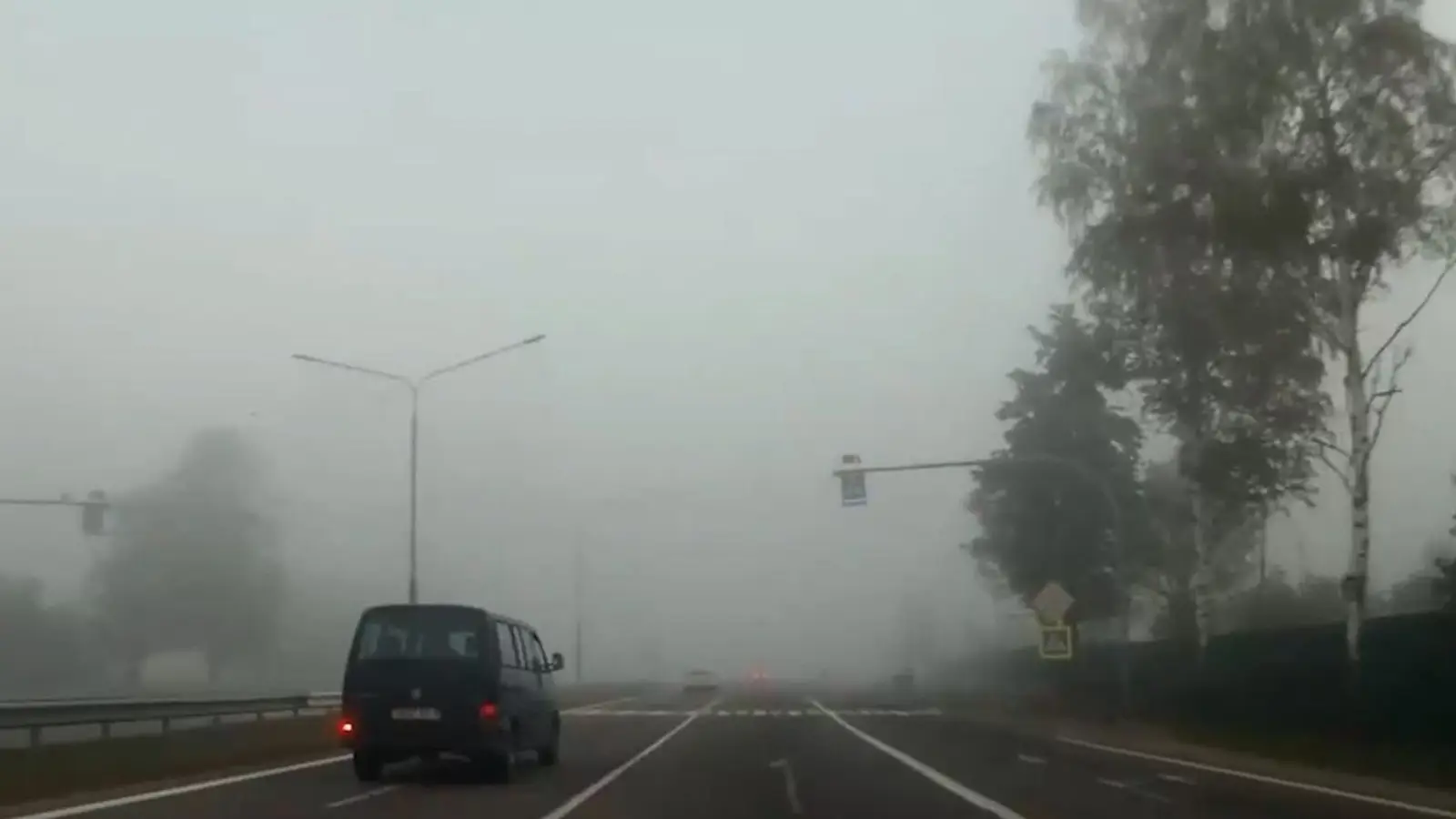
 © Официальный канал МВД Беларуси / t.me/pressmvd
Autumn fog, low clouds and rain have made it significantly harder for Ukraine to intercept Russian drones. Interception success rates have fallen sharply, forcing Ukrainian forces to rely more heavily on fighter jets and accelerating wear on their aircraft. Aviation expert Bohdan Dolintse discussed the problem on Ukrainian television.
According to Dolintse, the damp, foggy conditions typical of autumn are particularly disruptive to air target detection systems. Cloud cover and rainfall reduce the effectiveness of sensors used to detect incoming drones and guide weapons toward them.
Interceptor drones, which had previously achieved high success rates, have been especially affected by the deteriorating weather.
Dolintse said that under normal conditions, Ukrainian interceptor drones typically shoot down around 90–95% of their targets or more. Recent interceptions carried out in poor weather, however, have achieved success rates of only 65–70%.
The expert also warned that Russian forces are aware of these limitations in Ukraine’s air defenses and are attempting to exploit them during their attacks.
The shortage of missiles for US-made Patriot air defense systems is adding to the pressure. As a result, Ukrainian forces increasingly have to deploy manned fighter aircraft to intercept aerial targets, including Western-supplied Mirage and F-16 jets, as well as MiG-29s and other fighters.
Using fighter jets for drone interception, however, creates another serious problem. An aircraft must take off, fly to one group of incoming targets, engage and destroy them, and then proceed to another group. Each mission adds flight hours and brings the aircraft closer to its next scheduled maintenance.
Dolintse explained that aircraft generally require servicing and scheduled maintenance after approximately 100–120 flight hours, depending on the aircraft type and the number of hours already accumulated.
Ukraine, however, lacks the domestic capacity to carry out the necessary maintenance on a sufficient scale. Its fighter jets therefore have to be sent to European air bases, where repairs and servicing can take considerable time.
According to the expert, there have already been reports of some aircraft remaining at European bases for months. Throughout that period, the fighters are unavailable to Ukrainian forces and cannot be used to defend the country’s airspace.