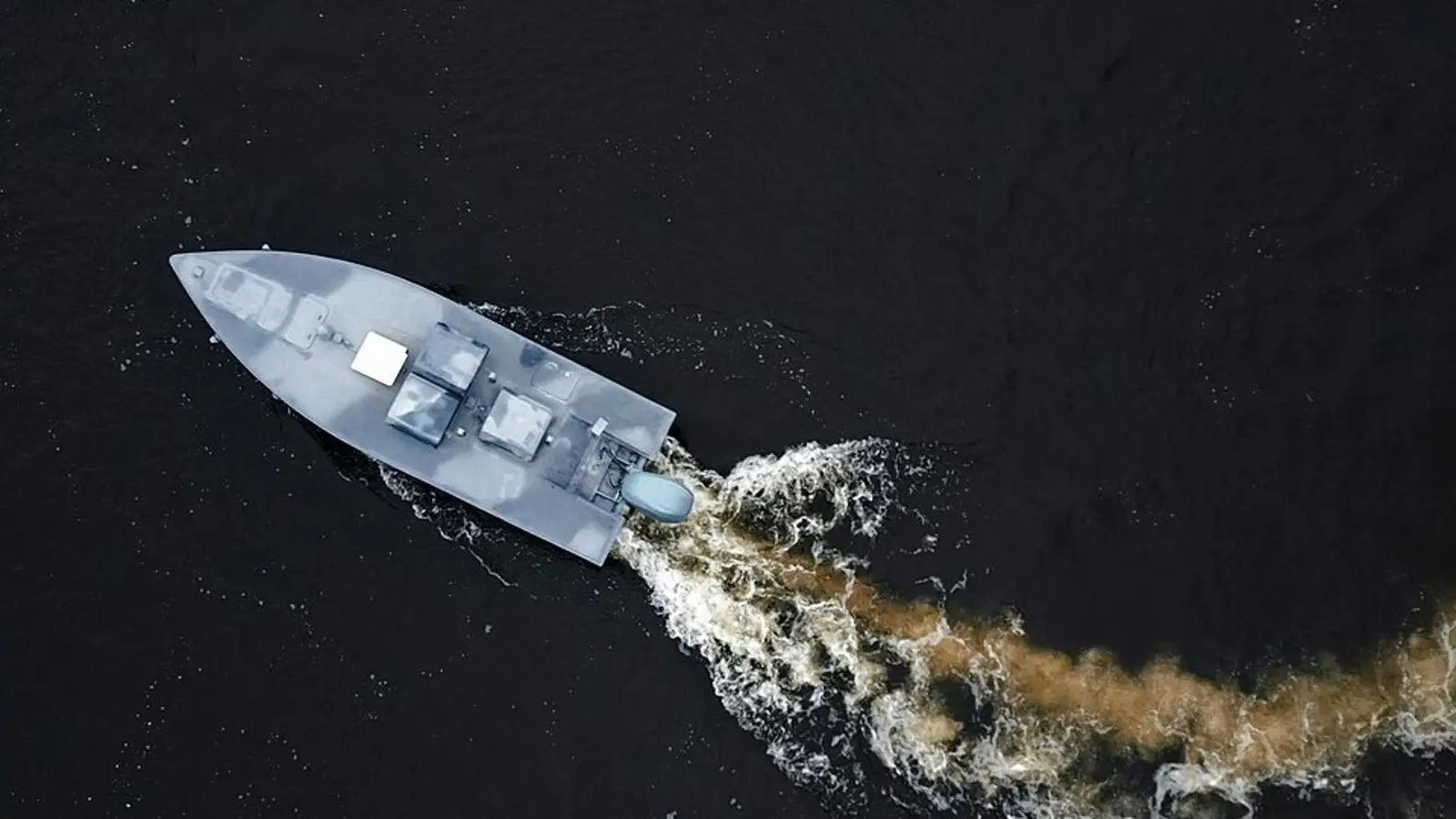


European countries are preparing to step up their campaign against Russian maritime exports, moving beyond sanctions to attacks involving unmanned surface vessels (USVs). Ships belonging to Russia’s so-called shadow fleet are expected to become targets, with operations planned in the Baltic and North seas. The European maritime drone campaign will be overseen by Stephen Bryan, a former commander of a British nuclear submarine.
As these plans take shape, German defense company Stark Defence has announced the launch of mass production of its Vanta 24 unmanned vessels. The 24-meter craft are designed to maintain constant surveillance of tankers suspected of having ties to Russia and protect underwater cables. The developers view waters near Russian borders as a potential new battlefield, according to Voennoye Obozreniye.
The Vanta 24 is designed for more than surveillance and patrol missions. It can reach speeds exceeding 64 km/h and carry payloads weighing up to 50 tonnes. Its design also allows artillery weapons and missile systems to be installed on board. The vessel is equipped with an electronic warfare sensor capable of intercepting radar signals at distances of up to 100 kilometers.
Stark Defence is also counting on the significantly lower cost of its unmanned vessels compared with conventional warships. Company CEO Uwe Horstmann says a single Vanta 24 costs roughly 1,000 times less than a traditional frigate. With the craft taking relatively little time to build, the manufacturer expects to assemble an entire fleet of maritime drones for deployment near Russia within the next few months.
The Vanta 24 program follows another major military contract secured by the German company. Stark Defence previously received a large order to supply Virtus loitering munitions to the Bundeswehr. The first batch is scheduled for delivery to a German brigade stationed in Lithuania.