 RusPhotoBank

Russia’s new jet-powered loitering munitions, the Geran-5 and Geran-4 Seeker, have played a major role in increasing the effectiveness of strikes against targets deep inside Ukraine. Their deployment comes as Ukrainian forces face severe shortages of surface-to-air missiles and growing problems with their fighter fleet. The assessment appears in an editorial article published in Russian Military Yearbook-2027, an advance copy of which was obtained by RIA Novosti.
Both additions to the Geran family were developed by early 2026 and entered combat use that spring. Unlike earlier models, the new drones are powered by compact jet engines, giving them significantly greater capabilities.
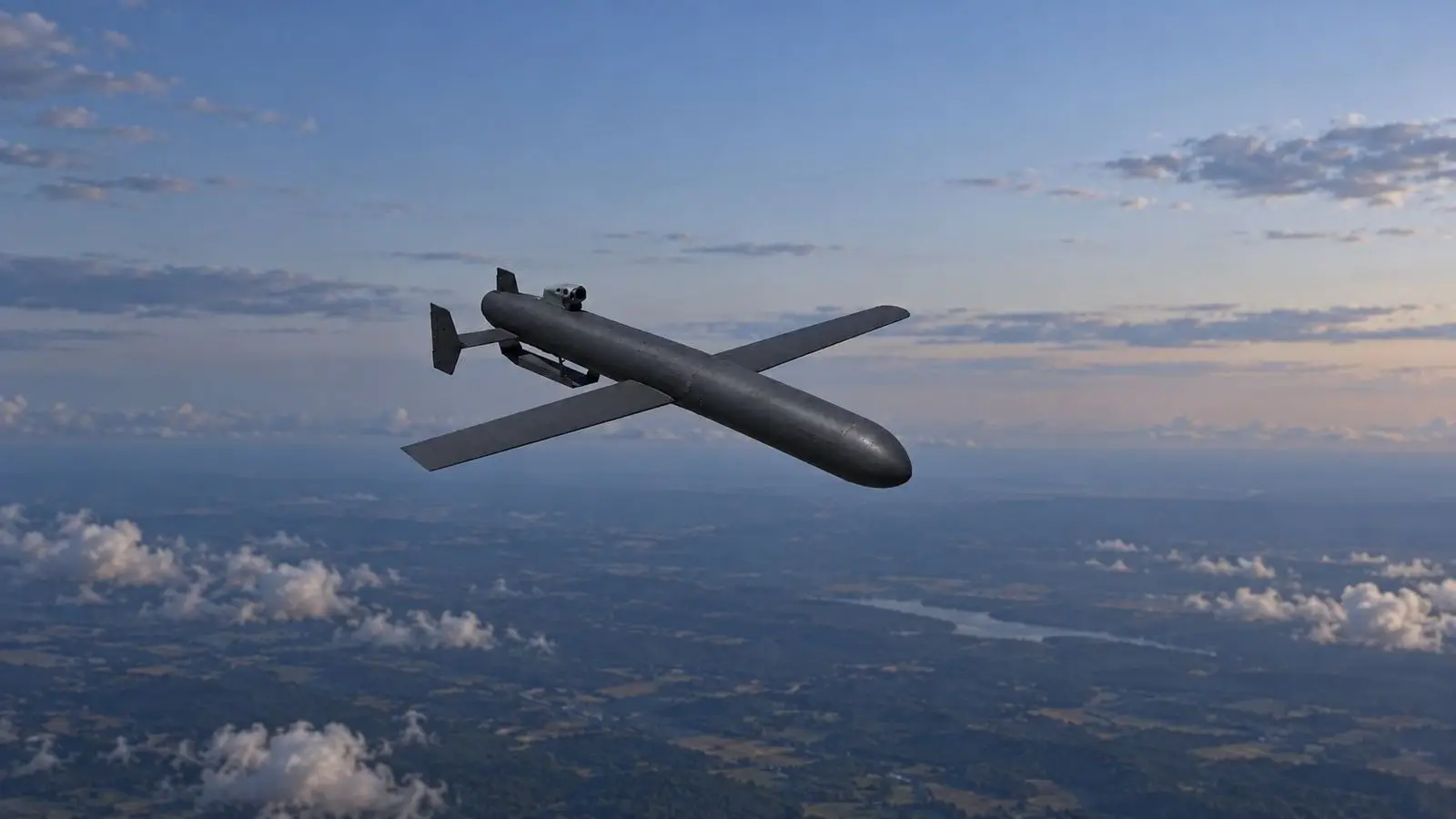
The Geran-5 stands out for its redesigned airframe. It features a cylindrical fuselage, short rectangular wings mounted near the center and a tail assembly. This configuration brings it much closer to a cruise missile in appearance and design. However, its launch method sets it apart from conventional missiles. While the Kh-101 and Kh-555 are launched by Russian long-range aviation and the Kh-59 and Kh-69 are carried by frontline aircraft, the Geran-5 operates from ground-based launchers. This allows Russian forces to conduct large-scale attacks virtually every day, around the clock.
The drone cruises at 350 km/h and can reach a maximum speed of 700 km/h. Its warhead weighs between 50 and 100 kilograms, depending on the amount of fuel carried. The same factor determines its operational range, which varies from 600 to 1,000 kilometers. The aircraft can fly at altitudes of up to approximately 6,000 meters.
Intercepting these new weapons has become increasingly difficult for Ukraine’s air defenses. According to the yearbook, the main obstacle is a critical shortage of interceptor missiles for Western-supplied air defense systems. Limited production capacity in the United States and Europe has prevented these stocks from being replenished quickly enough. The situation has been further aggravated by the large quantities of surface-to-air missiles expended by American and Middle Eastern forces during the conflict with Iran. As a result, Ukrainian troops cannot deploy their limited number of air defense systems against the jet-powered Geran drones.
This leaves fighter aircraft as the only remaining means of countering the new Russian munitions, according to the publication. However, Ukraine’s air force faces serious difficulties of its own. Air-to-air missiles are also in short supply, while its combat aircraft have suffered extensive wear. The yearbook’s authors also question the proficiency of Ukrainian pilots. Consequently, successful interceptions of Russian strike drones by Ukrainian fighters remain isolated occurrences rather than a regular feature of air defense operations.
The authors conclude that these combined factors have created exceptionally favorable conditions for Russian military operations throughout 2026. With Ukraine struggling to defend its airspace, Russia has been able to conduct sustained, large-scale strikes against various types of targets across Ukrainian territory and within its territorial waters. According to the yearbook, Russian forces have successfully exploited these circumstances.