 © Минобороны России / mil.ru

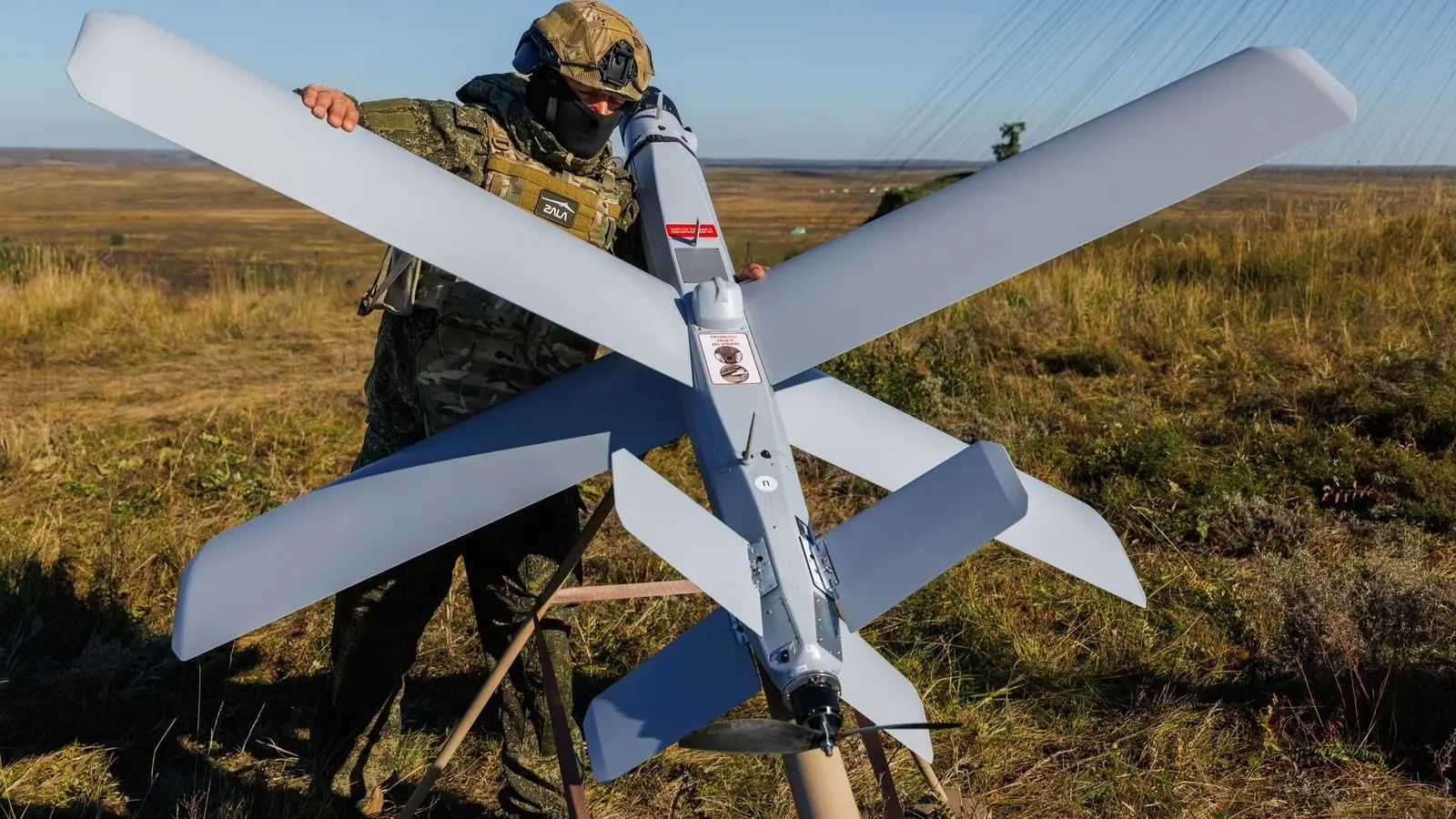
The Russian military is developing new battlefield tactics, improving its drones and dramatically reducing the time needed to strike detected targets. These advances are forcing NATO to reconsider its defense strategy. Despite heavy losses and persistent organizational weaknesses, Russian forces are becoming more effective in key areas of warfare, according to Swiss newspaper Neue Zürcher Zeitung (NZZ), citing research by Finland’s National Defence University.
One of the biggest changes is the growing ability to monitor battlefield activity almost continuously. Drones, satellites and radar systems make it increasingly difficult to move large military formations without being detected. Offensive operations can now be disrupted before they even begin.
This transformation has sparked disagreement among Russian military experts over the future of armored warfare. Former Chief of the Russian General Staff Yury Baluyevsky views the changes as fundamental, while retired Colonel Sergey Suvorov believes advances in defensive technology could eventually restore tanks' ability to maneuver more freely.
Russia’s defense industry is also demonstrating its ability to respond to rapidly changing battlefield demands. Alongside repairing older equipment and manufacturing new weapons, Russian producers are adapting their systems to counter Ukrainian technological developments.
NZZ points to Russia’s jet-powered Geran drones as an example of this progress. According to Ukrainian military intelligence, the latest Geran-4 variant features upgraded navigation equipment and a new type of warhead.
The changes extend beyond weapons development. Russian forces are improving coordination between reconnaissance units and those responsible for carrying out strikes. Information about detected targets can now reach artillery crews, air defense units and drone operators more quickly, leaving enemy forces less time to escape.
At the same time, the military is refining methods of protecting equipment from drone attacks and concealing command posts, ammunition depots and other facilities from surveillance.
However, technological advances have not eliminated the Russian army’s structural shortcomings. The Finnish study highlights the gap between the ability of individual units to adopt new battlefield methods and the much more demanding task of reorganizing the military as a whole.
Even so, NATO can no longer ignore Russia’s growing capabilities in these areas. The alliance is strengthening its air defenses and seeking to expand its arsenal of long-range precision weapons. One major challenge is that intercepting incoming missiles and drones cannot serve as the foundation of its entire defense strategy. Existing missile stockpiles are insufficient, while rapidly increasing production remains difficult.
In July, six NATO countries agreed to jointly develop long-range ground-based strike systems. However, it will take years before these weapons can be produced and deployed in substantial numbers.
Germany, meanwhile, plans to rely on American Tomahawk cruise missiles and Typhon launchers. Their delivery schedule remains uncertain following the substantial expenditure of US guided missiles during military operations against Iran.
These developments are particularly important for Finland, which shares a 1,350-kilometer border with Russia. Helsinki must account for the possibility of confronting a military that has gained extensive combat experience and improved its effectiveness in several critical areas.
NZZ notes that Russia possesses the advantage of direct battlefield experience, while NATO commands far greater economic and technological resources. Yet this imbalance alone does not determine which side would prevail.
What matters increasingly is how quickly each side can adapt its forces to modern warfare, integrate reconnaissance with firepower and maintain combat effectiveness under enemy attack.