 © Минобороны России / t.me/mod_russia

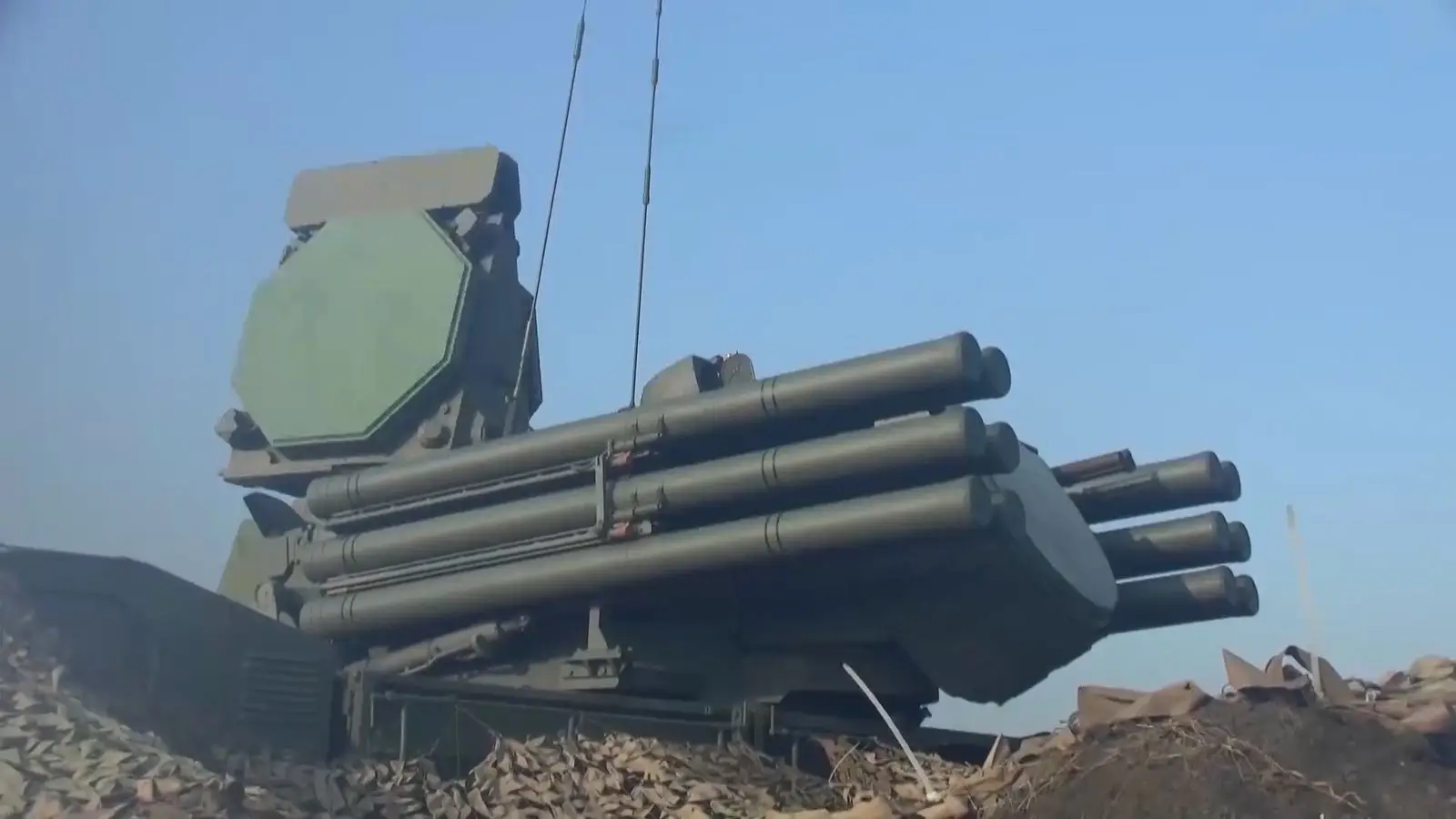
Russia’s new Krona short-range surface-to-air missile system, developed by Kalashnikov Concern, has successfully completed preliminary trials. However, its primary role will not be to establish an uninterrupted air defense barrier along the country’s borders. Instead, the system is designed to protect critical infrastructure deep inside Russia. According to EADaily, this approach could make it easier to counter Ukrainian drones while significantly reducing interception costs.
Building an impenetrable defense line stretching thousands of kilometers is practically impossible. Ukrainian UAVs can fly through border areas at low altitudes, using river valleys, ravines and other terrain features to evade radar detection. Even deploying substantially more air defense systems would not guarantee that every incoming drone could be detected and destroyed.
Krona offers a different solution, combining a less expensive method of interception with a more flexible operational structure. Russian air defense units currently have to use costly missiles against drones that are far cheaper to produce. The new system is intended to take over some of these missions, reducing the need to deploy more powerful weapons against relatively inexpensive targets.
The Pantsir-S1 and the more advanced Pantsir-SMD-E, for example, are sophisticated and expensive systems equipped with their own radar stations. Their missions include intercepting cruise missiles, HIMARS rockets and heavy UAVs. Deploying large numbers of these systems to protect oil depots and other facilities far from the front would require enormous expenditure and leave fewer vehicles available for combat operations.
The Citadel (ZAK-30) anti-aircraft artillery system serves a different purpose. Its rapid-fire weapon is designed to engage aerial threats at extremely close range, when an incoming drone is just two to three kilometers from its target.
Krona differs from both systems in how its detection and fire-control capabilities are organized. Rather than equipping every combat vehicle with an expensive radar, it relies on a centralized command post and separate dual-band radar stations. This arrangement allows its combat modules to be mounted on standard KamAZ trucks and deployed around factories, power substations and other critical facilities.
The missiles themselves are another major advantage. Krona uses the laser-guided Sosna-R and the 9M333, which is equipped with an infrared seeker. Both are considerably cheaper than Pantsir missiles, making them better suited to the demands of countering large-scale drone attacks.
Nevertheless, the system cannot provide continuous coverage of Russia’s borders. Krona has an interception radius of six kilometers, meaning that at least 160–170 combat vehicles would be needed to cover even a straight line along the Russian-Ukrainian border. Establishing two or three defensive layers, maintaining reserves and protecting the borders with Finland and the Baltic states would push that requirement beyond 500–600 units. Russian industry would be unable to produce so many systems within a short period.
For this reason, Krona is expected to focus on defending major cities and strategically important industrial facilities. A single battalion, consisting of one command post, two to six radar stations and six combat vehicles, can establish a circular defensive zone around a designated site.
Under this arrangement, Ukrainian drones that manage to cross the border could still be intercepted as they approach their intended targets. Relatively inexpensive missiles would handle these threats, allowing more powerful air defense systems to remain available for frontline operations.
Krona will therefore not completely prevent Ukrainian UAVs from penetrating Russian airspace. However, deploying the system around industrial plants, energy facilities and oil refineries could significantly strengthen air defenses across Russia’s rear regions without exhausting stocks of expensive interceptors needed at the front.