 © Минобороны России / t.me/mod_russia

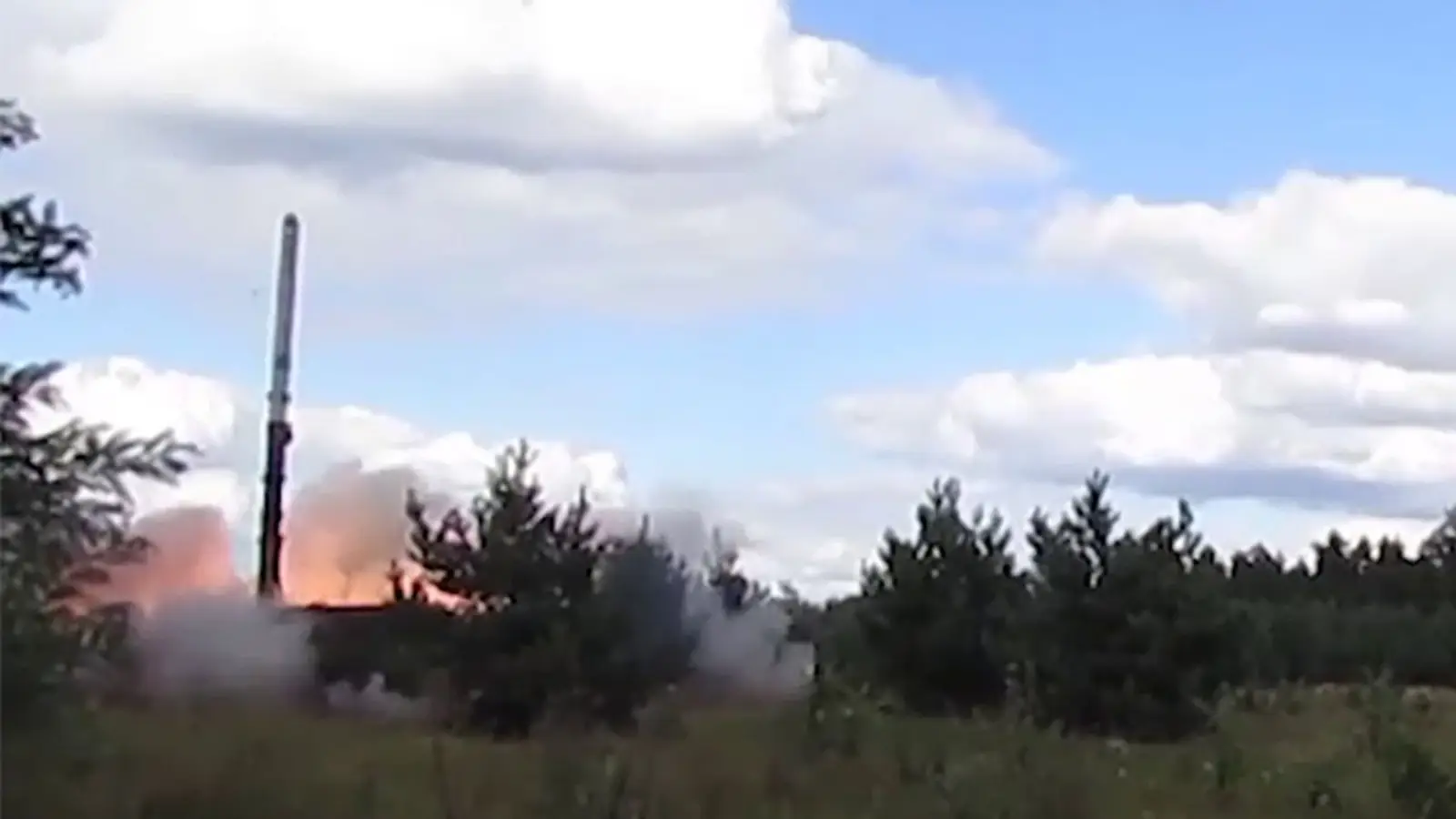
Russian military engineers have begun equipping Iskander-M ballistic missiles with new homing systems designed to maintain strike accuracy even when navigation signals are disrupted, according to Sergei Beskrestnov, an adviser to the Ukrainian president on defense technology.
Beskrestnov raised the issue in a Telegram post discussing Russian missile strikes against bridges in Kiev. He acknowledged that Russian forces have been hitting these targets with considerable precision despite Ukrainian efforts to interfere with missile navigation.
The Ukrainian specialist explained that during air raid alerts, Ukrainian forces extensively suppress navigation signals to reduce the accuracy of incoming weapons.
Under such conditions, an inertial navigation system alone cannot provide the precision required for accurate strikes, he said.
However, Beskrestnov reported that Russian engineers have started installing additional guidance equipment on Iskander-M missiles, allowing them to compensate for navigation interference.
According to the adviser, the missiles are being fitted with either 9E436 optical homing heads or 9B918 radar guidance systems.
He explained that the radar-based system scans the surrounding terrain during the final seconds of the warhead’s descent. The collected data is then used to adjust the missile’s guidance and improve its accuracy before impact.
The reported modifications could help explain the precision of Russian strikes against bridges in Kiev despite intensive efforts to disrupt navigation signals.
Earlier, in September, Russian military commentator Andrei Kots identified Iskander-M missiles as one of the most serious challenges facing Ukraine’s air defenses.
Kots argued that only interceptor missiles used by American Patriot air defense systems are capable of engaging these Russian ballistic weapons.