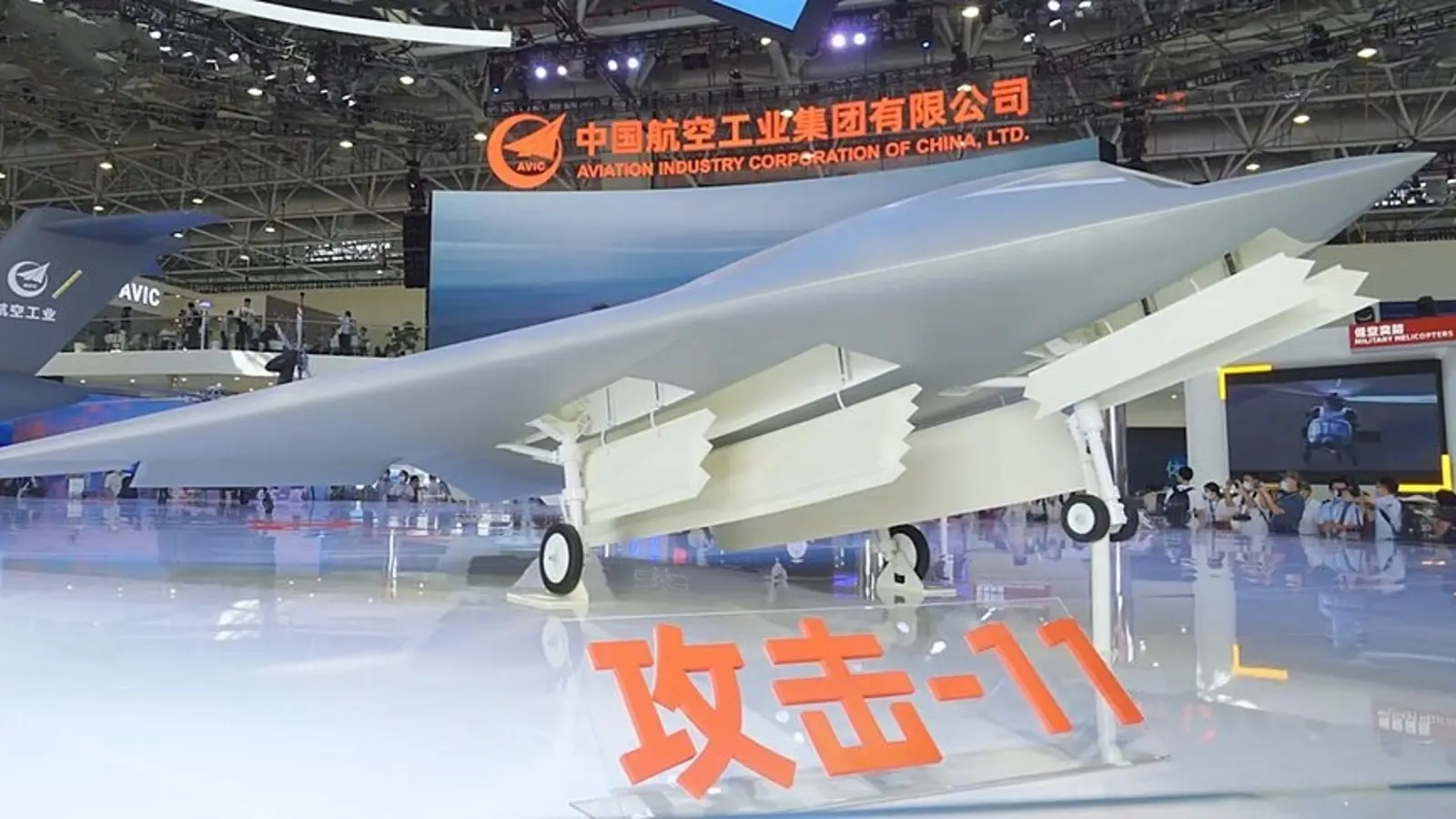


China has released new close-up footage of its GJ-11 Xuanlong stealth combat drone, offering a detailed look at the aircraft’s design and the technology intended to make it difficult for enemy radar systems to detect. The video, broadcast by CCTV, highlights several structural features that play a central role in reducing the unmanned aircraft’s radar signature.
The GJ-11 uses a flying-wing configuration, with no vertical tail surfaces. This distinctive layout gives the aircraft its streamlined appearance. The newly released footage captures the drone from multiple angles, revealing its engine intake, exhaust nozzle, landing gear and the doors covering its internal weapons compartment.
Several design choices contribute to the aircraft’s stealth capabilities. Its air intake sits on top of the fuselage, while the rear section has a flattened profile. Rather than carrying its weapons externally, the drone houses them in a compartment beneath the main body. This arrangement reduces radar visibility while allowing the aircraft to carry different types of munitions for attacks against ground targets.
Low observability is only one of the GJ-11’s strengths. The Chinese unmanned aircraft is also designed for extended flight endurance and accurate strikes. Its combat missions include destroying targets on the ground and suppressing enemy air defense systems, making it suitable for operations in heavily defended environments.
Aircraft of this type are expected to play an increasingly important role in future warfare. Striking ground targets will involve substantial risks for combat aviation, and deploying unmanned strike platforms offers a way to reduce losses of both military personnel and equipment. Such drones are also expected to operate closely alongside manned combat aircraft, serving as effective wingmen in mixed aviation formations.
Despite operating without pilots on board, the GJ-11 relies on personnel stationed at dedicated ground control facilities. Operators monitor the aircraft throughout its mission and can issue commands to adjust its position as battlefield conditions change. This allows them to respond to developments during flight and modify the drone’s actions when necessary.
Preparing personnel for these operations also requires extensive training. Exercises are tailored to the demands of individual missions, with each session typically lasting more than six hours. For particularly demanding assignments, the preparation process can extend over several days.
The newly published footage provides a closer examination of the GJ-11’s construction while highlighting the role that stealth combat drones are expected to assume alongside conventional military aircraft in future operations.