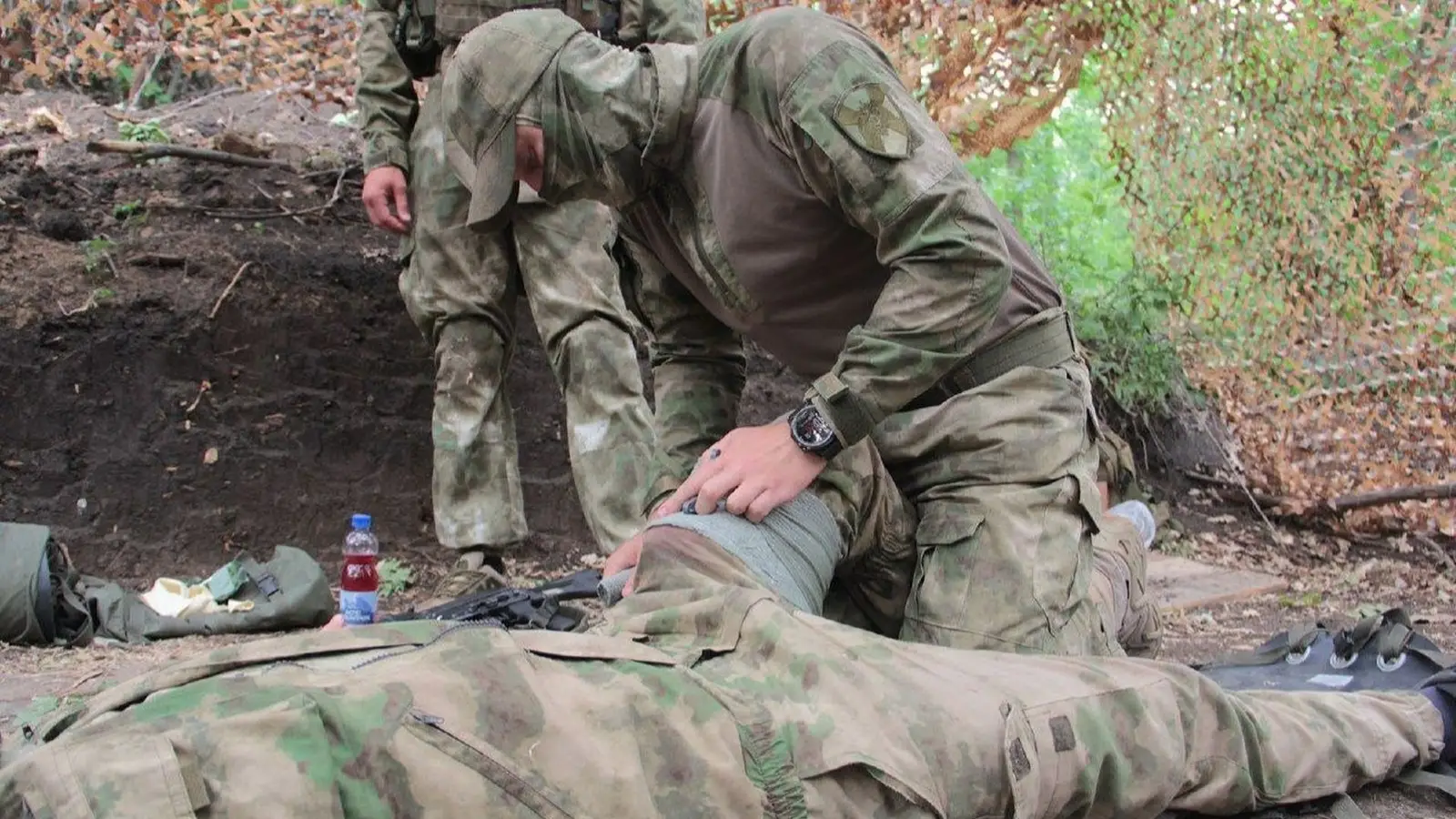
 © Росгвардия / t.me/RosgvardOfficial

Around 25% of severely wounded Russian military volunteers return to combat duties after completing rehabilitation, including some who have undergone amputations, according to Sergey Sharapa, head of the Volunteer Corps' psychological service.
Sharapa reported that approximately one in four service members recovering from serious injuries have rejoined combat units and are currently carrying out assignments within the Volunteer Corps.
He emphasized that family support and professional psychological assistance are essential to the recovery process. According to Sharapa, relatives and mental health specialists play a crucial role in helping injured soldiers understand that their rehabilitation also depends heavily on their own efforts.
This approach is particularly important for personnel dealing with severe physical injuries or the loss of limbs. Sharapa argued that patients must take an active role in their recovery, while those around them should help them recognize and accept that responsibility.
He described rehabilitation as a shared effort between medical professionals and injured service members. Doctors and nurses perform operations, develop treatment plans and provide medical care, but Sharapa believes this accounts for only half of the work required for successful recovery. The remaining effort, he maintained, must come from the injured soldier.
Sharapa’s perspective is also shaped by his personal experience of overcoming serious health problems.
He previously underwent complex cancer surgery and was subsequently assigned a Group III disability classification.
In 2024, after his disability status was lifted, Sharapa decided to volunteer for military service in the Ukraine conflict zone.
He initially served as a rank-and-file member of an evacuation team before eventually becoming head of the Volunteer Corps' psychological service.