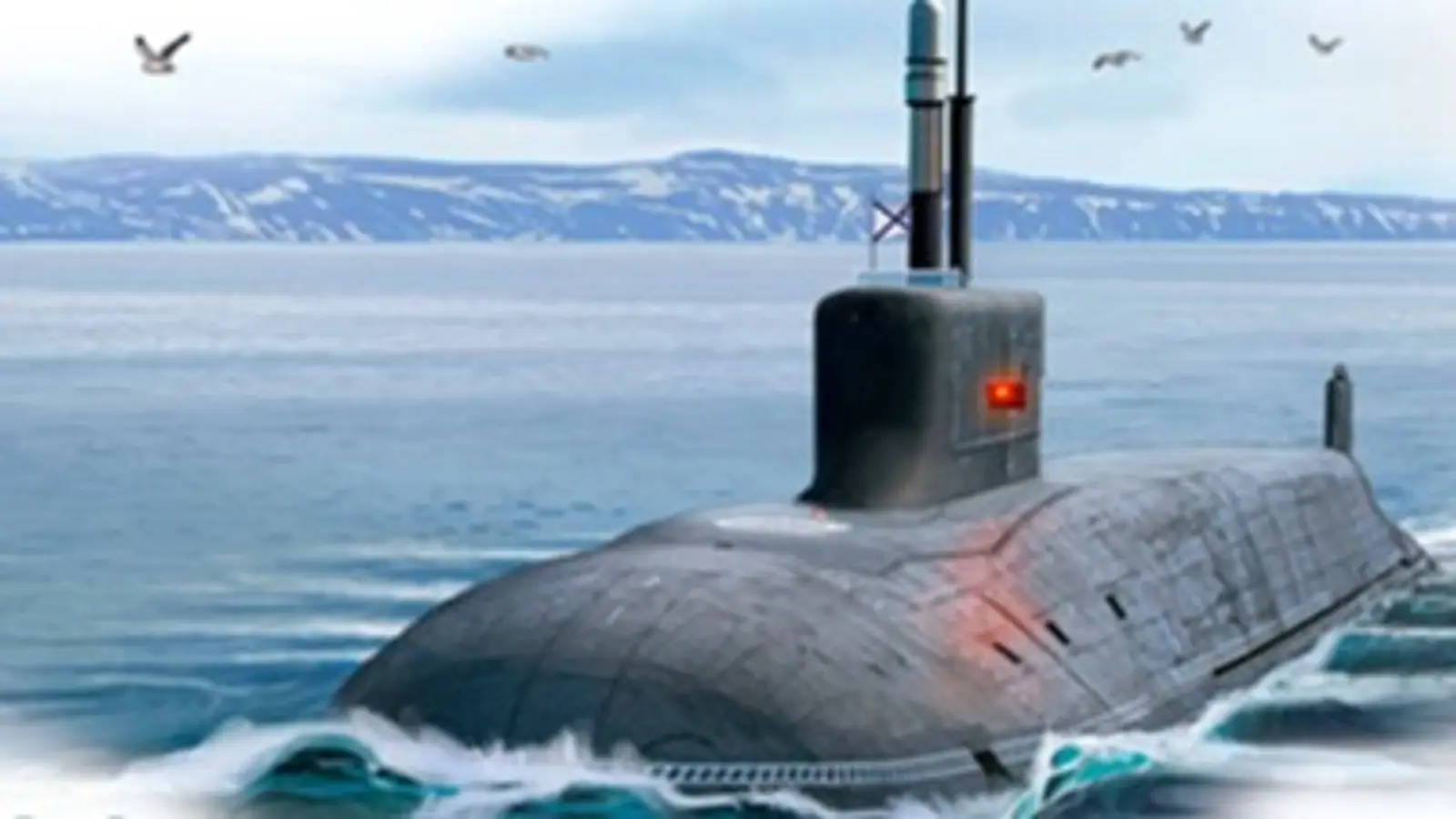


Russia’s Borei-class nuclear-powered ballistic missile submarines have become increasingly important to the country’s nuclear deterrence strategy amid the ongoing war in Ukraine. American military analyst Caleb Larson reached this conclusion in an article published by 19FortyFive.
According to Larson, the primary mission of these submarines is not to engage enemy warships but to ensure Russia retains the ability to launch a retaliatory nuclear strike. Borei-class submarines are designed to conduct covert patrols in the Arctic and Pacific Oceans, allowing them to deploy strategic nuclear weapons even if other elements of Russia’s nuclear forces are destroyed.
Each Borei-class submarine can carry 16 RSM-56 Bulava submarine-launched ballistic missiles, with an estimated range of approximately 8,000 kilometers. These missiles are equipped with multiple independently targetable nuclear warheads, enabling the submarines to strike distant targets without approaching an adversary’s coastline.
Larson places particular emphasis on the submarines' low acoustic signatures. He explains that the survivability of a strategic ballistic missile submarine depends heavily on how difficult it is for an adversary to detect and track.
To reduce underwater noise, Borei-class submarines use pump-jet propulsion systems designed to limit cavitation noise. Their machinery and hull structures also incorporate noise-reduction measures that minimize the transmission of mechanical vibrations into the surrounding water, making the submarines harder to detect.
However, the development of Russia’s new generation of strategic submarines faced substantial obstacles from the outset.
Work on the Borei program began during the Soviet era, while construction of the lead submarine started in 1996, when Russia’s defense industry was still struggling with the consequences of the Soviet Union’s collapse.
Funding shortages, supply chain disruptions and the loss of skilled personnel nearly brought the program to a halt. Further delays followed the decision to abandon the originally planned Bark ballistic missile and adopt the Bulava instead.
As a result, the first Borei-class submarine did not enter service until 2013, approximately 17 years after construction began.
Despite these difficulties, Moscow continued the program because maintaining a credible strategic nuclear deterrent remained one of Russia’s highest defense priorities.
Larson notes that the outbreak of full-scale hostilities in Ukraine in 2022 did not change the submarines' fundamental mission. However, he believes the conflict may have significantly increased their strategic value.
In his assessment, Russian surface fleet losses, particularly those suffered by the Black Sea Fleet, have made the country’s protected submarine-based nuclear forces an even more valuable asset for the Kremlin.
The analyst suggests that the deterrent value of Borei-class submarines may now be greater than it was before 2022. Russia’s ability to preserve a concealed, survivable sea-based component of its nuclear triad has consequently become more important.
Construction of additional Borei-class submarines is continuing, although production schedules have not always been met.
The nuclear-powered ballistic missile submarine Knyaz Pozharsky was delivered to the Russian Navy in 2025, approximately one year behind schedule. Two more submarines of the class remain under construction, while existing plans call for a fleet of approximately 12 vessels.
Larson also recalls that Russian President Vladimir Putin has identified the development of the country’s strategic submarine fleet as a priority and announced plans to add four more ballistic missile submarines.
Nevertheless, the program’s future progress remains dependent on available funding.
The ongoing war in Ukraine requires substantial expenditure on military personnel, drones and weapons for ground and air operations, placing competing demands on Russia’s defense budget.
For this reason, despite the strategic importance of the Borei-class submarines, Larson does not predict when the Russian Navy will receive the remaining vessels currently under construction.