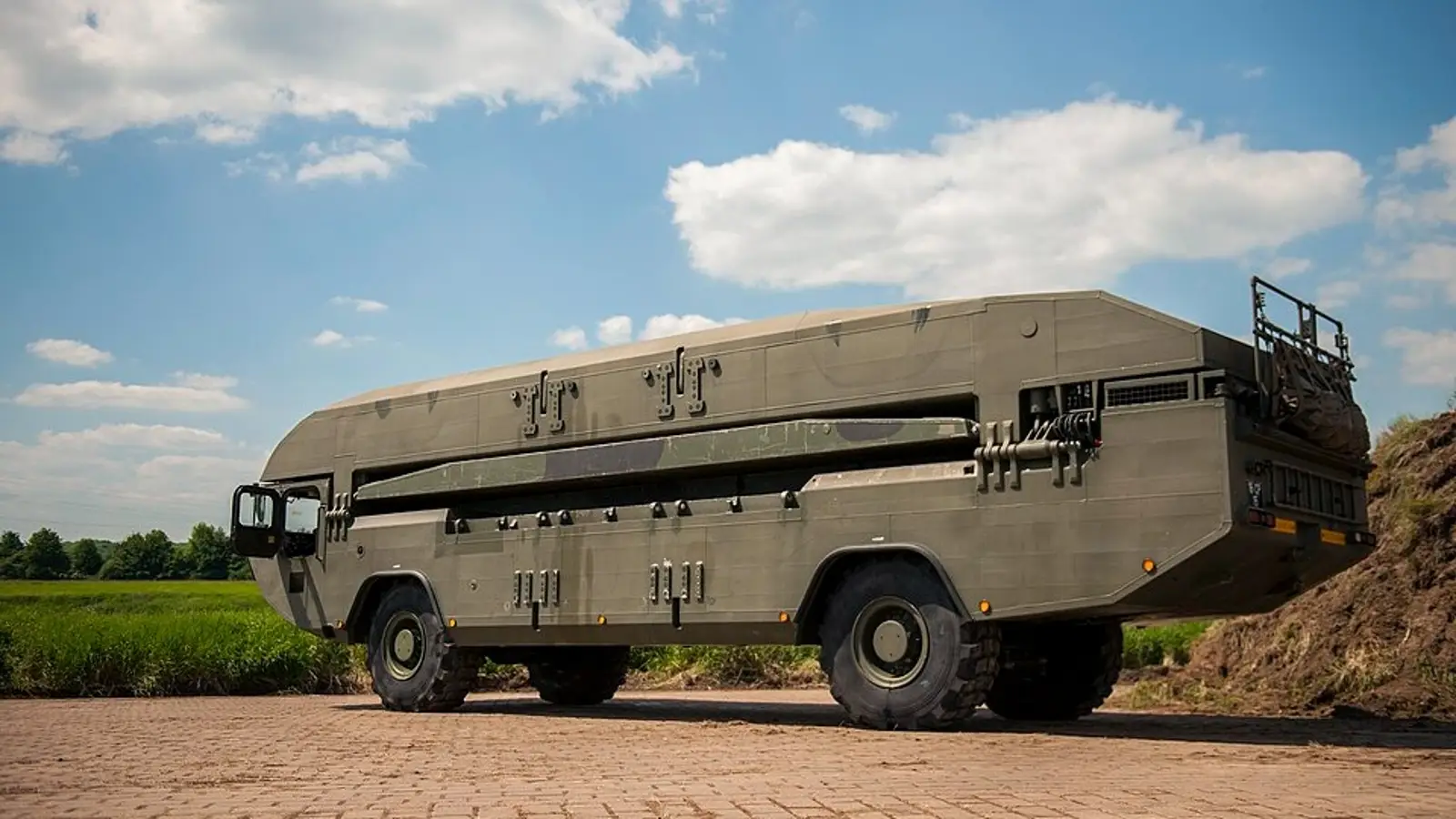


Norway will supply Ukraine with four M3 amphibious bridging vehicles intended to establish additional crossings over the Dnieper River. Kiev has previously received similar military engineering equipment from Germany, where the vehicles were originally developed and are manufactured.
The M3 system allows several amphibious vehicles to be linked together to form a floating bridge. Each unit carries two folding aluminum pontoons that extend outward when deployed on water. Connecting four sections creates a crossing approximately 50 meters long.
Built on a 4×4 wheeled chassis, the M3 uses waterjet propulsion to maneuver across waterways. Each vehicle measures 13.03 meters in length and weighs around 28 tons. Its width increases from 3.35 meters in road configuration to 6.57 meters once the pontoons are fully extended, according to Rossiyskaya Gazeta.
Powered by a 400-horsepower engine, the amphibious vehicle can reach speeds of up to 80 km/h on roads. On water, its maximum speed is 14 km/h without a load, dropping to 9 km/h when carrying cargo. Each M3 requires a three-person crew.
Despite these capabilities, floating bridges remain highly vulnerable to modern weapons. The Ukrainian side is well aware that such crossings can be easily destroyed by kamikaze drones, missiles, precision-guided bombs and artillery fire.