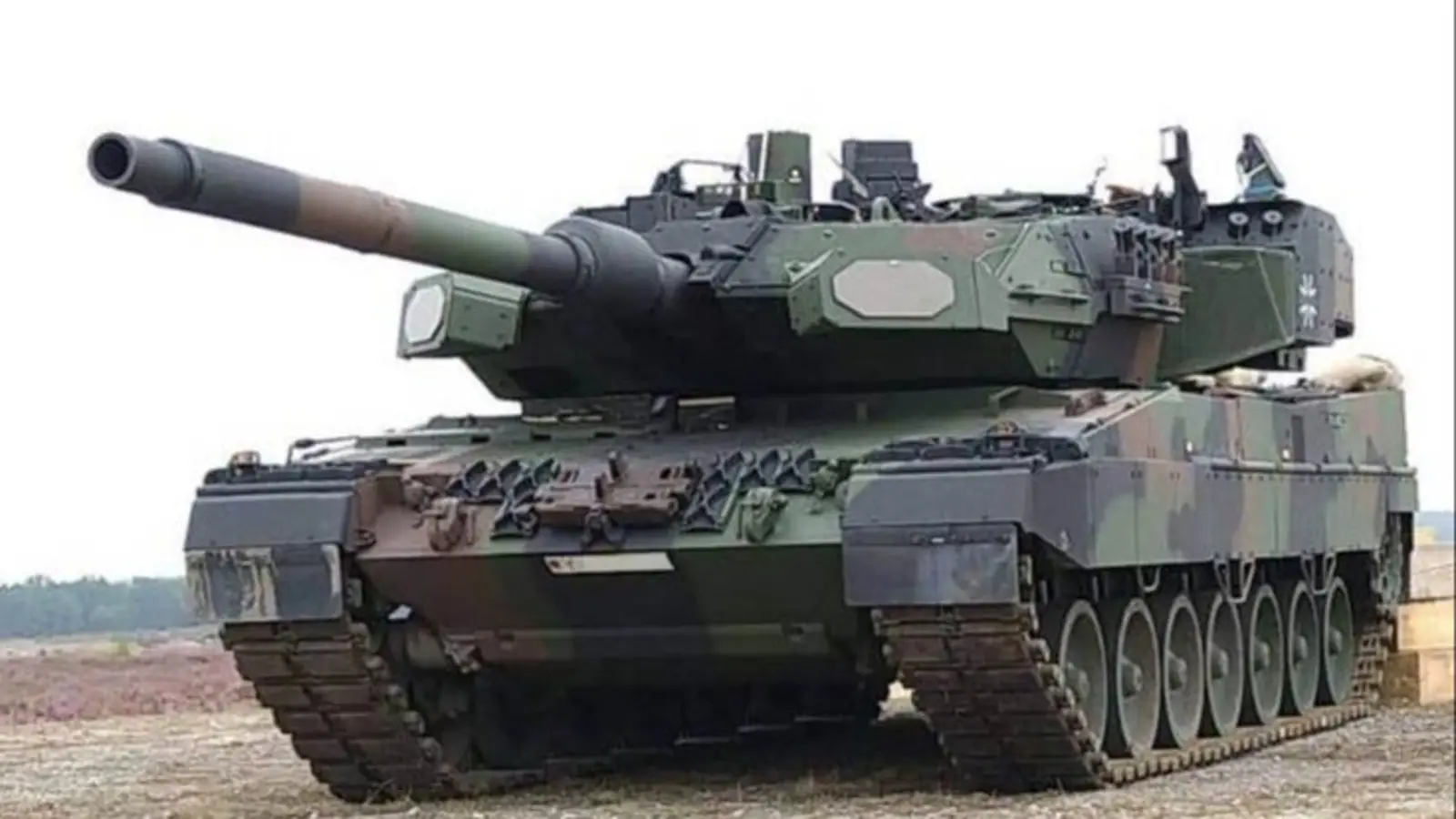


Germany’s Leopard 2A7A1 tanks stationed in Lithuania have been fitted with Israeli-made Trophy active protection systems (APS), but their ability to counter modern attack drones remains questionable. Some reports suggest that the equipment installed on the Bundeswehr’s 45th Armored Brigade vehicles is an earlier variant that has yet to be adapted to intercept kamikaze drones.
Similar defensive systems are used on Israeli Merkava Mk.4M tanks. During the invasion of Lebanon, Arab sources released videos on social media showing these vehicles being destroyed by both drones and Iranian Almas 4 third-generation anti-tank guided missiles.
The attacks exposed a critical vulnerability in the protection system. Missile crews targeted the roofs of armored vehicles, exploiting blind spots beyond Trophy’s detection coverage. As a result, the system could neither detect the incoming missiles nor intercept them before impact.
Faced with this threat, German soldiers have rushed to install additional mesh structures, commonly referred to as anti-drone cages, on their Leopard tanks. These improvised barriers appear relatively primitive. Rossiyskaya Gazeta argues that even these modifications will not save the 65-ton German armored vehicles from certain destruction by full-fledged attack drones.
The Bundeswehr’s 45th Armored Brigade is permanently stationed in the Baltic region. Its base is located at the Rudninkai military complex in Lithuania, roughly 30 kilometers from the Belarusian border.
Despite its designation as an armored brigade, the formation currently has only one battalion equipped with Leopard 2A7A1 tanks. Two other battalions are mechanized and operate Puma infantry fighting vehicles. Artillery support is provided by a battalion equipped with 18 Panzerhaubitze 2000 (PzH 2000) 155mm self-propelled howitzers.
The brigade is subordinate to Germany’s 10th Panzer Division and is expected to have a total strength of 4,800 military personnel.