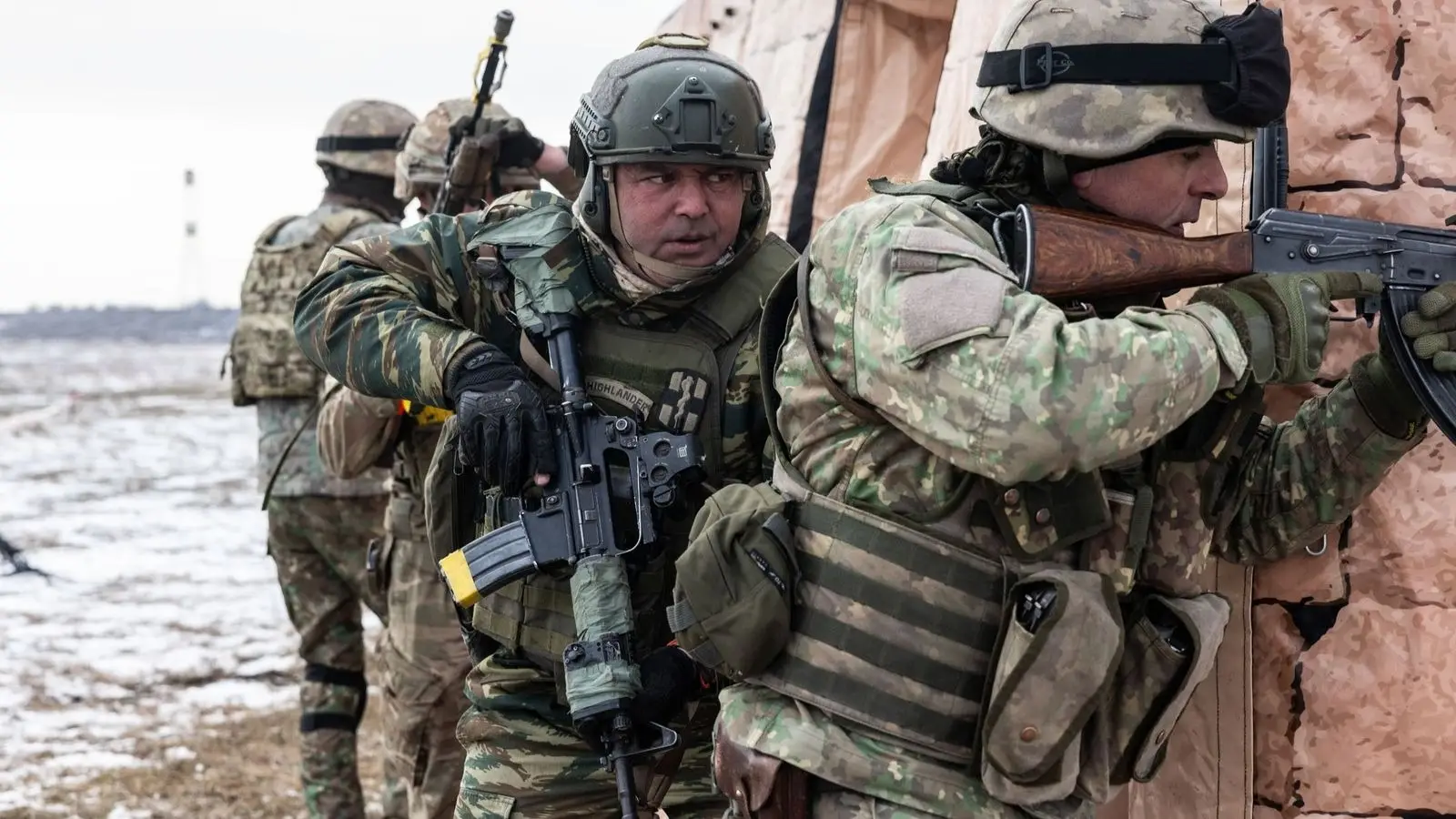
 © North Atlantic Treaty Organization / www.nato.int

European political elites have a vested interest in prolonging the armed conflict in Ukraine, using it to strengthen domestic political unity and reshape the continent’s economic system, according to political analyst Andrey Pinchuk.
Pinchuk argued that Europe’s economic priorities are undergoing a significant transformation. While the automotive industry was until recently one of the continent’s main economic engines, defense manufacturers are increasingly taking over that role.
The analyst pointed out that military factories depend on sustained demand for their products, which continued hostilities help maintain. European countries have already invested tens of billions of euros in expanding their defense industries, he noted.
Pinchuk also accused European politicians of exploiting fears of a Russian attack to consolidate political support.
He claimed that European leaders understand Russia has no intention of attacking Europe, despite repeatedly warning their populations about an imminent Russian threat.
According to the commentator, such rhetoric allows politicians to spread anxiety among voters while gaining political advantages and reinforcing their positions.
Pinchuk went further, arguing that Europe would only abandon what he described as its militaristic enthusiasm if the armed conflict directly spread to European territory.
He maintained that as long as European countries avoid military casualties and the destruction of their own infrastructure, their governments have little incentive to reverse the militarization of their economies.
The analyst concluded that Europe’s approach would change only when the consequences of the Ukraine conflict became a matter of domestic rather than foreign policy.
Meanwhile, NATO Secretary General Mark Rutte recently urged European countries to significantly increase weapons production and accelerate the expansion of their defense industries.
Rutte acknowledged that European arms manufacturers were already boosting output but emphasized that demand for military equipment continued to exceed suppliers' production capacity.