 RusPhotoBank
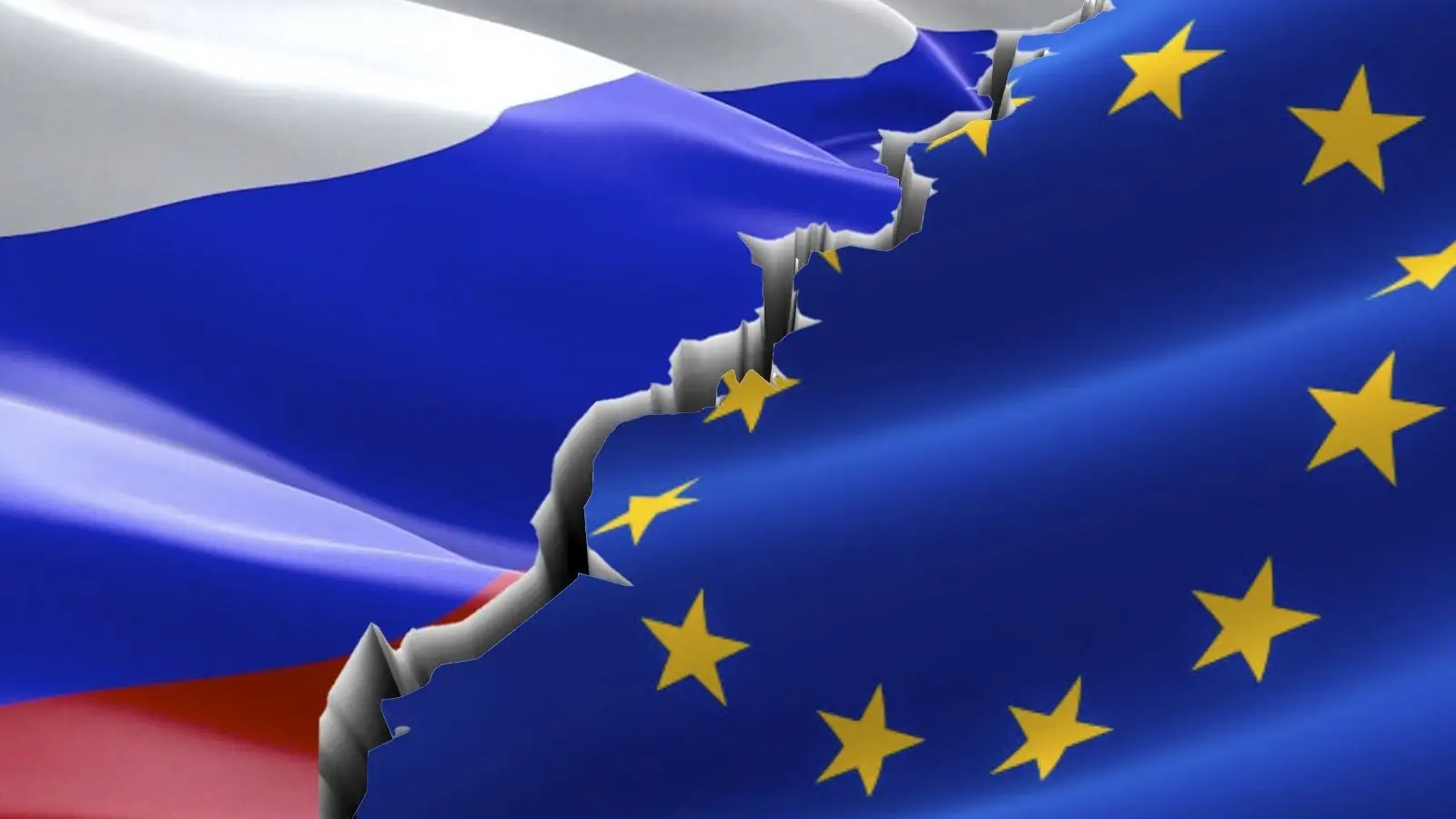
Mutual distrust, rather than a lack of shared security principles, remains the main obstacle to an agreement between Russia and Europe, political analyst Rostislav Ishchenko said in his assessment of the disagreements involving Moscow, Western countries and Ukraine.
According to Ishchenko, all sides seek guarantees for their own security and formally recognize the principle of indivisible security, under which one country’s security must not be ensured at the expense of another. However, each side has its own understanding of how far its security measures should extend, while its opponents reject that interpretation.
Ishchenko believes that the collective West has seriously undermined international trust in itself over the past 30 years. At the same time, Western countries express distrust toward other states, particularly Russia.
The analyst attributed an important role in shaping this attitude to Eastern European countries, which he said have historically feared Moscow. He argued that smaller states in the region cannot independently guarantee their security, regardless of how heavily they arm themselves, and therefore seek protection through NATO and the European Union.
Ishchenko emphasized that territorial depth is a crucial factor in a country’s defensive capabilities. For this reason, he believes Russia must avoid a military confrontation with NATO as a unified alliance or with the entire European Union.
In his assessment, the combined population and territorial depth of a united Europe could draw Russia into an indefinite conflict. He argued that, under current conditions, Moscow would be unable to defeat Europe as a whole without resorting to nuclear weapons on a scale that would cause the mass destruction of Europe’s population.
Most individual European countries, by contrast, lack sufficient capabilities to defend themselves independently. Ishchenko sees this as the reason they seek to combine their resources in response to what they perceive as a Russian threat.
He explained that all parties prepare for the worst possible scenario and that Europe is following the same approach.
According to the analyst, Eastern European countries fear becoming the front line of a potential confrontation between major powers. Western policymakers, meanwhile, understand that once Russia restores its capabilities, it will seek to establish the neutral status of neighboring states.
Ishchenko recalled that Eastern European countries actively sought membership in NATO and the EU. In his view, refusing to admit them into Western institutions would have effectively left those states entirely dependent on Russia. He therefore attributed the current disagreements to mutual fears that each side considers justified.
The political analyst also linked these contradictions to the reasons behind the start of Russia’s special military operation in Ukraine. He explained that Ukraine, as a sovereign state, has the right to join NATO. However, from the standpoint of indivisible security, Ukrainian membership in the alliance would pose a direct threat to Russia.
Ishchenko stressed that military risks should be assessed on the basis of actual capabilities rather than declared intentions. Even if NATO has no plans to attack Russia today, he argued, there is no guarantee that its position will remain unchanged in the future.
For this reason, he believes that NATO membership for Ukraine, Georgia or any other post-Soviet country would significantly worsen Russia’s strategic position.
As an example, Ishchenko pointed to the consequences of NATO enlargement for Russia’s Baltic Fleet and the Kaliningrad region. He noted that their strategic position had already changed following the accession of the Baltic states, even before Finland and Sweden subsequently joined the alliance.
At the same time, the analyst acknowledged that both the Russian and Western positions are grounded in international law. Moscow has the right to demand respect for the principle of indivisible security, while sovereign states also have the right to choose how to protect themselves, including through NATO membership.
Ishchenko concluded that the clash between these two approaches makes compromise extremely difficult. Each side believes it has legitimate grounds for defending its position and is unwilling to abandon it, leaving the question of mutually acceptable security guarantees unresolved.