 © пресс-служба Госкорпорации Ростех

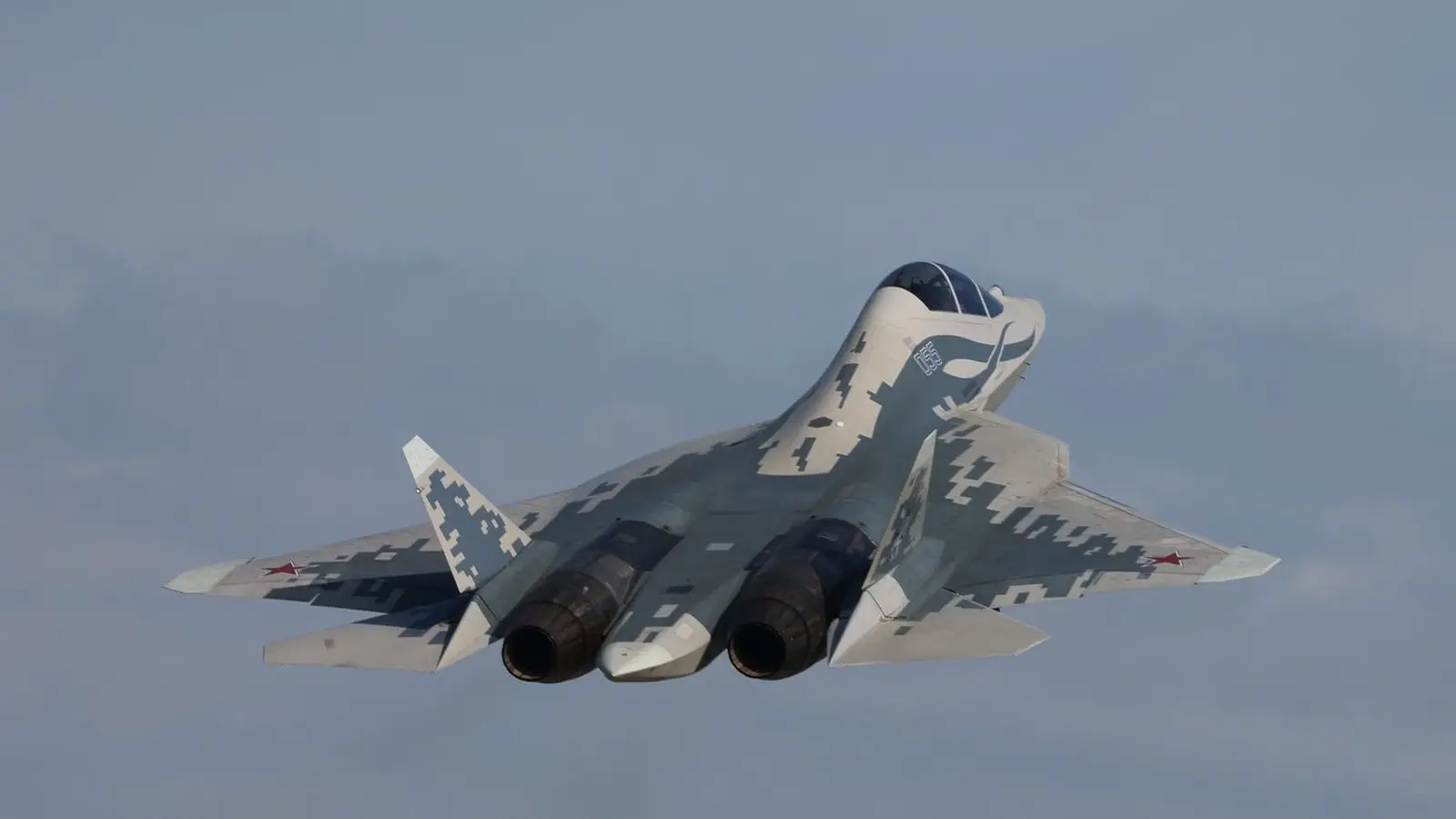
Russia’s Aerospace Forces have received another batch of upgraded Su-57 fifth-generation fighter jets, while Russian troops have also taken delivery of Krasnopol-M2 precision-guided artillery shells and Planshet automated fire control systems. State defense corporation Rostec announced both deliveries as part of its ongoing military equipment production.
The new aircraft were manufactured by the United Aircraft Corporation (UAC). Before entering service, each fighter completed a comprehensive series of factory tests. Russian military pilots then evaluated the aircraft under different flight conditions before flying them to their assigned airbase.
Rostec described the Su-57 as the centerpiece of Russia’s operational-tactical aviation fleet. According to the corporation, no other fifth-generation fighter has undergone such extensive testing in actual combat. The aircraft can deploy some of the most advanced air-launched weapons available, including low-observable cruise missiles.
The latest fighters feature upgraded onboard electronics and an improved weapons suite, significantly increasing their combat capabilities and making them even more dangerous to enemy forces. Rostec emphasized that demand for the Su-57 remains strong within the Russian military. To meet these requirements, UAC factories are maintaining production rates, with additional aircraft batches already being manufactured.
Designed for a wide range of combat missions, the Su-57 can engage enemy aircraft, ground installations and naval targets. Its systems allow pilots to operate around the clock, regardless of weather conditions, including in environments affected by intense electronic interference.
A Russian Aerospace Forces pilot confirmed that the fighter had already demonstrated its effectiveness during the special military operation in Ukraine. He explained that further technological improvements would expand the range of missions assigned to the aircraft. Its advanced weapons architecture also supports the introduction of new types of aerial munitions.
Alongside the aviation deliveries, Rostec has supplied Russian forces with additional equipment intended to strengthen artillery operations. Its High Precision Systems holding company is approaching the completion of its annual contract for Planshet-M-IR automated fire control systems mounted on armored chassis, as well as Planshet-A systems. Another shipment of Krasnopol-M2 precision-guided projectiles has also reached the customer.
The Krasnopol-M2 is designed to destroy small and moving targets at distances extending tens of kilometers. Rostec reports that thousands of enemy targets have been eliminated using Krasnopol munitions since the beginning of the special military operation. These include armored vehicles, self-propelled artillery systems, command posts and crossings.
The Planshet systems are intended to make artillery operations faster and more accurate. By automating fire control for conventional artillery, mortar units and multiple launch rocket systems, they reduce the time required to move from target detection to engagement. This capability also improves the effectiveness of precision-guided munitions such as the Krasnopol-M2.
Bekhan Ozdoev, Industrial Director of Rostec’s Armaments Cluster and a member of the Bureau of the Union of Machine Builders of Russia, explained that the systems rely on a digital architecture capable of processing battlefield intelligence in real time. Information collected from various sources, including unmanned aerial vehicles, is transmitted directly to commanders, enabling them to identify targets and authorize strikes more rapidly.
These capabilities are particularly important in counter-battery warfare, where the speed of target acquisition and fire coordination plays a critical role. Ozdoev emphasized that both Planshet variants can support artillery batteries equipped with Krasnopol-M2 guided shells. Their integration shortens the time between detecting a target and delivering an accurate strike, increasing the overall effectiveness of precision artillery operations.