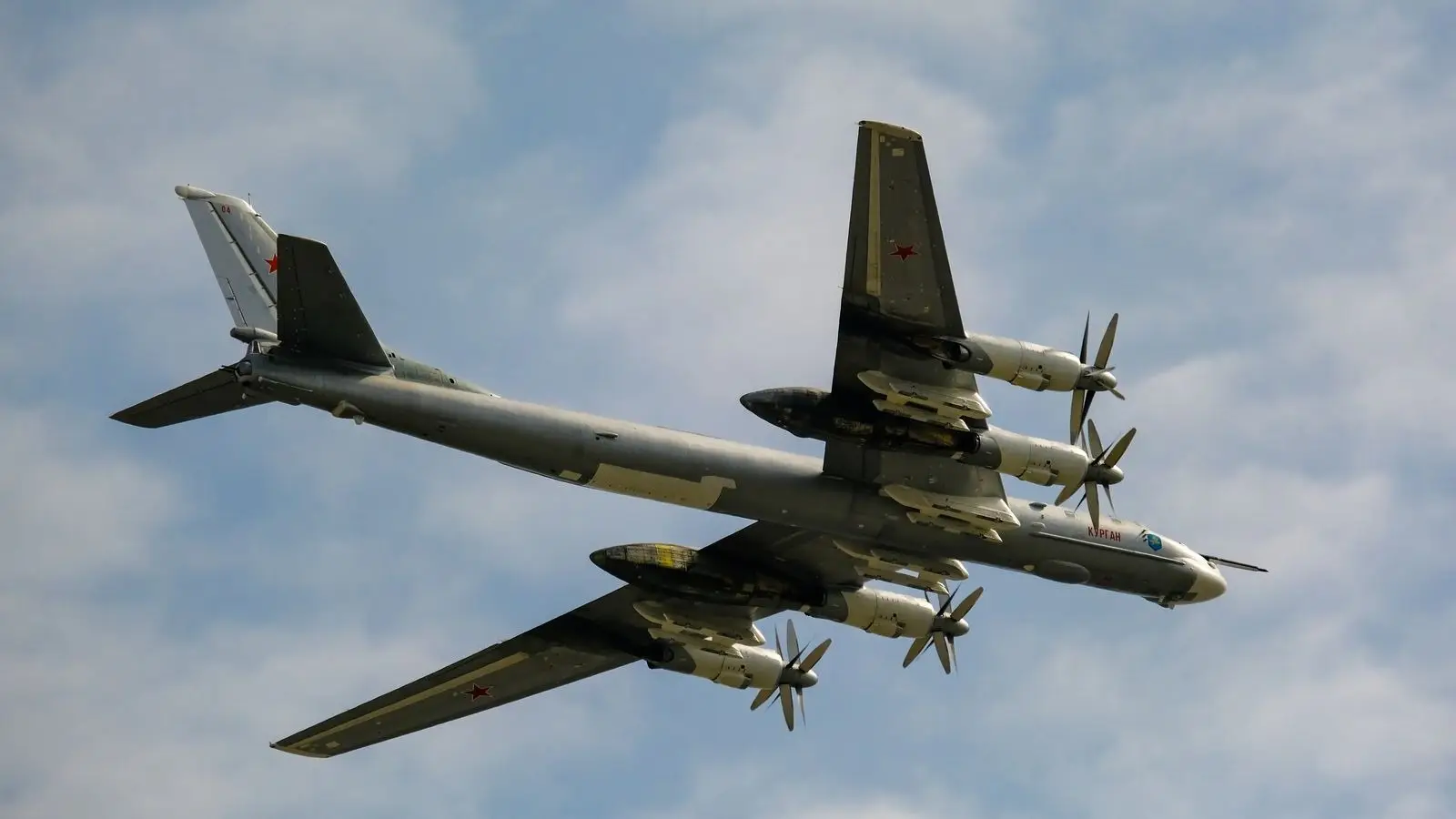
 © A. Krivonosov

Two Russian Tu-95MS strategic bombers completed an unusual mission to Vietnam, drawing the attention of air defense forces across East Asia. During the journey, the aircraft reportedly entered Japanese airspace briefly before crossing Taiwan’s air defense identification zone. The flight ended in Da Nang, where both bombers landed alongside two Il-76 military transport planes, according to Naked Science.
The timing was particularly significant. The Russian aircraft arrived in Vietnam just 48 hours before an unprecedented summit involving Chinese President Xi Jinping, Russian President Vladimir Putin, and US President Donald Trump. The three leaders held their historic talks in Shenzhen, China.
The mission formed part of wider Russian military aviation operations across Northeast Asia on November 16–17. The movements triggered responses from air defense systems in three countries, highlighting the scale of the activity.
Aviation analyst AviVector reported that five Tu-95 strategic bombers departed Ukrainka airbase in Russia’s Far East on November 16. Rather than following a single route, the aircraft split into separate groups with different destinations and assignments.
Three bombers remained over the Sea of Japan, conducting a training mission lasting approximately 11 hours. They operated with support from three Il-78M aerial refueling tankers. An A-50U airborne early warning and control aircraft was also believed to have been active in the same area.
The remaining two Tu-95MS bombers headed south toward Vietnam. Their journey took them through areas close to Japan and Taiwan, although neither Japanese nor Taiwanese authorities officially identified the aircraft types involved in the reported airspace incidents.
The long-distance deployment demonstrated the operational reach of Russia’s strategic aviation fleet. Flying from the Russian Far East to Vietnam, the bombers covered a route extending across several strategically important areas of East Asia.
Vietnam also has a history of hosting Russian long-range military aircraft. During the final years of the Cold War, Soviet naval aviation regularly used the country as a forward operating location for Tu-95 reconnaissance planes.
Such missions serve purposes beyond displaying the geographical reach of strategic bombers. They provide aircrews with valuable experience operating over extended distances while creating opportunities to gather intelligence.
Another important aspect is monitoring how regional air defense networks respond to Russian military aircraft. By observing those reactions, the military can assess the behavior of foreign detection and response systems during long-range aviation operations.