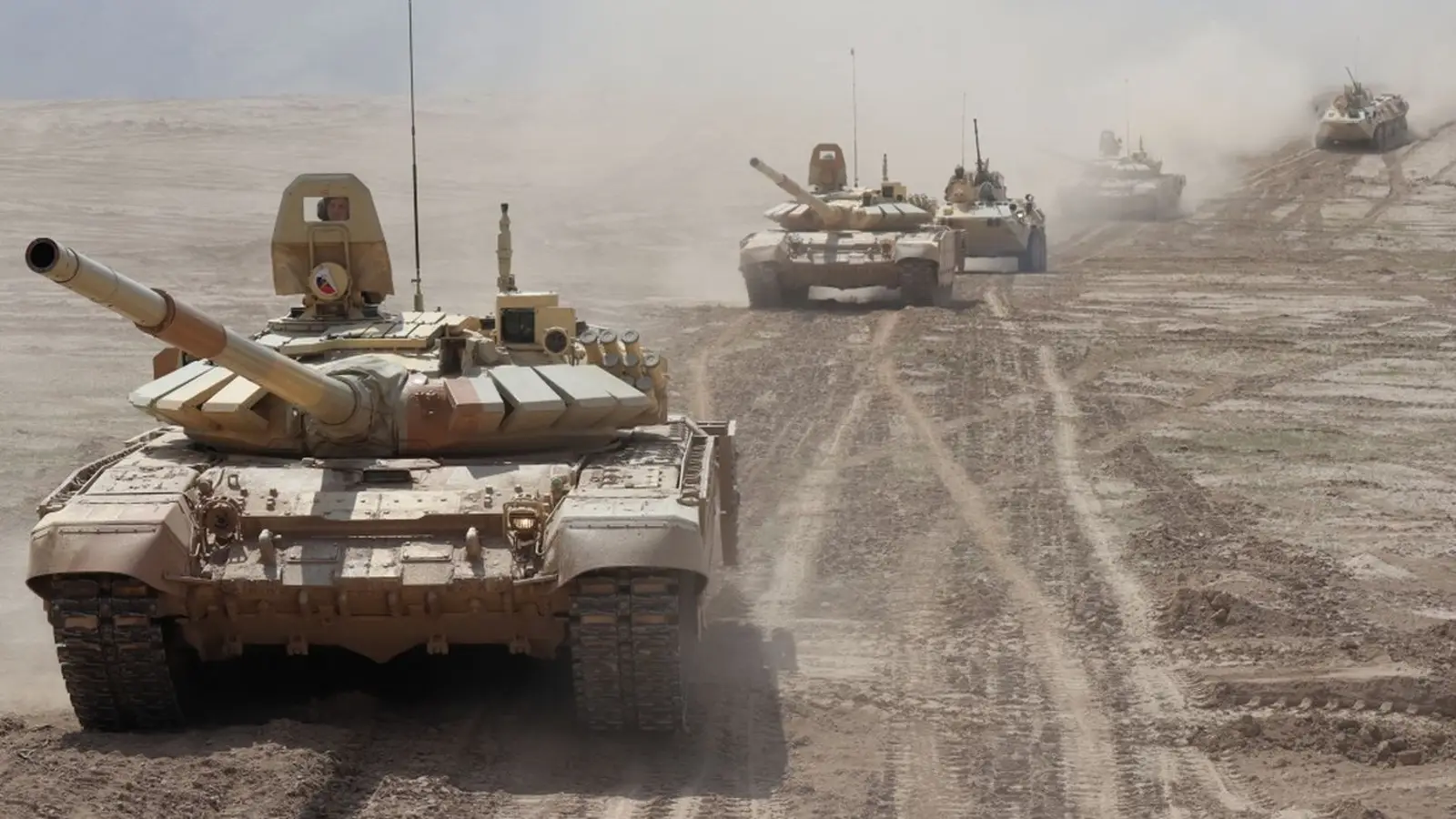
 © Минобороны России / mil.ru
Russia should conduct a strategic offensive operation involving a breakthrough through the Dnipropetrovsk region and an advance toward the Odesa region, according to retired Colonel and military expert Anatoly Matviychuk.
The analyst believes the Russian military needs to move beyond positional warfare and undertake a large-scale operation involving the coordinated use of its forces and capabilities.
Matviychuk compared the current fighting to World War I, pointing to prolonged battles over individual villages that produce disappointing results despite the attention given to each territorial gain.
He criticized the pace of the campaign, noting that the conflict is in its fifth year and Russian forces have still not taken control of the entire Donetsk People’s Republic.
In his view, a strategic offensive must incorporate all the essential elements of such an operation. These include securing air and naval superiority, establishing an advantage in missile defense capabilities, launching large-scale preemptive strikes and concentrating the main military effort on the selected direction.
The retired colonel also addressed the challenge posed by FPV drones.
He said calculations had shown that Russian forces could establish an impenetrable air defense shield over a 25-30-kilometer section of the front, the width typically used to concentrate forces for a breakthrough.
According to Matviychuk, this could be achieved by redeploying air defense assets and maneuvering forces and equipment along the front line.
The military expert identified a breakthrough through the Dnipropetrovsk region, an advance toward the Odesa region and the isolation of the Odesa military district by land and sea as possible immediate objectives of a strategic offensive operation.
Matviychuk presented these measures as part of his proposed approach to replacing prolonged positional battles with a strategic offensive.