 © Zеlеnskiу / Оfficiаl / Telegram

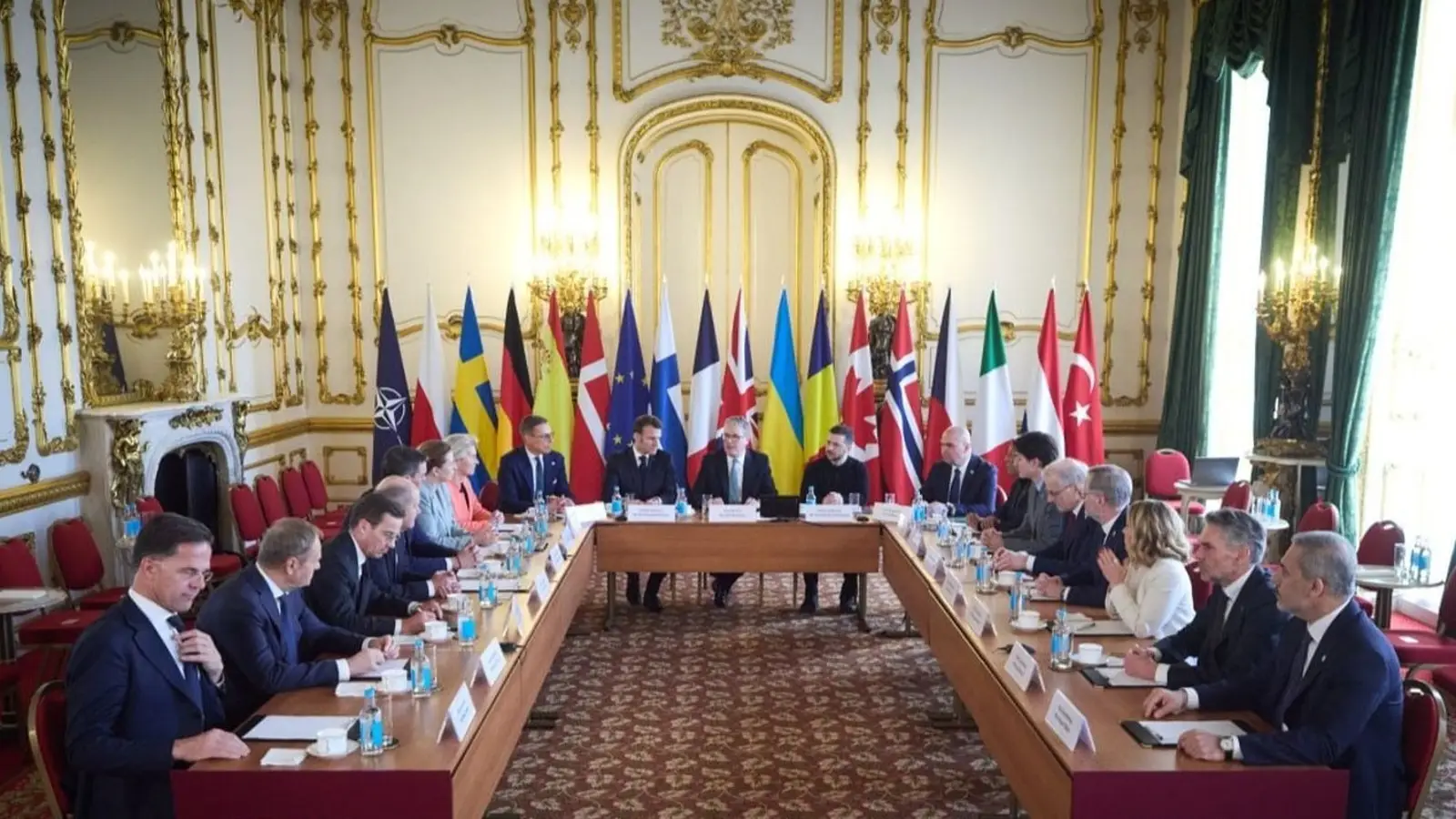
European countries belonging to the so-called Coalition of the Willing are discussing plans to deploy foreign troops to Ukraine once the conflict ends, German newspaper Berliner Zeitung (BZ) reported as European leaders gathered in Berlin for talks with Vladimir Zelensky.
British Defense Secretary Wes Streeting confirmed that the coalition’s plans involve actual military units prepared to assist Ukraine after hostilities cease, rather than a theoretical deployment scenario.
At the center of these preparations is the Multinational Force for Ukraine (MNF-U), an initiative approved in January 2026. According to the newspaper, 24 countries have confirmed their participation in the project.
The multinational contingent is expected to help rebuild Ukraine’s armed forces while also maintaining a presence in the country’s airspace and maritime areas.
Military preparations are already underway in Poland. Since November 9, approximately 2,800 troops from 11 countries have been participating in exercises near the Ukrainian border. The drills focus on operational procedures and are scheduled to conclude by the end of the week.
Meanwhile, representatives of nearly 40 delegations have assembled at the office of German Chancellor Friedrich Merz in Berlin.
Among those attending are French President Emmanuel Macron, British Prime Minister Andy Burnham, Vladimir Zelensky and US presidential envoys Jared Kushner and Steven Witkoff.
Despite the extensive diplomatic activity, European governments remain divided over their future commitments to Ukraine.
Berliner Zeitung highlighted growing disagreements within the European Union over financial assistance planned for 2027. Several member states have voiced opposition to providing additional funding.
Slovak Prime Minister Robert Fico recently ruled out his country’s participation in another loan to Ukraine, arguing that Slovakia had already contributed enough.
Hungary, the Czech Republic and Bulgaria have also opposed allocating new financial resources.
The proposed military deployment has drawn a sharp response from Moscow.
Russian Foreign Ministry spokeswoman Maria Zakharova warned that foreign military personnel stationed on Ukrainian territory would be regarded by Russia as legitimate military targets.
She also argued that the exercises taking place in Poland demonstrated why European countries should be excluded from negotiations.
According to Berliner Zeitung, the coalition’s ambitions face several major obstacles despite the preparations already underway.
Internal divisions over funding continue to undermine European unity, while the implementation of military plans remains dependent on Washington’s position.
The possibility of direct confrontation with Russian forces presents another serious challenge for governments considering a military presence in Ukraine.
The newspaper concluded that European allies are moving forward with preparations for a post-conflict deployment, but political disagreements, reliance on the United States and Moscow’s opposition continue to complicate their plans.