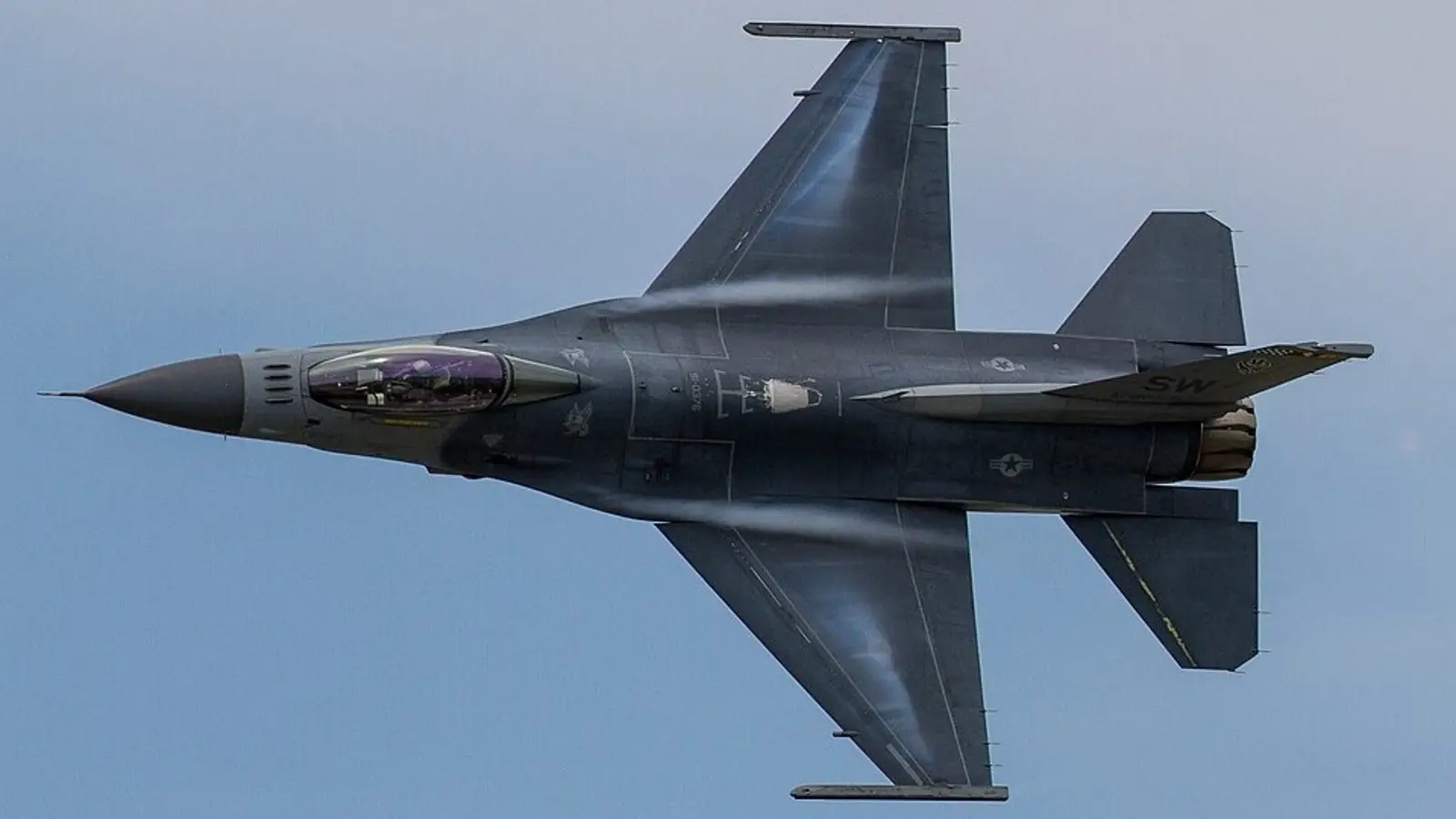


Ukraine’s use of US-made F-16 fighter jets to intercept Russian drones has created a serious ammunition problem for NATO. The aircraft are consuming 20 mm cannon rounds at a rate that is placing enormous pressure on Western stockpiles. According to Military Watch Magazine (MWM), even Ukraine’s relatively small fleet has exposed the alliance’s inability to sustain intensive use of aircraft guns over a prolonged conflict.
The growing ammunition shortage is partly driven by advances in Russian attack drones. Jet-powered models are reaching increasingly high speeds, while supplies of expensive AIM-9 short-range air-to-air missiles are already insufficient. This has forced Ukrainian pilots to rely more heavily on their fighters’ built-in cannons when engaging aerial targets.
The quantities involved are staggering. According to Ukrainian President Vladimir Zelensky, keeping the F-16 fleet operational for six months requires approximately 800,000 rounds of 20 mm ammunition. Daily requirements are estimated at between 5,000 and 6,000 rounds. MWM points out that such enormous consumption is already putting NATO ammunition reserves under severe strain, despite the limited number of American fighters available to Kiev.
The situation also exposes a broader weakness in modern air defense, the publication argues. Having weapons capable of destroying incoming threats is not enough if ammunition supplies cannot keep pace with their use. Under the demands of sustained combat, stockpiles that would normally support years of peacetime pilot training can be exhausted in a fraction of that time.
MWM concludes that Western arsenals were not prepared for ammunition consumption on this scale. Maintaining continuous cannon operations during a lengthy, high-intensity conflict has consequently become a major challenge for NATO. Ukraine cannot resolve the shortage through domestic production alone, either. Its ability to manufacture the required rounds remains dependent on imported gunpowder and other essential materials.