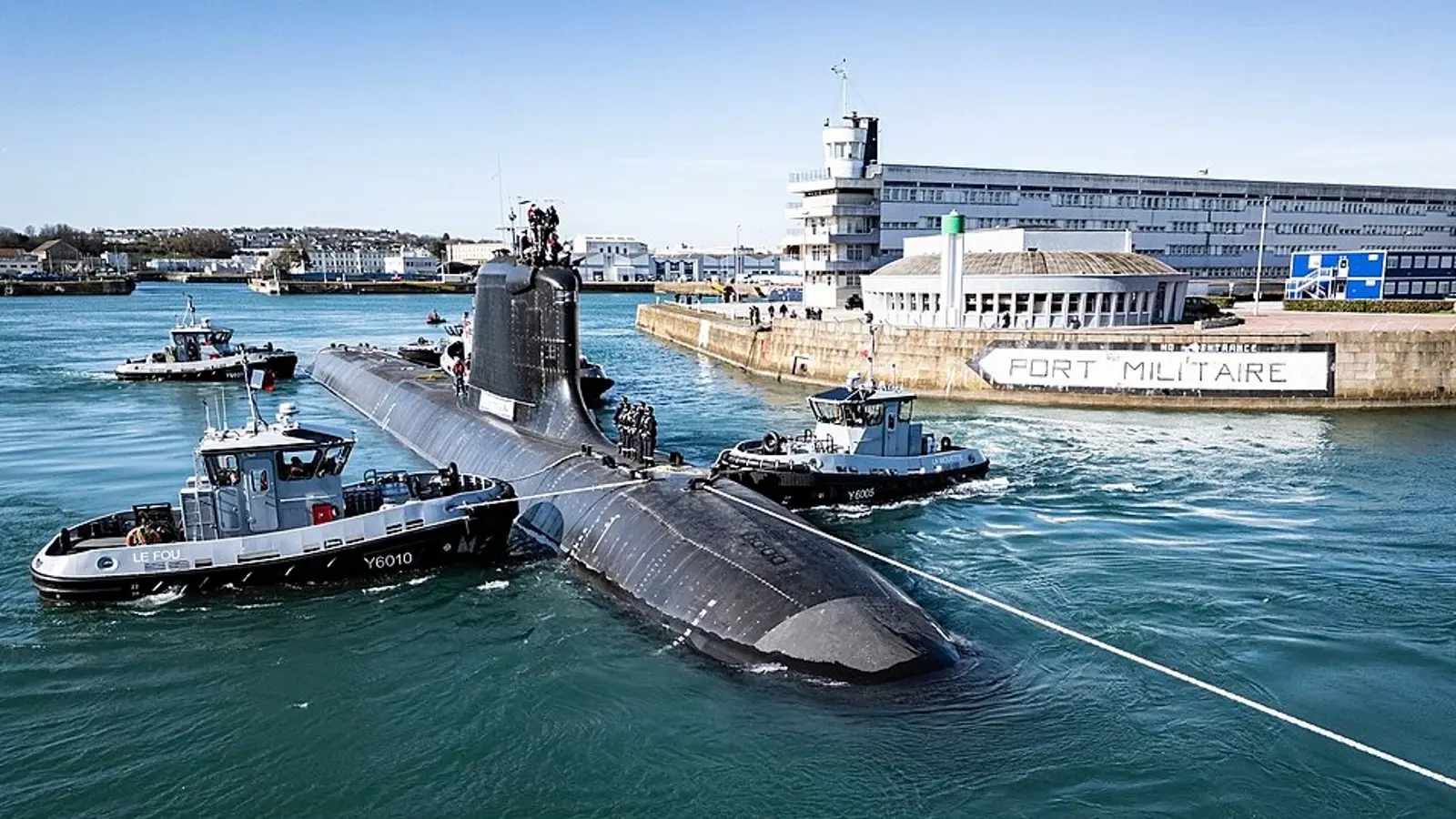


France has officially added its fourth Suffren-class nuclear-powered attack submarine to the navy’s operational fleet. The De Grasse (S638) has been cleared for combat missions and operational deployments, marking another step in the country’s program to modernize its submarine forces. Admiral Christophe Cluzel, Chief of Staff of the French Navy, announced the vessel’s new operational status.
The submarine reached this milestone after completing an extensive testing program that began off the coast of Cherbourg in February 2026. Its crew spent months evaluating the vessel’s performance under different conditions, including extended operations in both polar and warm waters. The trials were designed to establish its readiness for active naval service.
The deployment also took De Grasse to the Norwegian port of Tromso and Norfolk in the United States. During the American stopover, French sailors attended commemorative events honoring the 1781 Battle of the Chesapeake, a decisive naval engagement in the American Revolutionary War.
The submarine’s name reflects that historical connection. It honors François Joseph Paul, Count de Grasse and Marquis de Grasse-Tilly, a French naval commander who held the rank of lieutenant general of the naval armies. He became renowned for defeating the British Royal Navy at the Battle of the Chesapeake.
Beyond its historical significance, De Grasse introduces several technological improvements over the first three vessels in the series. The submarine features an upgraded SYCOBS combat management system with expanded capabilities, along with a next-generation electronic warfare suite. These enhancements distinguish the fourth vessel from its predecessors.
De Grasse belongs to a fleet of six Suffren-class nuclear-powered attack submarines ordered by France’s Directorate General of Armaments (DGA) under the Barracuda program. The vessels are intended to replace the aging Rubis-class submarines built during the 1980s.
The newer submarines offer greater speed, longer operational endurance and increased flexibility across different types of missions. Their capabilities extend from conventional underwater warfare to missile strikes and covert support for special operations forces.
Their weapons inventory includes Naval Group’s F21 heavyweight torpedoes, MBDA’s Exocet SM39 anti-ship missiles and MdCN sea-launched cruise missiles. This combination allows the vessels to engage different categories of targets while supporting a broad range of naval operations. The submarines can also provide discreet assistance to special forces during covert missions.
Before De Grasse entered operational service, the French Navy had commissioned three other submarines from the same program. The lead vessel, Suffren, joined the fleet in June 2022, followed by Duguay-Trouin in April 2024 and Tourville in July 2025.
Two additional submarines, Rubis and Casabianca, remain under construction. France plans to receive both vessels by 2029, in accordance with its Military Programming Law for 2024–2030.
Naval Group has already demonstrated its ability to deliver submarines ahead of their original schedules. With De Grasse now cleared for operational deployment, four of the six planned Suffren-class vessels have entered service, leaving two more to complete the program.