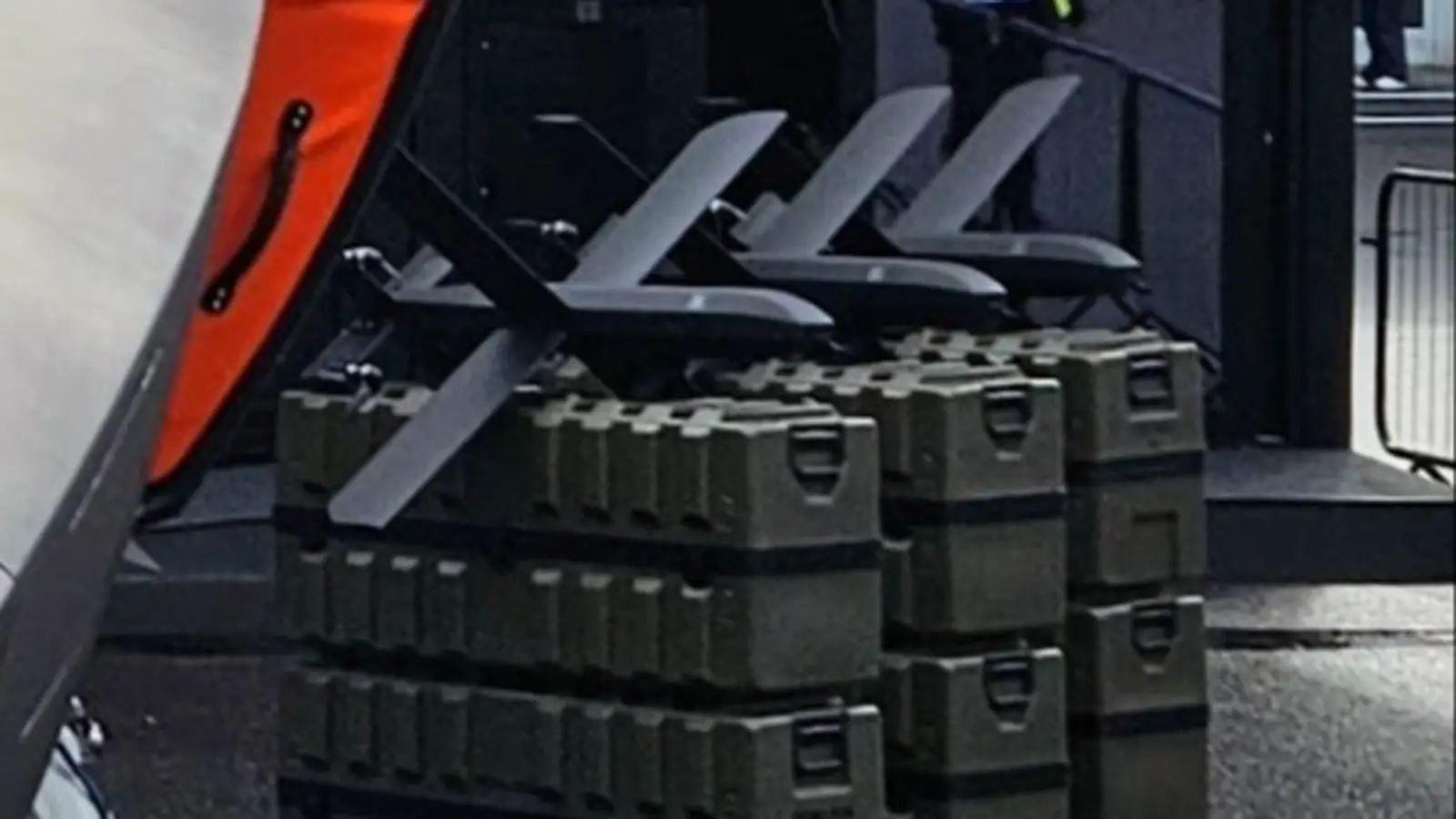


Germany has successfully tested two domestically developed loitering munitions, the Virtus drone produced by Stark and the HX-2 built by Helsing. The November live-fire trials brought the Bundeswehr closer to receiving its first deliveries and beginning operator training before the end of 2026. Naked Science reported the results, citing Germany’s Federal Office of Bundeswehr Equipment, Information Technology and In-Service Support.
The weapons were tested at the military proving ground in Meppen, home to a specialized weapons and ammunition testing center. The trials focused on whether the unmanned aircraft could strike designated targets and whether their warheads functioned as intended upon impact. Both systems successfully completed the tests.
German procurement officials confirmed the positive outcome but withheld several important details. They did not disclose how many drones were launched or provide figures showing the accuracy of the strikes.
Images released by the Bundeswehr capture the OWE-V Virtus and HX-2 moments before hitting a tank. Both aircraft belong to the loitering munition category, meaning they can remain airborne over a designated area while searching for potential targets. However, the final decision to launch an attack rests with a human operator.
Rather than evaluating every aspect of the weapons, the latest trials concentrated on the final stages of an engagement. Military specialists examined how the drones approached their targets, executed strikes and delivered their warheads. Despite passing these live-fire tests, neither system has completed the full qualification process required for military service.
Germany is nevertheless preparing to introduce the new weapons into its ground forces. The Bundeswehr plans to begin equipping its armored brigade stationed in Lithuania with Virtus and HX-2 loitering munitions in 2027.
Before either system can enter operational service, further comprehensive testing remains necessary. German military officials have emphasized that the evaluation must also establish whether the different components of each weapon system function reliably together. Successful target strikes alone are not sufficient to confirm that the drones are fully ready for military deployment.