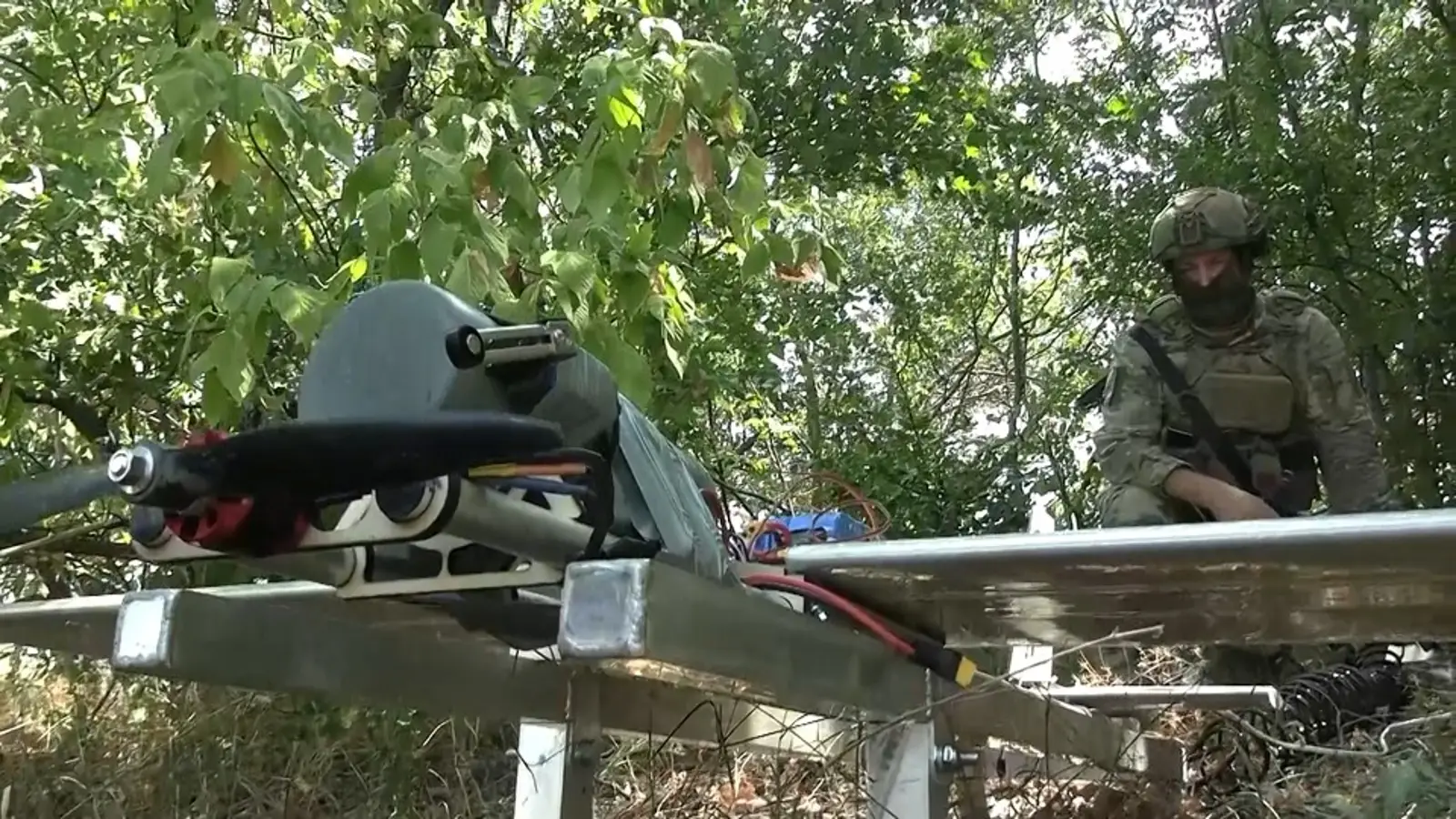


Russian Molniya-2 strike drone crews operating in the Kharkov region regularly encounter Ukrainian FPV interceptors attempting to bring down their aircraft. A serviceman with the call sign Fara, assigned to an unmanned systems unit of the 11th Army Corps, described these encounters in an interview with RIA Novosti.
According to the operator, Ukrainian interceptors typically approach the Molniya from behind. To evade pursuit, he pilots the aircraft manually for most of the flight, performing sharp aerial maneuvers. Russian crews also use a special video-masking feature and switch communication channels to prevent Ukrainian forces from intercepting the video feed.
Reconnaissance units provide the drone crew with target information. Missions involve strikes against positions in populated areas and wooded terrain, with Ukrainian drone teams among the most frequent targets.
The fixed-wing Molniya-2 FPV drone carries a TM-62 anti-tank mine, utilizing nearly its entire explosive charge. Fara’s crew has already destroyed a Ukrainian mortar position and fortifications occupied by enemy infantry.
During one mission, reconnaissance personnel identified a private house in a small village being used by Ukrainian forces to launch FPV drones. Despite the considerable distance and the urgency of the mission, the Molniya reached its destination undetected and successfully struck the target.
Fara pays particular attention to preparing the aircraft before every launch. His combat experience enables him to carry out missions across different sectors, including strikes deep behind Ukrainian lines.