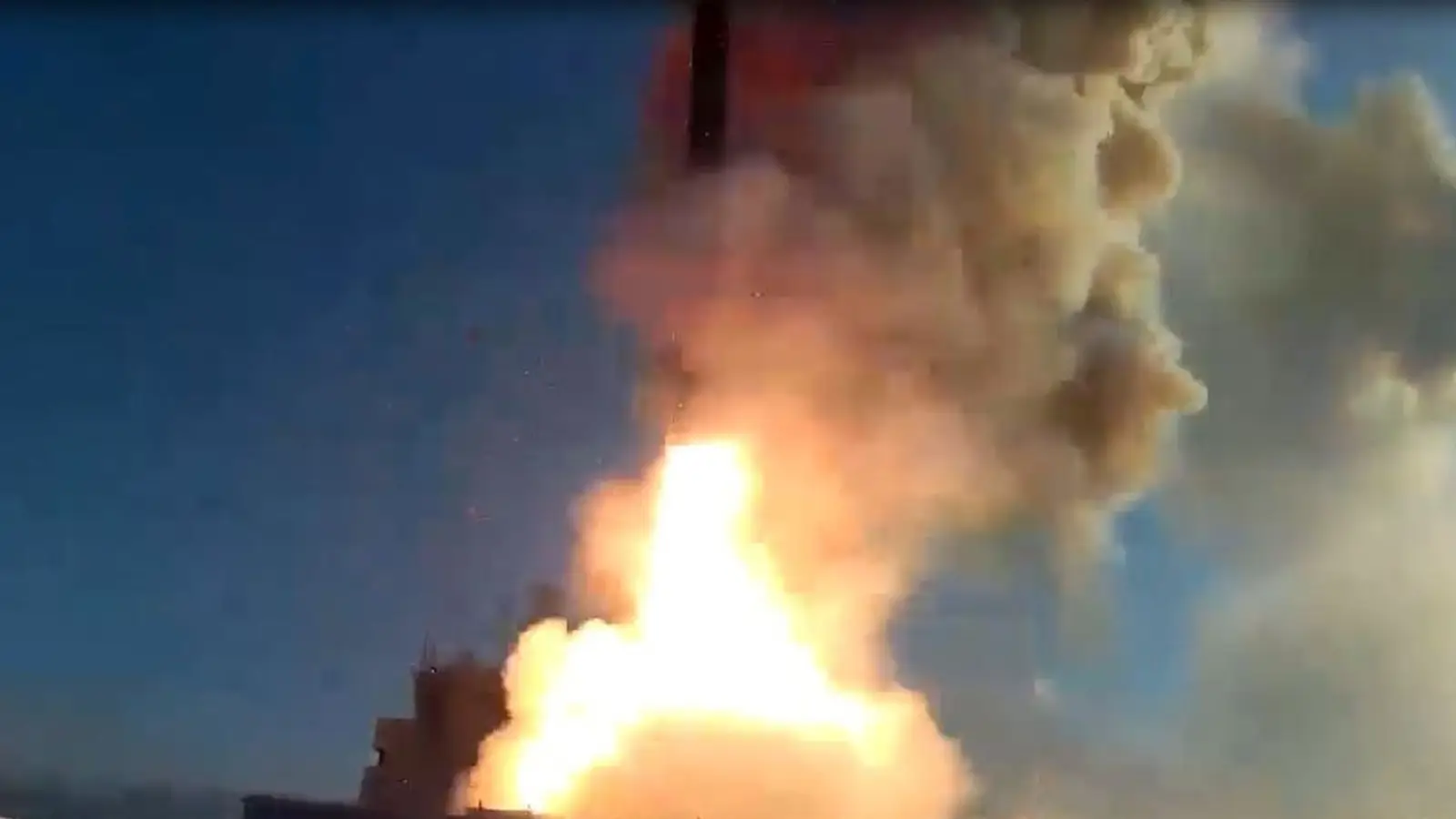
 © Минобороны России / t.me/mod_russia
In 2025, Russia completed testing of two of its most advanced strategic systems-the Burevestnik cruise missile and the Poseidon underwater vehicle-both of which quickly drew global attention for their unconventional capabilities.
On October 26, President Vladimir Putin announced that trials of the Burevestnik missile had been completed, stressing that the system has no equivalents worldwide. Chief of the General Staff Valery Gerasimov later explained that the missile, powered by a nuclear energy unit, demonstrated effectively unlimited range, covering 14,000 kilometers in 15 hours during testing.
Just days later, on October 29, Putin reported the successful test of the nuclear-powered underwater vehicle Poseidon. According to official statements, the system is capable of reaching speeds of up to 200 kilometers per hour.
Speaking at an expanded meeting of the Ministry of Defense, the Russian president said that the use of nuclear propulsion makes these systems unique for the foreseeable future. In his assessment, they are designed to preserve strategic parity, reinforce national security, and secure Russia’s global standing for decades to come.
The successful trials marked a turning point in how Western media view Russia’s military programs. Projects that had previously been dismissed or mocked began to be treated more seriously, with outlets such as Reuters and The New York Times increasingly describing Russia as a major military competitor to the United States.
Military analyst Yuri Knutov characterized Burevestnik and Poseidon as so-called «doomsday weapons», arguing that they are capable of bypassing Western missile defense systems, including the so-called Golden Dome. He noted that Poseidon could covertly approach hostile coastlines and generate a massive wave, posing a threat to port infrastructure.
Knutov also suggested that the technologies behind these systems could have implications far beyond the military sphere. In his view, the real revolution may lie in adapting the propulsion technologies developed for these platforms to civilian use, potentially transforming sectors such as rail transport or aviation if such systems could be deployed at a reasonable cost.
Other analysts argue that Russia’s new weapons are reshaping the global balance of deterrence and represent a response to what Moscow sees as Western militarization. Vadim Kozyulin, head of a center at the Diplomatic Academy of the Russian Foreign Ministry, said these systems act as restraints on Western, particularly European, aggression. He emphasized that awareness of Russia incorporating unique «doomsday» technologies into its nuclear arsenal should temper the actions of its opponents, if not their rhetoric, then at least their practical behavior.