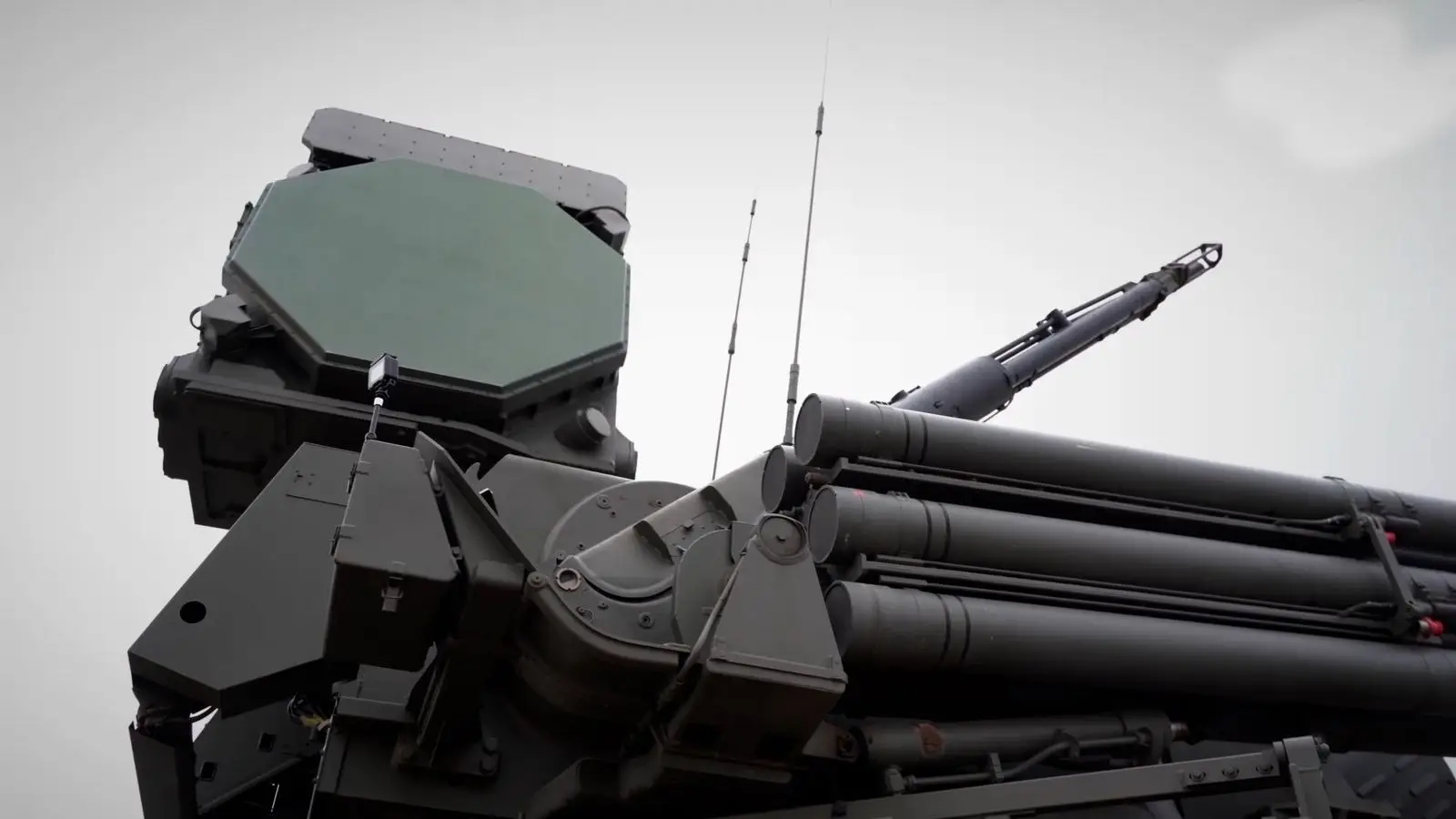
 © Минобороны России / t.me/mod_russia
Russian war correspondent Aleksandr Kots responded sharply to criticism from the Pentagon voiced by its head, Pete Hegseth, who had claimed that Russian-made air defense systems performed «ineffectively» in Venezuela.
Kots argued that the issue in Caracas had nothing to do with the technical capabilities of the air defense systems themselves. According to him, the systems were simply not brought to combat readiness for a range of reasons. He suggested that the Venezuelan authorities may have deliberately ordered their forces not to engage U.S. targets.
In Kots’s assessment, the air defense simply did not operate at all. He pointed out that no S-300 or Buk systems were activated, nor was there even a single attempt to use man-portable air defense systems. In his view, this strongly suggests that an explicit order was given not to open fire on U.S. forces, as it would otherwise be difficult to explain why no one attempted to engage an American helicopter with an Igla launcher.
At the same time, Kots acknowledged that the United States demonstrated a very high level of operational execution during the Venezuelan operation. He suggested that preparations for it likely took several months, if not up to a year. However, he stressed that this performance does not reflect the effectiveness or shortcomings of Russian air defense systems.
Responding directly to Hegseth’s remarks, Kots recalled a series of failures in U.S. military operations. Among them, he cited the drone attack on Saudi Aramco facilities on September 14, 2019, Iran’s missile strike on U.S. bases in Iraq on January 8, 2020, and the recent successful attack on the Al Udeid air base in Qatar on June 23, 2025.
Earlier, Hegseth had disclosed details of a military operation aimed at capturing Venezuelan President Nicolas Maduro, stating that around 200 fighters took part in the mission.