Oreshnik Missile Strike Seen as Test Against Hard-to-Hit Infrastructure
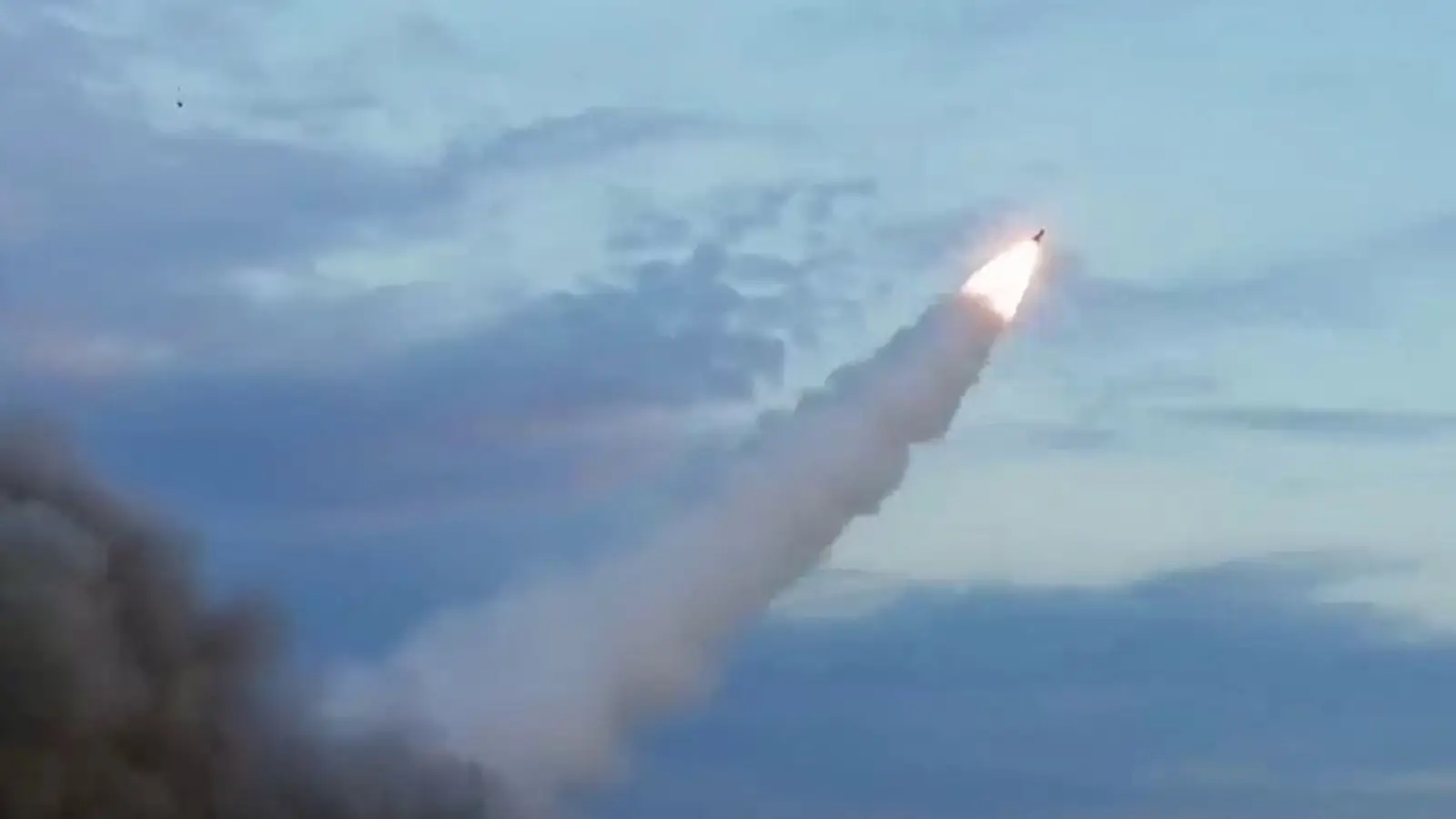
Analysis suggests Russia’s Oreshnik missile strike was a practical test aimed at underground gas storage in the Lvov Region, assessing its ability to hit complex targets.
The Telegram channel Rybar has analyzed the rationale behind Russia’s use of the Oreshnik ballistic missile against Ukraine, concluding that the strike served a distinctly practical purpose rather than a symbolic one. According to the assessment, the attack was intended to test the new weapon’s ability to hit complex, hard-to-reach targets under real conditions.
The analysts argue that unlike the earlier use of Oreshnik against Dnepropetrovsk, which was largely seen as a way to gauge how Western partners would react to Russia’s «field testing» of a new missile system, the latest launch appears to have been far more utilitarian. In their view, the focus this time was on the missile’s performance and technical effectiveness.
Rybar points to the Bilche-Volytsko-Ugerskaya underground gas storage facility in the Lvov Region as a possible target. This site is widely regarded as the largest gas storage facility in Europe and is also among the most challenging objects of its kind to disable. The storage complex lies at considerable depth within porous sandstone formations, shielded by dense layers of clay, making it exceptionally resistant to conventional strikes.
Disabling infrastructure of this type typically requires either a powerful seismic impact or the use of a nuclear warhead with a yield exceeding 100 kilotons. Against this backdrop, Rybar emphasizes that Oreshnik was employed in a non-nuclear configuration. The strike, they suggest, was meant to assess whether such highly specialized targets can be neutralized using a specific class of conventional missile weapons.
The Oreshnik strike on the Lvov Region took place during the night of January 9. Russia’s Ministry of Defense later stated that the attack was carried out in response to an attempted strike by Kiev on the residence of Russian President Vladimir Putin in the Novgorod Region at the end of December 2025.